Angels, Sporks and the Sacred Thresholds of Life

“But Daddy, what if there are monsters?”

Our two oldest have been frequently asking this question. Almost always when encouraged to go on their own to another, usually unlit, room in the house to retrieve something of need.

It’s pretty fascinating how universal this fear of monsters is among kids. Certainly the result of a combination of learned behaviors and deeply embedded instincts. Instincts needed for our ancestors to survive in the wilderness. Much like a house cat’s reflex when it mistakes a cucumber for a snake out of the corner of its eye.

And it got me thinking about something in the Bible that I’ve struggled to understand and that also happens to be considered frightening at times… Angels.

Despite the sanitized depiction of them in renaissance artwork and Christian merchandise, they are described in an assortment of ways in the Bible, with some actually sounding fairly… well… frightening.

Yes, in Genesis Lot and Abraham are visited by angels that appeared just like humans. And the writer of Hebrews acknowledges Christians may unknowingly interact with them. But in other places we see them described as multi-winged creatures (Isaiah). Other descriptions are of some type of hybrid creature with the four faces of a human, eagle, lion and ox (Ezekiel). And others where it says they are covered in eyes (Revelation).

It reminds me of someone’s joke that they made a biblically accurate angel tree topper. This is nightmare fuel.

Throughout the Gospels, the accounts of people’s interactions with angels at both Jesus’ birth and his resurrection are consistently ones of fear and angels reassuring them to not be afraid.

It took me a while to realize how many passages describe angels far differently than the harmless porcelain cherubs that adorn many yards and curio cabinets. Once I did however, these passages started to make more sense.

And there may be no better time to explore this topic than the lead up to Easter, which features a story involving angels at the empty tomb.

WALL-E and the Spork

Roughly six years ago I wrote a post about WALL-E exemplifying a messianic figure in modern storytelling. The plot has many parallels with Jesus’ parable of the prodigal sons and similarly invites viewers to a different way of approaching life. To this day, that remains one of the most enjoyable posts to write.

Since then I’ve realized there’s far more gems that can be mined from this cinematic masterpiece. And one in particular that I think can help explain the role of angels.

There’s a short scene towards the beginning of the film that, up until recently, I wrote off as strictly comic relief. It’s the scene where he is sorting his treasures from the day and cannot figure out how to categorize the spork he found.

Unable to fit the spork neatly into either of his spoon and fork collections, WALL-E places it in the middle as a transition between the two. It is a simple scene. No words needed. It is a lighthearted way of depicting the consciousness that has miraculously developed in this trash-compacting robot.

Intentional or not, I think this little scene is a great distillation of the movie’s plot.

Fittingly the spork and WALL-E’s placement of it in this transitional space, represents the place WALL-E occupies within the movie. Sporks are uncanny and unique. They share some features of both forks and spoons but do not fit cleanly into either category.

WALL-E is a type of hybrid himself. A robot capable of human emotions. A hardworking trash collector who gazes at the stars. And as such he mediates the gap between humans and robots.

Just as WALL‑E recognizes the spork cannot belong exclusively in one category, Scripture often presents beings that occupy the space between worlds. The spork scene playfully mirrors the same tension that angels embody — creatures that bridge heaven and earth, matter and spirit, fear and reassurance.

Hybrids, Monsters and Mediators

Hybrids and monsters often play similar roles in stories. Fluffy, the large three-headed dog in Harry Potter, guards the door to the Sorcerer’s Stone. Alioth, the chaos monster from the TV show Loki, guards the End of Time from all other timelines. The Sphinx in Egyptian and Greek mythology guards locations of divinity. Even dragons (traditionally understood as mixtures of serpents, birds and cats), like Smaug from The Hobbit or Maleficent from Sleeping Beauty guard treasure, castles or princesses.
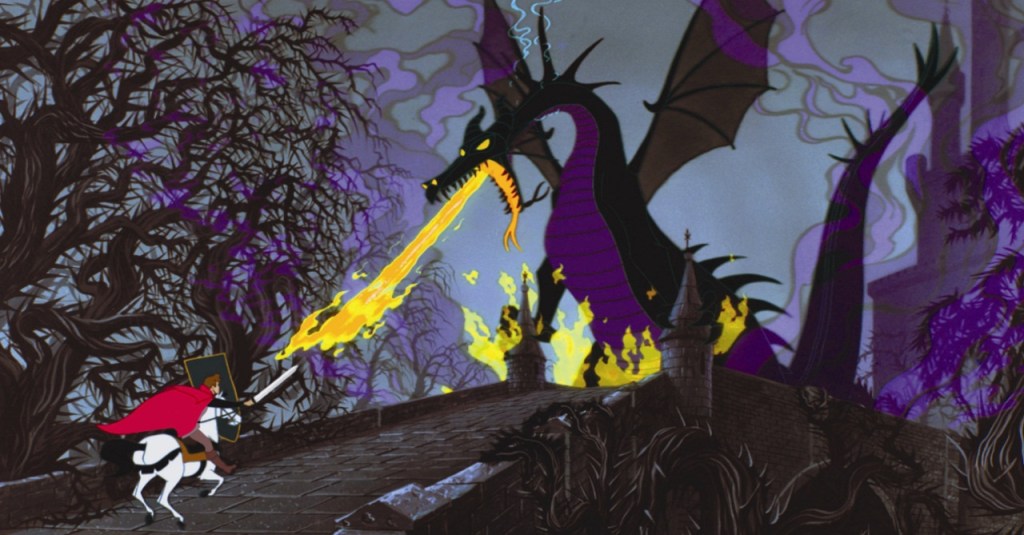
These creatures are often found in these transitional, or “liminal” areas.

Monsters like Alioth, Smaug and Maleficent serve as agents of chaos and destruction. Others like Fluffy and the Sphinx are more domesticated, serving as guardians. Gargoyles actually line the exterior of some churches to represent spiritual guardianship. And yet others can serve as helpful mediators and ambassadors.

The common thread for all of these however is twofold. They occupy these liminal spaces between where the protagonist in a story stands now and what’s next, for better or worse. And their features seem to defy all the categories we have from normal everyday life.

It’s this exact paradigm that causes children to fear monsters in dark rooms. What does happen next? “What if there are monsters?”

Angels as Mediators

After the fall in Genesis 3, cherubim are assigned the role of guarding the garden. The cherubim and seraphim were located within the temple in the Holy of Holies delineating the space where only God’s presence is located from the outer parts of the Temple. Angels move back and forth between heaven and earth by the ladder in Jacob’s dream.

And maybe most surprisingly is how often they met people in the wilderness, at their low points, when God would use these interactions to mold them for what comes after the wilderness. Jacob, Moses, Elijah, and yes, even Jesus too during his temptation in the wilderness were all ministered to by angels.

Angels are consistently used by God as messengers and ambassadors to encourage and support many who are lost in the wilderness of life.

So what do we make of this?

Union, Not Just Mediation

The Bible’s more apocalyptic books like Ezekiel and Revelation typically use exaggerated symbology to point to theological truths through visions as opposed to literally describing how things appear. The imagery functions similarly to the spork scene in WALL-E. As such, I tend to think the descriptions of angels with a mixture of faces and covered in eyes point more to their role and function as God’s agents in our world.

Throughout the Bible, angels are often encountered at the sacred thresholds of life. In those valleys and challenging seasons of life which present the “wilderness” situations where God has molded many in the past and can also mold us. Angels can help mediate heaven and earth for us in those seasons, even if we are unaware of their presence.

But this pattern also points us to Jesus. Fully man yet fully God. A seemingly impossible combination. One that we Christians can spend a lifetime struggling to grasp. And I think that’s okay.

And as we prepare for Easter, we can be reminded, as the author of Hebrews points out, that Jesus was even greater than the angels. Where the angels help mediate heaven and earth, through Jesus’ incarnation, life, death and resurrection he will consummate the union of heaven and earth. For just as WALL-E’s sacrifice of himself yielded the restoration of earth in the movie, Jesus’s sacrifice on the cross provides the bridge between heaven and earth.
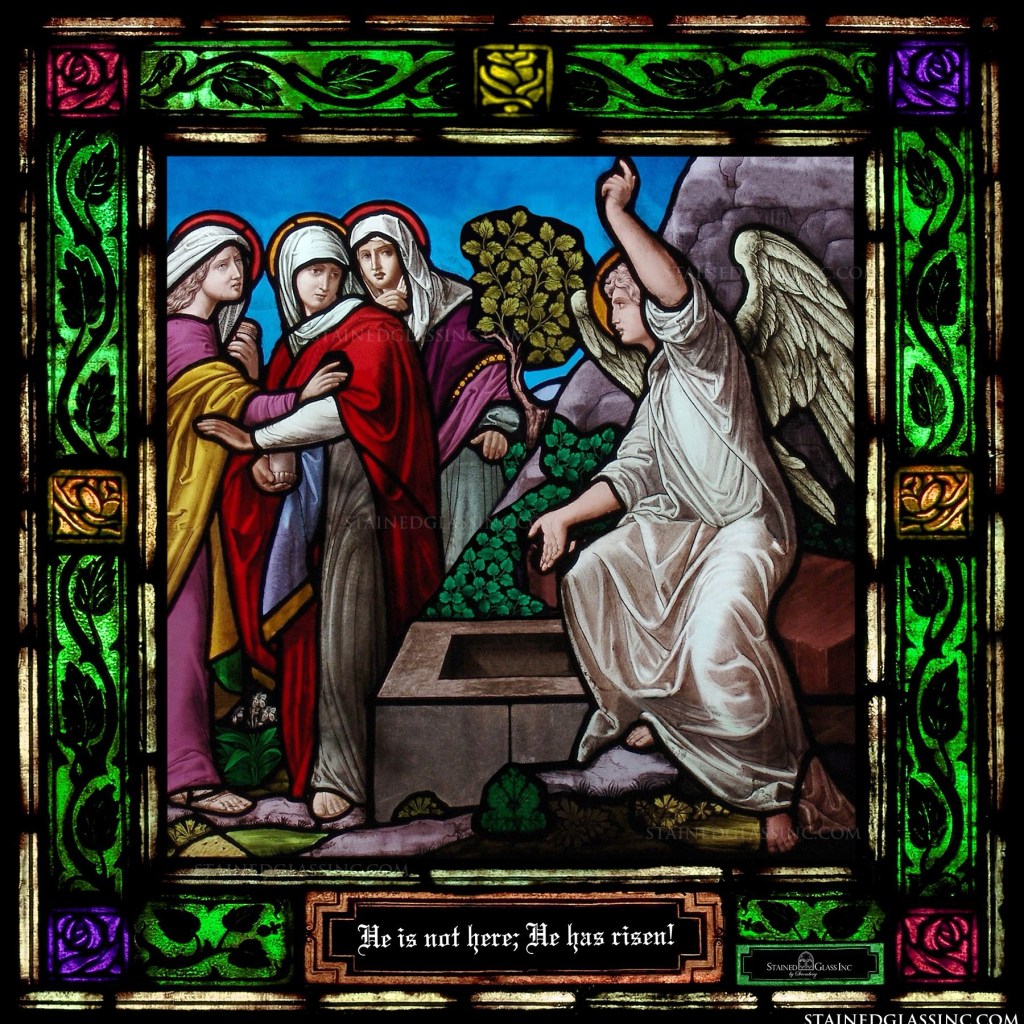
And so when we, kids and adults alike, get scared of the unknown, whether it be potential monsters, the hopelessness of a difficult season, or maybe even interaction with an angel, I think it’s a helpful reminder that God can be found in those places too.

And that by walking through sacred thresholds where heaven and earth meet, with the aid of angels and his Son, he often shapes us for what comes next, in both this age and the one to come.

WALL-E and the Prodigal Son

Beyond its charming love story and the adorable personification of a little trash compacting robot, WALL-E gave its viewers much to meditate on. WALL-E truly is a masterpiece in storytelling. Conveying most of the story with so few words, the story is strikingly simplistic and yet filled with incredible depth.

This 2008 Pixar movie has served as a G-rated version of classic stories like Aldous Huxley’s Brave New World, asking the audience very similar questions. Can wealth and comfort really provide the security and fulfillment we all long for? What are we giving up by trying to escape the difficult realities we are presented with on earth? What does courage really look like? And what exactly is it that makes this little robot so endearing?

But unlike Brave New World, WALL-E presents us with more lighthearted scenes with WALL-E going back to his home as probably the most memorable. We see the WALL-E trying to find a place for his newly found spork, creating a hat out of a trash can lid, and recognizing the beauty of held hands from a scene of “Hello, Dolly!”. And while that scene gives us a thorough introduction to what motivates this little robot, I don’t think we have to look much further than the first few minutes to get a glimpse into one of the most important and overlooked parts of the story.

I don’t think it’s a coincidence that just before zooming in on a trash covered Earth, they were finishing the following lyrics from the song “Put On Your Sunday Clothes.”

There’s a slick town, Barnaby… Out there. Full of shine and full of sparkle. Close your eyes and see it glisten, Barnaby.”

The stark contrast is immediately drawn between the “shine” and “sparkle” we would envision for an idyllic world and the reality of a trash-covered Earth. Between the world we would all love to live in, like the Axiom ship the humans escape on, and the littered world this fictitious group of people decided to leave behind. Between the world we all would want to leave for future generations and the world this lonely robot is left to inhabit.

And yet, if we were to place ourselves alone in this polluted and toxic world like this, would any of us have the attitude WALL-E has? Would we be listening to music and humming along while working what to many of us would seem like a meaningless job like compacting little cubes of trash all day? Would we be content with such little impact and without praise from others?

Or would we be looking to escape that reality like the humans in the movie? To fill our stomachs to the full? To spend our time binge-watching more TV shows than we could ever watch in a lifetime? Trying to escape reality through whatever food, sex, drugs, alcohol, or virtual realities we can get our hands on?

If this robot was disgruntled, would he have nearly the appeal that he has had on people, or is it in fact his pleasantness in spite of the circumstances that makes him so alluring?

And yet, WALL-E presents us with another conundrum to consider. WALL-E is the only robot in the movie that from the beginning of the story seems to have transcended his programming. And he’s also the only WALL-E robot still functioning on Earth with all others losing functionality after 700+ years of hard work. All other robots are stuck doing routine functions without really giving consideration to why they do what they do. I don’t think this is a coincidence either, but rather an important facet of the story.

WALL-E, by the end of the movie helps both groups realize what they are lacking. He is such a powerful character because he serves as the unassuming savior of the story. A robot going about his business even to the point of his near destruction for love and for purpose. And this story is so poignant and moving because it invites us to ask how do we respond to watching such heroism and courage. And it’s this aspect of the movie that reminds me of one of my favorite passages in the Bible.

The passage is found in Luke 15 and it’s the parable of the prodigal son. So many of us are familiar with the story of the younger son. The younger asks for his share of the father’s inheritance. He essentially asks his father to liquidate half his wealth because he couldn’t wait for his father to pass away and acquire his share of his wealth then. Then he goes and wastes his inheritance on frivolous things only to find himself in trouble when a severe famine occurs.

He returns to his father only hoping that he would be merciful enough to allow him to work in his garden again. He does not expect to be received as his son again after what he did. But expects to be received like an average laborer, to earn a living just so he does not starve. But instead the younger son is welcomed home with open arms from the father and a feast. The story demonstrates that God is always open and ready to receive the repentant sinner. A story that fell therapeutically on the ears of the downtrodden, sinful, lost and forgotten in society both then and today.

But Jesus also continues with the story of the older son, which is often forgotten and discussed far less often. And this part of the story is intended for a second group in his audience. It’s the story of a son who worked in the garden, never asked for his father’s inheritance, and appeared to be doing everything right. Yet he was bitter when the younger son was received by the father so joyfully. The father asks the older son why he would not come inside for the party to celebrate the return of his younger brother, but the older son remained resentful.

“Look! All these years I’ve been slaving for you and never disobeyed your orders. Yet you never gave me even a young goat so I could celebrate with my friends. But when this son of yours who has squandered your property with prostitutes comes home, you kill the fattened calf for him!”

For a son who appeared to be doing everything right, and laboring away for his father, he was quite indignant and certainly not appreciative for the situation he was in. Despite being in the father’s garden, he was not happy, let alone content. Quite an interesting difference presented in these two brothers.

The parable of the prodigal son is an interesting one because it provides two examples of how not to live, but in a way insinuates that there is a third way of living. A life that enjoys working in the Father’s garden and is ready to invite others to join in.

WALL-E captivates me in many of the same ways that Jesus does. To the casual observer WALL-E’s job would appear to be without meaning of significance. He’s a trash collecting robot. There are far more inspiring things one could do for an occupation. And yet, he joyfully goes about his work diligently and when an opportunity arises for him to carry out a significant mission and return the lost plant to Eve, he’s prepared to do it. Through his actions he invites the other humans and robots to step outside of their comforts and their programming to see there are more meaningful things in life to pursue. He helps them transcend who they were to become who they could be.

Jesus lived his life in the very same manner. Whether we have tried to find an escape from the harsh realities of life through the dulling of our senses and the gratification of our fantasies or mustered all our strength to begrudgingly work through life, Jesus has something to offer us. A model of a willfully laborious life given sacrificially, even to the point of death and ridicule, all so that we can see there’s abundant life to be found living in this same manner. That there is a different way to live that may seem counter intuitive to the casual observer, but when acted upon, truly can provide life in its fullest.

We can get up to work each day in a world that is often missing its “shine” and “sparkle” and go about our little jobs even when they appear to have such little meaning. We can labor in the Father’s garden, being joyful for the opportunities that come our way, and excited for the day when others may decide to come back or join us in the labor. And who knows, maybe we find a little rest in the midst of the work. A message maybe as relevant today as it ever has been.

“Come to me, all you who are weary and burdened, and I will give you rest. Take my yoke upon you and learn from me, for I am gentle and humble in heart, and you will find rest for your souls. For my yoke is easy and my burden is light.” – Matthew 11:28-30 –

So yeah, WALL-E is a beautiful and thought-provoking movie for many good reasons. But in my opinion, what makes it most influential, are the aspects that most echo the gospel. A life lived so radically that it brings life to those around them.