Radiator Springs and Other Forgotten Places

“Also, seek the peace and prosperity of the city to which I have carried you into exile. Pray to the Lord for it, because if it prospers, you too will prosper.” Jeremiah 29:7

One of the least discussed plights facing our culture today has gone unnoticed – the neglect of place.

When the location where you live feels forgotten, all sorts of unfortunate issues arise. The people by extension likewise feel overlooked. The economic base fades. The third places (social settings beyond home and work/school) vanish. Hope disappears and despair fills the voids. Boarded-up buildings and despair often set the stage for the fiercest political movements of both the left and right.

Setting aside politics for a second, it’s important to note that this very dynamic is what J.D. Vance wrote in his bestseller Hillbilly Elegy. Despite its focus predominantly on the issues plaguing Middletown, Ohio, the implication was that his experiences in this one town were representative of the experiences of wide swaths of the population.

The shift of industry to other countries, while arguably being a net economic benefit to the country on the whole, left in its wake many towns with no more economic opportunity, and a host of issues gave rise. Issues that he and his family had to contend with and that many readers could relate to.

This book came out before Vance’s move to politics, and was actually well received early on by those on both sides of the political aisle for explaining the undercurrents that gave rise to Trump’s initial election.

But I think this exact issue can also be observed in communities that tend to vote for Democrats as well. It’s hard for me not to hear the voices of many in poor parts of cities and other urbanized areas that likewise feel unseen and experience many of the same hardships, even if they manifest in slightly different ways.

And I actually think there’s more held in common for this exact reason than many are willing to admit. That maybe these current political movements share a similar root cause of forgotten places.

Accidental Community Destruction

Domicide, the destruction of communities and homes is sometimes intentionally done. War, genocide, exile… It can be purposefully used as punishment.

But it doesn’t always take that form. The loss of home, whether deliberate or by accident still hurts. And it’s the latter, where sometimes other priorities outweighed that of preserving communities, that most often goes unnoticed.

That’s why I found it so fascinating that a kids’ movie would provide one of the best artistic expressions of this very phenomenon.

That scene in the movie Cars showed how the construction of the highway, while more efficient for travel than the prior road network, had essentially starved the little town of Radiator Springs of all traffic. The once lively and bustling town was now a withered shell of its former self.

Was anything done maliciously to hurt the residents of Radiator Springs? No, this was a cost that came with the construction of the highway. As is the case with most new technologies or societal changes, there are those who benefit and those who don’t. That’s not to say this is necessarily a zero-sum game. Nor is it always abundantly clear beforehand who the winners and losers will be.

But as is always the case, there’s no such thing as a free lunch.

How many towns feel the same today? We’re surrounded by many. For every success story like Bethlehem and Easton’s revivals over the past couple of decades (largely due to proximity to major highways and other cities), there are probably hundreds in Appalachia alone that are still dying. Why is that?

Modern Society’s Devaluing of Place

Modern society struggles with this in a few respects. Many ways that prior generations and cultures did not. Here are a few I’ve noticed.

Technology and prosperity have made it more possible than ever to travel, relocate, or simply choose to isolate. And so while past generations to some degree were “forced” to remain a part of their community, today it is far easier to choose one’s own path, which despite having some appealing and even good elements, also carries the risk of isolation. The end result though is that permanence and consistency are far less common today.

Second, success for many young adults is framed as leaving as opposed to staying. Leaving to go to college. Leaving to go to more urbanized areas where pay is typically better. When these students do not return to their hometowns we are depriving these smaller communities of those who could have been doctors, teachers, and active participants in their communities. Staying is rarely celebrated. It’s hard to see how all the shuffling we have done of young adults has not played some role in the social upheaval we observe.

And while I tend to lean libertarian myself, I have to admit that markets can be a source of instability for communities. Does that mean markets should be abandoned? I’m certainly not of that opinion. But we have to recognize the trade offs that come with them, and some of those trade offs can be the undermining of towns.

And while there are many more issues that could be listed, one more I think that’s worth noting is not necessarily an issue isolated to modern culture. It’s one that I believe has been fairly universal throughout human history. That class divisions very often coincide with locale and are so so difficult to overcome.

Lightning McQueen and Mater

It’s part of what makes Cars such a great story. The celebrity race car is forced to condescend and live alongside cars very different from himself. This is made most apparent through the character of Mater, a highbilly pickup truck who is from a completely different social setting. It is by Lightning McQueen’s active care for the town of Radiator Springs that he finds a far better life. And Radiator Springs is the place that facilitates the character development.
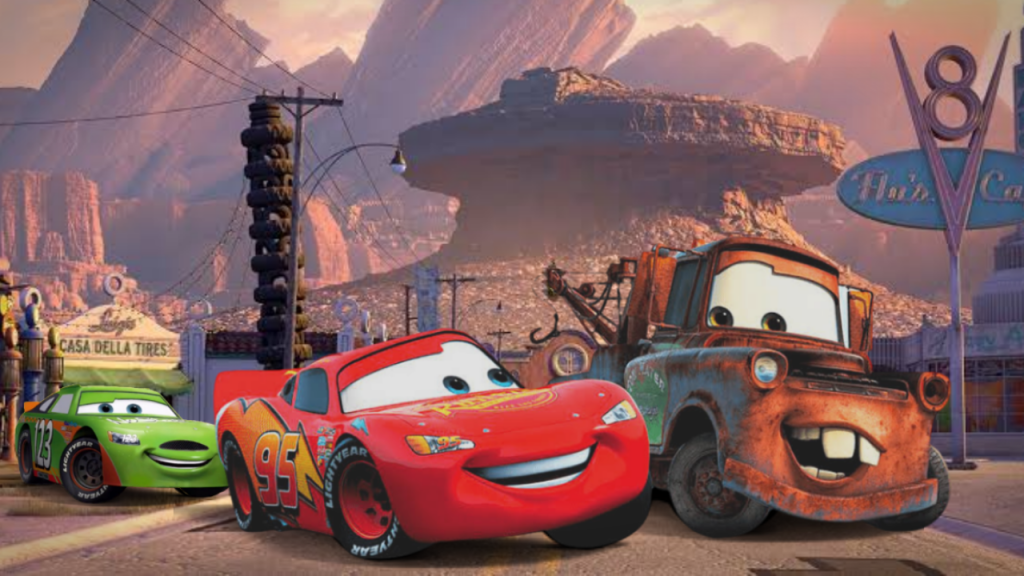
Having a stable community and home matters. And while Radiator Springs was able to be revived by Lightning McQueen’s mere presence, the model of using celebrities or being blessed by the proximity of major highways aren’t sustainable answers for the vast majority of our towns and cities.

That’s why the verse from Jeremiah is so moving. He’s directing a people who have just been taken into exile to care for the city they now live in. They aren’t in Jerusalem anymore. They have been scattered from their homeland by the Babylonians. And yet, Jeremiah encourages them to seek the prosperity of the city to which God has carried them.

So what does that mean for us? To seek the prosperity of the communities we live within will require making some sacrifices of time, money and effort to get connected. Possibly choosing to stay at a job longer and resisting the urge to optimize our personal resume and pay to allow deep roots to form. Choosing to be around other people who may be difficult to connect with instead of taking the “easier” route of isolating. And maybe deciding to take the longer trip on the backroads to pay a visit to those overlooked communities, both literally and figuratively.

For by doing this I think we can all follow a similar character arc to that of Lightning McQueen. A broadening of our perspective to see beyond our own personal endeavors and the potential blessing that can be brought to those around us. Hopefully similar revivals to the places we call home, much like we saw with Radiator Springs.

For they don’t revive by themselves. They are saved by those who stay, even when it’s difficult, and care for them.

Why We Shouldn’t Throw Away Fairy Tales

One of the things I most look forward to as a father will be the opportunity to read stories to my son. Morgan and I have already started the habit of rocking him to sleep while reading books and I am excited for when he’s old enough to really engage with the stories.

For some reason, there’s something about stories that resonates so much with me and maybe that’s the case for you as well. I’m not ashamed to say I’m the type of guy who gets teary-eyed at the end of movies like Up, Wreck-It Ralph, and Toy Story 3. How can you not shed a tear when Carl gives Russell the Ellie badge, when Ralph is sacrificing himself into Diet Coke Mountain, or when Woody, Buzz, Jessie and their friends are all about to be melted in the incinerator and they are locked arm-in-arm facing it together?

These stories don’t have to be animated films though to create these deep feelings. Maybe war films like Saving Private Ryan conjure up similar emotions as you witness their camaraderie and sacrifice. While they aren’t usually my cup of tea, romantic films like The Notebook get people welling with emotion as they see the deep love Allie and Noah share. Or maybe you were feeling emotional when half of our favorite heros from the Marvel Cinematic Universe vanished into dust before our eyes in Avengers: Infinity War. Hopefully no one needed a spoiler alert on that last one!

Maybe the stories that most resonate with you are from literature. I remember the shock when reading Harry Potter and the scenes when Dumbledore and Snape died. As with any great piece of fictional writing, these were characters I had come to know and identify with and to read of their deaths was to in some way experience that myself.

These experiences drive us go to the movies and read books. These stories seem to point to certain values or ideals that resonate with so many of us. Even when we can’t articulate into words what exactly in the story resonates with us, their impact is felt. In a way, these fictional stories, although they are not necessarily true historically, abstract out themes and concepts that are incredibly true to our real-life experiences as human beings.

What’s interesting is that lately there seems to have been more dialogue about Disney’s princess stories. Now I’m not going to argue that the Disney version of these older stories are the epitome of fairy tales, but I do think that they are the ones we collectively are the most familiar with.

Keira Knightley, an actress probably most commonly known for her role in the Pirates of the Caribbean, recently said on Ellen that the movies Cinderella and The Little Mermaid are banned in her house because of their depiction of women. Her comments sparked some discussion with people voicing both support and opposition to her thoughts. I don’t think she’s alone in holding these opinions.

Even a scene in Ralph Breaks the Internet, featuring the Disney princesses, which I will admit I found to be humorous (and still do), poked fun at the past princess stories that Disney had created and as stated in news headlines “spoofed the Disney Princess Industrial Complex” and was a “moment that mattered.” A scene like this would not have happened if Disney did not realize this was a widely shared sentiment.

As funny and creative as that scene is, the question remains… Is what this scene portrays about these older stories true? These movies have been mostly acclaimed since they were released. The question is then what changed recently? Are we better people today that we can look back on these stories and see them for what they really are? Or do we have a different and maybe inaccurate perspective on what these stories were really meant to convey?

Take Sleeping Beauty for instance. This is a story that could very easily be construed as “a woman is in trouble and needs a big strong man to save her.” There is the obvious plot line of being willing to fight for true love, which I don’t think is necessarily a bad thing to teach. However, I think Sleeping Beauty contains a strong lesson on parenting.

Aurora’s (Sleeping Beauty) parents, did not invite Maleficent to Sleeping Beauty’s christening. In essence, her parents were unwilling to allow anything that could be potentially dangerous into her life, which I think we all know, whether or not we want to admit it, is impossible to do.

They were then confronted by Maleficent and issued a curse that on her 16th birthday she would die from pricking her finger on the spindle of a spinning wheel. Her parents then decided that in order to protect their daughter, they would burn every spinning wheel in the kingdom and send her away to live with the three fairies. They decided to keep her secluded from all spinning wheels, which I think is a metaphor for all potential things that they believed could cause her harm. Interestingly though, they couldn’t keep her from pricking her finger on the spinning wheel as Maleficent still found her way to Aurora.

There is so much more to this story that could be extracted. We could learn from the isolation of Maleficent contrasted with the family and community of all the other characters. Or we could compare Prince Phillip’s courage to the fear of Aurora’s father. Or how about the importance of strong female supporting characters (which is present in a lot of these fairy tales) around Aurora and the importance that mentorship has in a young person’s life.

In Beauty and the Beast, Belle is responsible for redeeming the Beast and is by far the most admirable of all the characters. Gaston, represents the epitome of the self-aggrandizing jerk that I hope we all agree no man should be emulating. Ariel, Pocahontas, and Mulan all represent incredibly strong and courageous women in their stories. Cinderella is a great demonstration of good things coming to those who are diligent with their responsibilities and that is a great lesson for men and women of all ages.

Disney adapted these fairy tales that had been passed down for several centuries across cultures. There are reasons these stories were shared for so long and that Disney was willing to adapt them into films. You can compare it to evolution and survival of the fittest. These stories that have been handed down to us have been maintained because they speak to some of the deepest virtues and values that we have come to embrace as a culture better than other stories that have been told. Yes, they may be imperfect stories, and worthy of critique, but I think we need to be careful about thinking we are so different or (even worse) better, than our ancestors and that they cannot through their stories speak into our lives.

For the same reason that not every movie and story made today will be remembered 100 years from now, not all stories of old have been passed down by our ancestors to us. There’s a reason Lion King will be remembered and not The Emoji Movie or why books like The Lord of the Rings and Harry Potter will last instead of The Twilight series.
I’m not saying we can’t joke about these movies. I just think we need to carefully watch what we joke about, because it very easily and quickly be adopted as “truth.”

It feels like there has been a growing disdain or casual indifference to most of what we inherit. It’s almost like we’ve become so preoccupied with the mistakes of our ancestors that we are now in the process of trying to clean the slate of their influences in our lives, which often manifests as the throwing away of everything that they created, valued, and passed down to us, including their stories. We view these older stories as antiquated, irrelevant, or (even worse) oppressive in the themes they portray.

However, I think there is a real danger in this interpretation of these stories and as a result the dismissing of them. Reducing each of these stories down to the plot line of “a woman is in trouble and needs a big strong man to save her” or fill in the blanks “_ is oppressed and needs the oppressor __ to save them” is stripping these stories of their real value and intended message.

I’m not saying there’s never been oppression, nor am I saying that these stories are perfect in the stories that they tell. However, I think we will be giving up on some of the best stories we have to learn from and discrediting the significance of what our ancestors learned if we just throw them away. I believe that the degree to which we decide to give critical thought to the themes of these stories is the degree to which we will draw benefit from them. Yes, we can still criticize these stories, but to discard them could be like throwing out the baby with the bathwater. And if that’s the precedence we set, why should we expect our descendants to want to hear any of the stories we tell?

C.S. Lewis once said, “But some day you will be old enough to start reading fairy tales again.

I hope we can continue to give these stories a chance to teach us and consider why they have been deemed valuable for so long. I think they have so much to teach not just my son, but me as well because they have been shared with so many people across time and have resonated with so many. I don’t want to be a parent, like Aurora’s father, that in an effort to shield my son from all of the potential malevolence in the world keeps him from living his life. Similarly , I think it’s much better to engage with these stories and be able to learn through the process, then to not even give them a chance.

Let’s be careful about what we decide to throw out  because our ancestors are worth listening to and we may be getting rid of the very best they were trying to share with us.