Angels, Sporks and the Sacred Thresholds of Life

“But Daddy, what if there are monsters?”

Our two oldest have been frequently asking this question. Almost always when encouraged to go on their own to another, usually unlit, room in the house to retrieve something of need.

It’s pretty fascinating how universal this fear of monsters is among kids. Certainly the result of a combination of learned behaviors and deeply embedded instincts. Instincts needed for our ancestors to survive in the wilderness. Much like a house cat’s reflex when it mistakes a cucumber for a snake out of the corner of its eye.

And it got me thinking about something in the Bible that I’ve struggled to understand and that also happens to be considered frightening at times… Angels.

Despite the sanitized depiction of them in renaissance artwork and Christian merchandise, they are described in an assortment of ways in the Bible, with some actually sounding fairly… well… frightening.
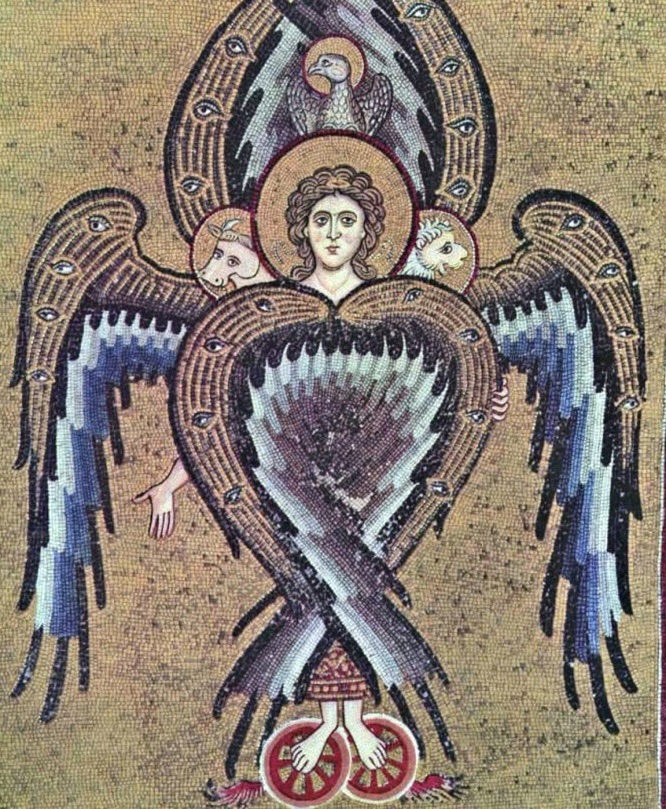
Yes, in Genesis Lot and Abraham are visited by angels that appeared just like humans. And the writer of Hebrews acknowledges Christians may unknowingly interact with them. But in other places we see them described as multi-winged creatures (Isaiah). Other descriptions are of some type of hybrid creature with the four faces of a human, eagle, lion and ox (Ezekiel). And others where it says they are covered in eyes (Revelation).

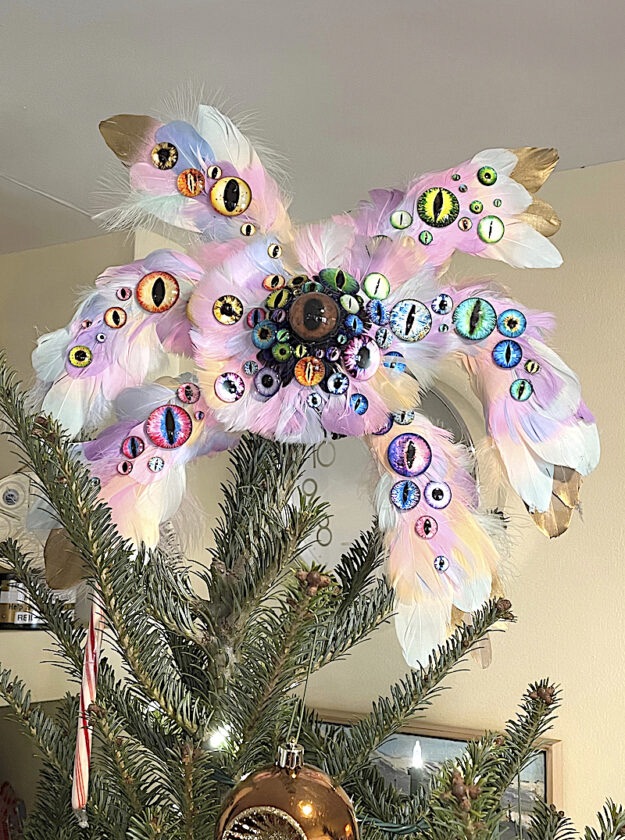
It reminds me of someone’s joke that they made a biblically accurate angel tree topper. This is nightmare fuel.
Throughout the Gospels, the accounts of people’s interactions with angels at both Jesus’ birth and his resurrection are consistently ones of fear and angels reassuring them to not be afraid.

It took me a while to realize how many passages describe angels far differently than the harmless porcelain cherubs that adorn many yards and curio cabinets. Once I did however, these passages started to make more sense.

And there may be no better time to explore this topic than the lead up to Easter, which features a story involving angels at the empty tomb.

WALL-E and the Spork

Roughly six years ago I wrote a post about WALL-E exemplifying a messianic figure in modern storytelling. The plot has many parallels with Jesus’ parable of the prodigal sons and similarly invites viewers to a different way of approaching life. To this day, that remains one of the most enjoyable posts to write.

Since then I’ve realized there’s far more gems that can be mined from this cinematic masterpiece. And one in particular that I think can help explain the role of angels.

There’s a short scene towards the beginning of the film that, up until recently, I wrote off as strictly comic relief. It’s the scene where he is sorting his treasures from the day and cannot figure out how to categorize the spork he found.

Unable to fit the spork neatly into either of his spoon and fork collections, WALL-E places it in the middle as a transition between the two. It is a simple scene. No words needed. It is a lighthearted way of depicting the consciousness that has miraculously developed in this trash-compacting robot.
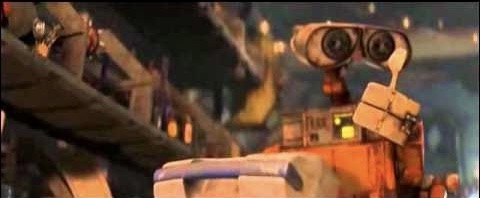
Intentional or not, I think this little scene is a great distillation of the movie’s plot.

Fittingly the spork and WALL-E’s placement of it in this transitional space, represents the place WALL-E occupies within the movie. Sporks are uncanny and unique. They share some features of both forks and spoons but do not fit cleanly into either category.

WALL-E is a type of hybrid himself. A robot capable of human emotions. A hardworking trash collector who gazes at the stars. And as such he mediates the gap between humans and robots.

Just as WALL‑E recognizes the spork cannot belong exclusively in one category, Scripture often presents beings that occupy the space between worlds. The spork scene playfully mirrors the same tension that angels embody — creatures that bridge heaven and earth, matter and spirit, fear and reassurance.

Hybrids, Monsters and Mediators

Hybrids and monsters often play similar roles in stories. Fluffy, the large three-headed dog in Harry Potter, guards the door to the Sorcerer’s Stone. Alioth, the chaos monster from the TV show Loki, guards the End of Time from all other timelines. The Sphinx in Egyptian and Greek mythology guards locations of divinity. Even dragons (traditionally understood as mixtures of serpents, birds and cats), like Smaug from The Hobbit or Maleficent from Sleeping Beauty guard treasure, castles or princesses.
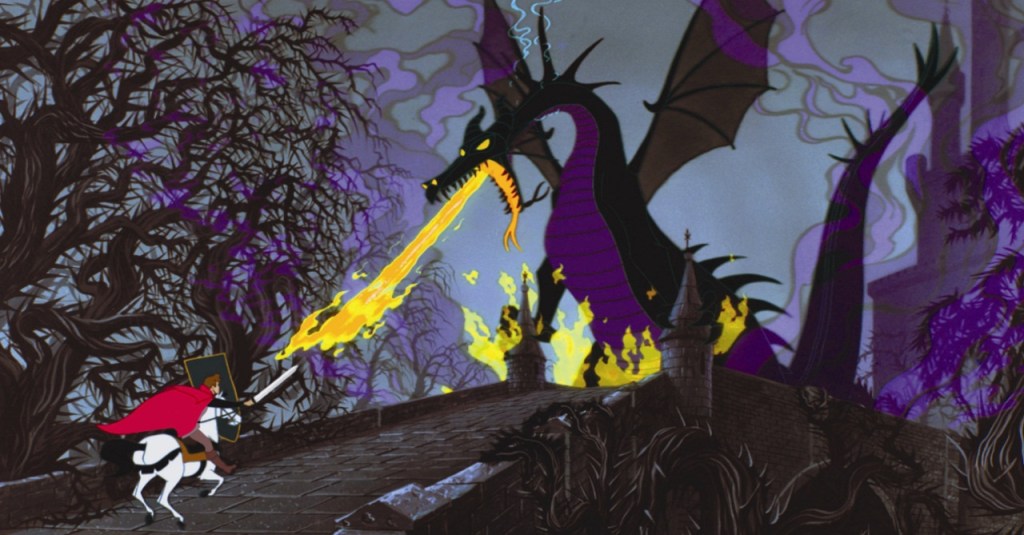
These creatures are often found in these transitional, or “liminal” areas.

Monsters like Alioth, Smaug and Maleficent serve as agents of chaos and destruction. Others like Fluffy and the Sphinx are more domesticated, serving as guardians. Gargoyles actually line the exterior of some churches to represent spiritual guardianship. And yet others can serve as helpful mediators and ambassadors.

The common thread for all of these however is twofold. They occupy these liminal spaces between where the protagonist in a story stands now and what’s next, for better or worse. And their features seem to defy all the categories we have from normal everyday life.

It’s this exact paradigm that causes children to fear monsters in dark rooms. What does happen next? “What if there are monsters?”

Angels as Mediators

After the fall in Genesis 3, cherubim are assigned the role of guarding the garden. The cherubim and seraphim were located within the temple in the Holy of Holies delineating the space where only God’s presence is located from the outer parts of the Temple. Angels move back and forth between heaven and earth by the ladder in Jacob’s dream.

And maybe most surprisingly is how often they met people in the wilderness, at their low points, when God would use these interactions to mold them for what comes after the wilderness. Jacob, Moses, Elijah, and yes, even Jesus too during his temptation in the wilderness were all ministered to by angels.

Angels are consistently used by God as messengers and ambassadors to encourage and support many who are lost in the wilderness of life.

So what do we make of this?

Union, Not Just Mediation

The Bible’s more apocalyptic books like Ezekiel and Revelation typically use exaggerated symbology to point to theological truths through visions as opposed to literally describing how things appear. The imagery functions similarly to the spork scene in WALL-E. As such, I tend to think the descriptions of angels with a mixture of faces and covered in eyes point more to their role and function as God’s agents in our world.

Throughout the Bible, angels are often encountered at the sacred thresholds of life. In those valleys and challenging seasons of life which present the “wilderness” situations where God has molded many in the past and can also mold us. Angels can help mediate heaven and earth for us in those seasons, even if we are unaware of their presence.

But this pattern also points us to Jesus. Fully man yet fully God. A seemingly impossible combination. One that we Christians can spend a lifetime struggling to grasp. And I think that’s okay.

And as we prepare for Easter, we can be reminded, as the author of Hebrews points out, that Jesus was even greater than the angels. Where the angels help mediate heaven and earth, through Jesus’ incarnation, life, death and resurrection he will consummate the union of heaven and earth. For just as WALL-E’s sacrifice of himself yielded the restoration of earth in the movie, Jesus’s sacrifice on the cross provides the bridge between heaven and earth.
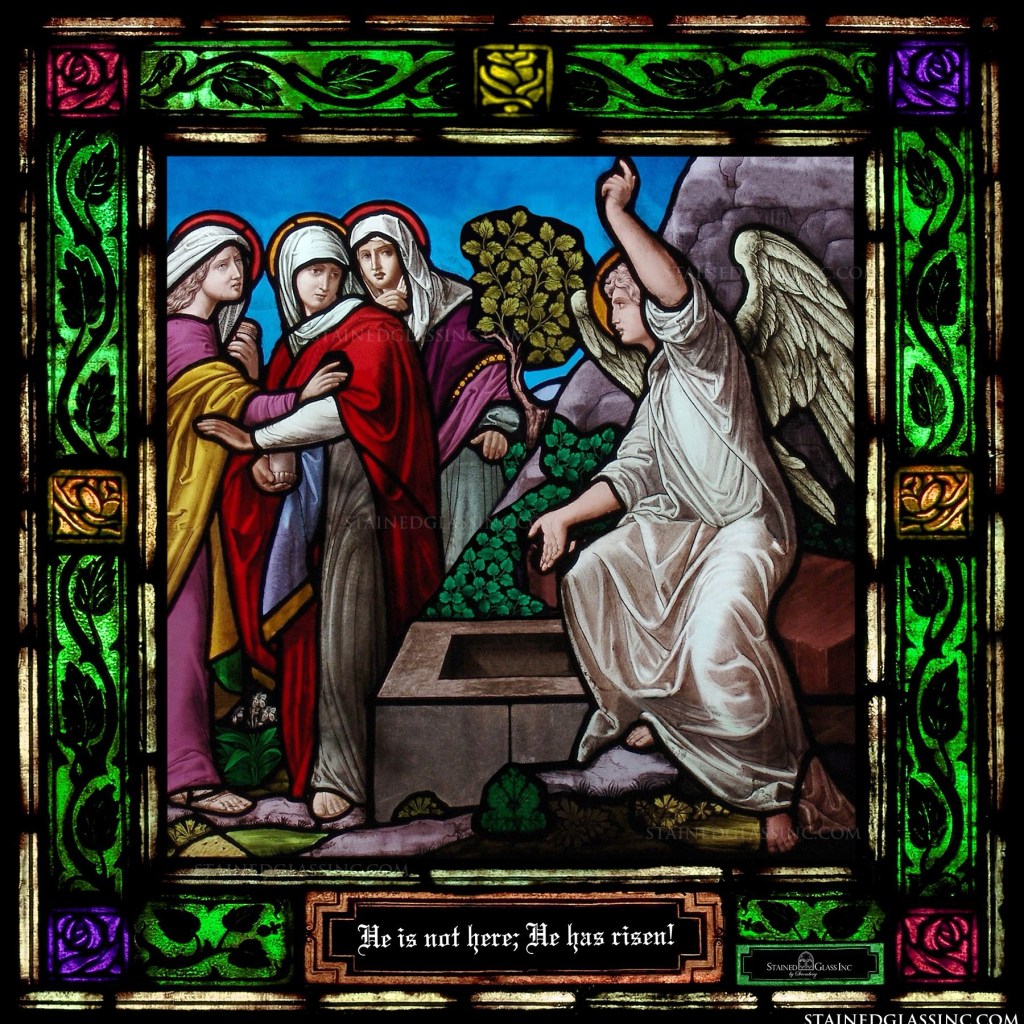
And so when we, kids and adults alike, get scared of the unknown, whether it be potential monsters, the hopelessness of a difficult season, or maybe even interaction with an angel, I think it’s a helpful reminder that God can be found in those places too.

And that by walking through sacred thresholds where heaven and earth meet, with the aid of angels and his Son, he often shapes us for what comes next, in both this age and the one to come.
The Predictability of Spirits

I never knew before having kids that I would one day become a bubble solution connoisseur. After a few run-ins with poor quality bubble solution and the tears that ensued (Tristan’s, not mine to clarify) I’ve been taking notes on which brands perform the best and asking family and friends alike who their dealers are for the best performers. You learn quickly with kids there are few things more deflating than going to blow bubbles and nothing coming out of the wand. As a parent you have to be prepared and stocked up with the highest quality solutions. And for those that are wondering, Sun Burst, Fubbles and Disney brand bubble solutions all seem to take the prize.

Well over this past summer I think we probably used at least a few gallons worth of bubble solution. That means watching our kids blow A LOT of bubbles. And I began to notice something…

While the wind may carry all of them in a general direction, the individual flight patterns of each varies considerably. Up, down, left and right, forwards and backwards. Almost always following the prevailing wind direction but occasionally going against it too. You can’t anticipate with certainty which way they would go next.

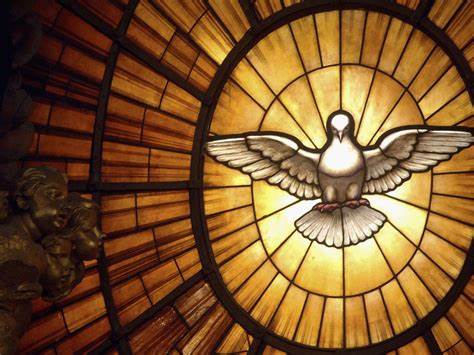
And it reminded me of this interesting verse from John 3:8. “The wind blows wherever it pleases. You hear its sound, but you cannot tell where it comes from or where it is going. So it is with everyone born of the Spirit.”

wind, spirit and breath

The original Greek words for “wind” and Spirit” used in this verse are pneuma and pneumatos respectively. I’m no scholar on ancient languages, but we can see that these two words are clearly related in the original language. In fact in both the Old Testament and New Testament, the words wind, spirit and breath are, as far as I know, almost always used interchangeably. While we see them as being distinct from one another, our ancestors saw them as synonymous.

Let’s consider school spirit. It’s not a material object you can touch, move, or see with your eyes. It cannot be reduced to atoms bouncing off one another. It cannot be modeled by empirical formulations. And it isn’t bound by the laws of physics. Yet, I think all would agree it exists. School spirit animates students and teachers alike. It has the ability to breathe life into kids. It can move through a body of students much like the wind.

It’s why the word spirit shares the same root as words like inspire (“to give breath”), respire (“to breathe again”), and conspire (“to breathe together”). We still have remnants in our language of a former way of seeing the world. A way of perceiving that we still see in part.

Or consider the wind motif that is still in many of our movies. It often represents this subtle force that moves characters and pushes the plotline along. It’s found all throughout Disney movies like The Lion King, Frozen II, and Pocahontas. It’s difficult to articulate the exact purpose wind plays within a story, yet we all intuitively understand its role. Here’s a scene from the Lion King that captures that essence beautifully.

Much in the same way, we can intuitively understand how spirits govern the actions of individuals, schools, communities, families, and entire nations for good or for bad. Yet, they often go unseen and unrecognized just like the wind unless, like Rafiki, we’re attuned to discerning them.

the social sciences and the discernment of spirits

Recently I have started taking interest in topics pertaining to the social sciences. Personality disorders, counseling and therapy, mental health, family systems, the rise and fall of ideologies, religions and nations… it’s all relevant to the social sciences.

The social sciences is a field of study I would have scoffed at in my high school and college days for being something of far less value than the hard sciences. And yet, here I am a bit older and realizing just how crucial these studies are and the value they can provide when done well.

What is so baffling is that you begin to see that the behavior of groups start to follow patterns in a similar fashion to the traditional sciences like biology, physics, and chemistry. Political factions, dysfunctional families, churches, work environments, and even the lives of individuals tend to play themselves out in patterns that those in the social sciences can track and monitor with relative predictive ability. In many ways the social sciences have helped elucidate what has long been considered opaque. One could say what was once considered the unpredictability of spirits, has to to a large extent with the help of modern social sciences become predictable.

And yet, I can’t help but notice that more often than not the consensus in the social sciences is regarding that which is pathological. Around how to live the good life, it seems very much that the jury is still out. It’s easier to identify addiction, personality disorders, dysfunction, cults, or what constitutes something like poor school spirit than the alternative. It’s easier in many ways for modern movie makers to depict villains than it is to create an engaging hero. It’s easier to see where things went wrong than to know how to fix them let alone articulate what the ideal is. And I think this is one of the points Jesus is trying to express to Nicodemus, a Pharisee, when he makes the aforementioned statement regarding the necessity of being born of the Spirit.

Jesus and the unpredictable spirit

Pharisees have a bad reputation for being hypocritical. And yet, on the other hand you have to recognize their attempt to live an upright life, even if hypocrisy was at play. In contrast to many around them, they were at least expressing an intent to lead a righteous life.

Nicodemus approaches Jesus for a conversation because he recognizes that Jesus could not perform the miracles he had, if he were not from God. Nicodemus is essentially trying to confirm that they are both laboring for the same team. And yet Jesus responds in a surprising manner. He doesn’t openly embrace Nicodemus but instead states that even Nicodemus still needed to be born again of the Spirit if he wanted to see the Kingdom of God.

Nicodemus, like the Pharisees in general, was predictable, following a set of rules and operating in absolutes. Jesus however lives by a different Spirit, and one that – like the wind – often surprises people. He zigs when others expect him to zag. Much of the gospels can be summarized as different individuals and groups thinking Jesus is on their side, trying to recruit him to their cause only to find out that he operates in ways that confound them. Jesus is, in a way, unpredictable. Not erratic. Unpredictable in the sense that he is able to hold within himself in perfect harmony what we often perceive as conflicting virtues.

And for 2,000 years individuals, families, communities and nations have been altered and animated by this Jesus and the Spirit by which he lived. Part of what makes him such a captivating person is his ability to avoid being compartmentalized. He’s unpredictable like the Spirit that moves him. He sets impossibly high standards yet communes with the sinful. He made bold claims to his own divinity and authority yet he humbled himself to the point of being unjustly hung on a cross. And he chastises his disciples for having little faith yet has the utmost patience and grace.

Even today, Jesus is used as a model for both inclusion and holiness. Both grace and judgement. Both perfect service and kingship. The lion and the lamb. The first and the last.

Yes, the path the Spirit calls us to may be to take the narrow path and avoid the wide path to destruction. Some look at that life and say it’s restrictive. And to a certain extent, yes the prevailing wind is predictable and he does ask us to bear his yoke. But beyond that narrow path are wide open vistas of a life that to many will seem as “unpredictable.” The type of unpredictable that leads to admiration in the greatest of saints, and perfected in this Jesus of Nazareth who has captivated so many for so long. And he offers his Spirit to continue to breathe new life into this world.

What in the World are Spirits?

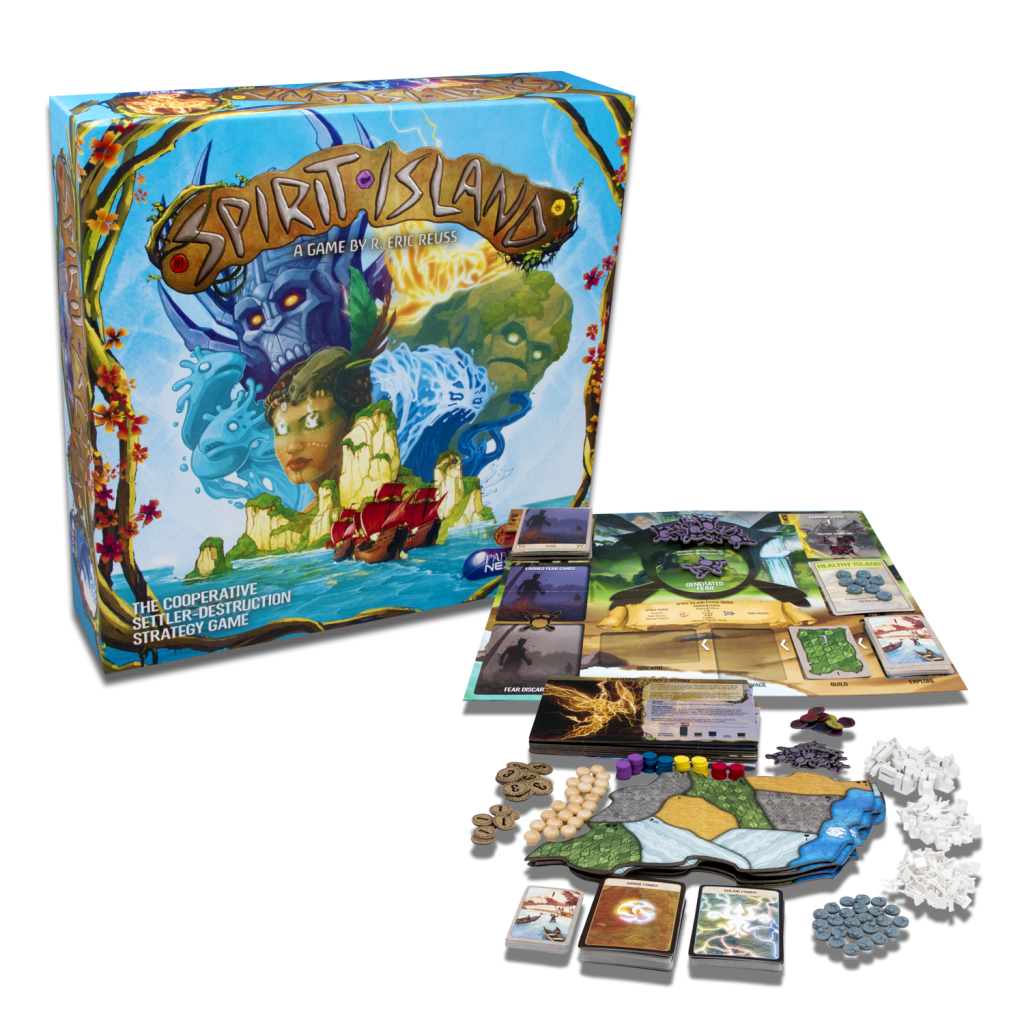
You may not know this, but I’m a bit of a board game enthusiast. Yes, I’m self-aware enough to know I’m a nerd. Ever since being introduced to Dominion in college, I’ve often been searching for newer and even crazier games to play with friends and family. And I have accrued quite a collection over the past few years. Codenames, Avalon, Pandemic, Puerto Rico, you name it… But there’s been one game in particular that I found this past year and boy has it been a joy to play. The game is Spirit Island.

For those of you who have never heard of it, it’s like a mix between Dominion, Pandemic, and Settlers of Catan. Hopefully I didn’t lose all my readers there. It’s the perfect game for millennials because the spirits of the island are teaming up with the island natives to fend off those oppressive European settlers who intend to settle and blight the island. Hopefully I didn’t lose all of you by now because this isn’t a board game review. Although this is one of the highest rated games and I do recommend it!

I think Spirit Island provides illustrations of the widely held views of what spirits were to ancient people. They were those invisible forces of nature that tribal people used to believe in. They were the mysterious entities crafted by our older generations before they had the ability to disprove their existence through science. They were the result of person-hood being assigned to the elements like fire, water, and lightning. These phenomenons that they experienced at the time but could not explain in any other way.

Maybe that’s what our ancestors thought. I’m sure that is what some of them in fact did think. But maybe there’s a bit more to this idea of spirit as well.

If you consider yourself a Christian, you will likely have to ask yourself what to make of the references to spirits within the Bible. And even if you’re not a Christian, you’re probably wondering why those Christians believe in spirits at all? I mean the Holy Spirit is right in the Trinity right? It’s kinda a big deal. Yet, speaking for myself personally, for many years I have avoided giving this question sufficient consideration. Maybe you have as well.

What made me initially want to become a Christian was my adoration for who Jesus was. The way he interacted with people. The wisdom he shared. The love he said he had for me and everyone else when he gave over his life in his execution. Isn’t it adoration that makes us want to follow anyone? I think you would be hard pressed to find someone who doesn’t at least like Jesus. They may not like Christians, and I understand why, but Jesus himself, tends to be a pretty likable figure for many people today.

Yes, some of you may say I was suspending disbelief to put my faith in a man who died and rose again. The resurrection is as much today, as it was then, a mystery and a miracle worthy of debate and doubt. But I was at a point where I decided Jesus was worth following, he was the basket I was willing to put my eggs in, and I would see where it would lead. But I wouldn’t at the time suspend my disbelief on spirits. It just wasn’t something I was giving much thought to at the time.

I have often struggled or avoided this topic of spirits. To me, spirits were similar to the topics of angels and demons, which have unfortunately been represented often in a manner similar to that depicted in The Emperor’s New Groove with an angle and a devil on each shoulder telling you what you should or shouldn’t do. I mean c’mon, it’s clear to everyone today that this was an antiquated way of representing what we now know is our consciousness. It can be reduced to a bunch of synapses and neurons firing at all times.

As an engineer, someone who has spent much time in mathematics and the sciences, how could I believe in these spirits? There’s no proof of them. Nothing materially to show they exist. If it weren’t for their prevalence in the Bible, I probably wouldn’t be wrestling with this question. But here I am. I cannot continue to kick this can down the road. For myself, I needed to give some more thought to the topic. And before that question of who the Holy Spirit is could be answered, I had to ask what in the world spirits even are.

what spirits do we have today?

When you hear the word “spirit” in what context is it often used today? School spirit possibly? Team spirit? The type of spirit associated with Halloween that floats around like a ghost? Wine and spirits? Spirit fingers?

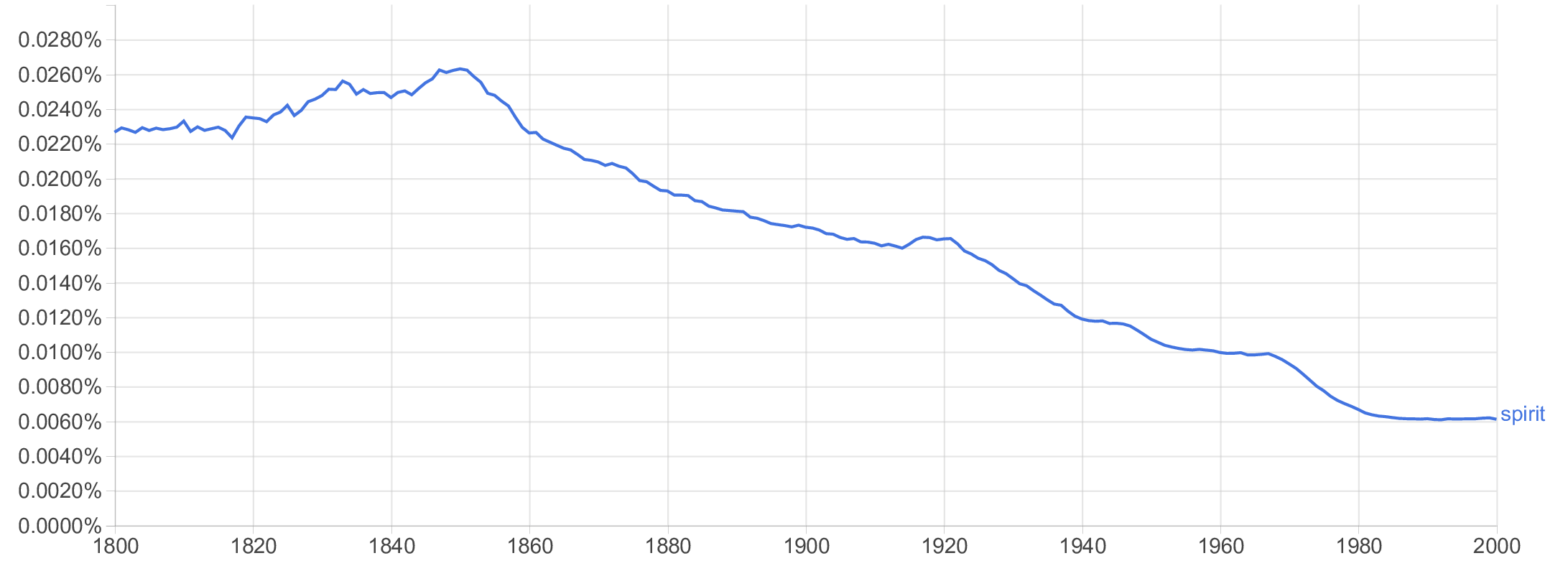
According to Google NGram, the use of the word spirit, not surprisingly, has diminished in use over the past couple centuries. I know I personally don’t use the word often and would often turn my head sideways when I met someone who did. But it’s with this diminished use of the word that I believe there’s been a loss of understanding of what in the world “spirit” even means.

If we consider uses of the word like team spirit and school spirit, I think we can start to get an understanding of what spirits may be. As a Penn State alum, I know full well what school spirit looks like. There are few experiences that compare to that of watching a Penn State football game with over 100,000 other Penn State fans at Beaver Stadium. People screaming their heads off. Giving up their entire Saturday to tailgate, eat food, yell chants, sing the Alma Mater and show up shirtless for a November game. The same school spirit that causes people to lose sleep for days when Joe Paterno was fired. How do you define that school spirit? Is there a scientific way for representing what that school spirit is?

Or consider team spirit. I’m sure many of us have taken part in a team sport, musical ensemble, or worked with a group of people at multiple times in our lives. There are different feelings associated with each group. Maybe times where everyone “gels together” and maybe times where there is clashing and infighting amongst the group. Is there a way that this team spirit can be quantified or measured? I don’t know that it can.

Maybe instead of spirit, we would call these “values”, or more broadly “ideas”. But I think the problem with using the term value or ideas is that we often state that we have values or ideas. Yet Carl Jung, a well-known psychiatrist and psychoanalyst, flipped this notion on its head and said “People don’t have ideas. Ideas have people.” I think this quote is quite relevant for explaining how we experience values, ideas, and even things like team or school spirit.

How responsible are we for adopting these spirits or values? It didn’t take much effort at all for me to hop on the Penn State school spirit train or to want to belong to the teams I have participated in over the years. Do we possess these values or ideas, or could it possibly be that these values, ideas, or, dare I suggest, spirits have us?

Consider the dark side of these so-called spirits. Is it that hard to say that a spirit colonized the people of Germany leading up to and through World War II? We’re not talking about a few people here. We’re talking about millions of people who fell in line with what turned out to be a horrific viewpoint. To them at the time, it was completely rationalized, yet look at the fruit that spirit produced. They were in a sense controlled by what we would term an evil ideology today. This isn’t to absolve individuals of responsibility, but to demonstrate how people can passively, and sometimes actively, absorb these mindsets and ideologies. Is it hard to say that maybe “spirit” would be an appropriate term for this example that is comparable to the team and school spirits we discussed previously?

Or even spirits within families? As children, aren’t we largely passive in our intake of the spirits of the very relationships of our parents, siblings, extended family members and communities? Are there not “spirits” that occupy the interpersonal spaces and relationships that we breathe in every day of our childhoods? When we say “the apple doesn’t fall far from the tree,” can we not see that there is often some momentum within family dynamics that can be difficult to overcome? Can we not ascribe the word “spirit” to this constantly evolving (both positively and negatively) interpersonal space that affects us all?

These spirits aren’t quantifiable. They cannot be measured. They are unseen to the naked eye. But I think we can all admit they exist. We may call them values. We may call them ideologies. We may even give them the name essence. Could their fluidity, invisibility, potency, and ability to (again dare I say) possess people make them worth considering more deeply?

If you followed me to that point, then the next step beyond that would be assigning these spirits personhood. I realize that’s no small leap in assumptions. I’m not sure I’m there yet myself. But when one looks at the spirits that contend for our allegiance in political, familial, and societal spheres of life, I don’t think it’s that far of a stretch to think there may be some credibility to the statement that a spiritual world exists. I was struggling with this idea of spirits before, but I think I’m slowly starting to see that maybe they just look different than the ones in Spirit Island. Maybe, just maybe, there’s some legitimacy to this whole spirit thing.