Self-Control and How to Teach It

“You had one job to do!”

That’s the quote that comes to mind whenever I read this particular verse in Paul’s letter to Titus. It’s a simple verse, but one that causes me to chuckle a bit every time I read it.

“Likewise, urge the younger men to be self-controlled.”

Titus 2:6

HA, Ha, ha…? Wait, what exactly is it that makes this humorous? In fact, it doesn’t seem funny at all.

Well, the humor isn’t exactly evident within the verse itself. But it emerges once the preceding verses are considered.

“But as for you, teach what is consistent with sound doctrine. Tell the older men to be temperate, serious, prudent, and sound in faith, in love, and in endurance.

Likewise, tell the older women to be reverent in behavior, not to be slanderers or slaves to drink; they are to teach what is good, so that they may encourage the young women to love their husbands, to love their children, to be self-controlled, chaste, good managers of the household, kind, being submissive to their husbands, so that the word of God may not be discredited. Likewise urge young men to be self-controlled.

Titus 2:1-6

Paul’s letter seems to indicate that while older men and women and younger women are capable of bearing a lengthy list of responsibilities, younger men are to be entrusted with but one.

You have one job to do. Self-control.

Boy, does it hurt to hear that. Does Paul really think that little of guys like myself? Is Paul correct that young men are uniquely susceptible to this one particular error? Is it fair? Is it true?

Men Uniquely Challenged in Self-Control

Having taught a Sunday school class for middle-school-aged boys, I was always shocked how well all the girls stayed in their seats, while the boys ravaged the room like animals. How the girls raised their hands politely while the boys constantly tried to talk over one another. How the girls listened to directions while the boys were tempted constantly to act on every impulse. Personal experience seems to indicate clear differences and that’s why I find this at least a little humorous.

But one can look at trends in our society more broadly and see a dark side to this. Consider the relative struggles for boys in public schools as compared to girls and the admission trends going into college. Or even the overrepresentation of men in prison as well. Sure some may say these disparities are entirely or mostly socially constructed. That it’s only because we raise boys differently than girls that these different outcomes arise.

But maybe Paul’s point shows that this same pattern of behavior is observed across cultures and across times. That something written a couple millennia ago can still have relevance today. For biology really doesn’t change nearly as quickly as our cultures and circumstances do, right?

Why Resist Temptation at All?

So what’s the big deal about self control? Whether it’s food, alcohol, sex, or drugs – just to name a few – our body is prone to these prompts to indulge our most basic cravings. The marketing industry has boomed over the past century or so capitalizing on these subconscious desires. Video games are designed around them. Streaming services do their best to keep you glued to the TV. I’m sure Cheez-Its have a few tricks up their sleeves to make themselves so darn irresistible . And one might ask, why should we even attempt to curb these desires?

As adults many of us have learned that overindulgence or addiction to any of these can be detrimental to our health. There’s a reason we know we shouldn’t let kids eat whatever snacks they want whenever they want or let an addict have unfettered access to their substance of choice. We understand the need for AA and dieting programs.

That even though a person thinks they need to cave to that craving to be fulfilled, there’s a very strong argument to be made that giving in to everything their body longs for is detrimental to their health at the very least the long run and oftentimes the short term as well.

Self-control is the skill that helps us regulate these cravings. Yet we aren’t exactly born with it. In fact, we humans seem quite unique as compared to the animal kingdom in our ability not just to learn how to regulate ourselves but to actually export that restraint to our kids and by domesticating other animals. It is an amazing feat when we can train our dog to sit idly by staring at the juicy steak on the kitchen table and not give in to their innermost desires. If not for our training they would be devouring it like a wild animal.

But how do we best control ourselves and help teach others like our kids how to manage their impulses? And how should it be approached in communities like our schools and churches?

The 3 Typical Approaches to Self-Control

The first is an approach of absolute prohibition or abstinence. Often this is done out of a heightened sense of caution and a belief that it is most effective to establish a consistent and firm boundary that is never to be crossed than possibly concede any ground, especially with kids, by attempting nuance. No alcohol. No candy. No video games. And scare the kids with horror stories of STDs and teenage pregnancies to discourage any sexual deviance. Maybe even threaten that you will show them the door for disobedience. Don’t give them an inch or they’ll take a mile.

The method employed to establish this type of self-control doesn’t really matter as long as the end result occurs. No indulging in these actions whatsoever. No ifs, ands, or buts about it.

The second approach is on the opposite end of the spectrum, and is something I think is beginning to occur with more regularity. It’s the habit of choosing to indulge in whatever craving may arise instead of resisting it. That any inhibition to acting on our desires is not living as our “authentic self.” If you want sex, seek it out with whoever through hook-ups or do it privately through porn. Eat as much as you want of whatever you want. Or the constant and steady increase in the prevalence of recreational drugs and alcohol. Why should we limit our desires? “Eat, drink, and be merry for tomorrow we die.”

And the third approach is what I associate with the commonly stated phrase “everything in moderation.” It can be viewed as a middle road option as compared to the first two approaches. That generally speaking, everything is permissible, but you don’t want too much or too little of any given thing.

Yet I don’t think any of these three approaches cut it. At least when teaching middle-school-aged boys none of these worked. The more I’ve pondered these questions as to how and why we are to control ourselves and the verse that prompted them, the more I’ve realized how this challenge to self-control serves as a microcosm of what God wants most for us in this life.

A Biblical Approach to Self-Control

And this exact issue is present in the opening chapters of the Bible.

Now the Lord God had planted a garden in the east, in Eden; and there he put the man he had formed. The Lord God made all kinds of trees grow out of the ground—trees that were pleasing to the eye and good for food. In the middle of the garden were the tree of life and the tree of the knowledge of good and evil.

A river watering the garden flowed from Eden; from there it was separated into four headwaters. The name of the first is the Pishon; it winds through the entire land of Havilah, where there is gold. (The gold of that land is good; aromatic resin[and onyx are also there.) The name of the second river is the Gihon; it winds through the entire land of Cush. The name of the third river is the Tigris; it runs along the east side of Ashur. And the fourth river is the Euphrates.

The Lord God took the man and put him in the Garden of Eden to work it and take care of it. And the Lord God commanded the man, “You are free to eat from any tree in the garden; but you must not eat from the tree of the knowledge of good and evil, for when you eat from it you will certainly die.”

Genesis 2:8-17

From the very beginning God supplies man with multiple trees with fruit that were good for eating but puts one restriction in place. You must not eat from the tree of knowledge of good and evil.

Let us consider the three approaches mentioned before and see if this qualifies as any of those. God prohibits the consumption of the fruit from one tree in particular, but not all the others. He doesn’t allow them to indulge in whatever they want to consume. So maybe there’s an element of moderation involved, but he doesn’t necessarily limit how much they eat from the other trees. Hmmm… what’s going on here? Well in the next chapter it gets more interesting.

“Now the serpent was more crafty than any of the wild animals the Lord God had made. He said to the woman, “Did God really say, ‘You must not eat from any tree in the garden’?”

The woman said to the serpent, “We may eat fruit from the trees in the garden, but God did say, ‘You must not eat fruit from the tree that is in the middle of the garden, and you must not touch it, or you will die.’”

“You will not certainly die,” the serpent said to the woman. “For God knows that when you eat from it your eyes will be opened, and you will be like God, knowing good and evil.”

When the woman saw that the fruit of the tree was good for food and pleasing to the eye, and also desirable for gaining wisdom, she took some and ate it. She also gave some to her husband, who was with her, and he ate it. Then the eyes of both of them were opened, and they realized they were naked; so they sewed fig leaves together and made coverings for themselves.”

Genesis 3:1-7

While it’s common in modern interpretations to view the serpent as Satan in this passage, it wasn’t initially interpreted that way prior to the introduction of the concept of demons that from my understanding emerged not too long before the events documented in the New Testament. Simply read, early Jewish readers could have interpreted the serpent as the most earthly of all the creatures God had made. It slithered along the ground and in a cosmology that had a heaven and earth dichotomy, the serpent was therefore furthest from the heavens and most earthly or beast-like of all the animals. It had no self-restraint. What it longed for, it acquired.

You can see how in his first question to Eve, he distorts God’s command. “Did God really say ‘You must not eat from any tree in the garden?‘” The answer of course is no. God did not say that. In fact, he said it was permissible to eat of any, including the tree of life, with the exception of the tree of knowledge of good and evil. The serpent insinuates something that God did not in fact say. God did not prohibit them eating from the trees. God does not take the first approach with these earthly desires by prohibiting them in their entirety.

When Eve explains the warning God gave for eating from the tree of knowledge of good and evil, the serpent responds, “For God knows that when you eat from it your eyes will be opened, and you will be like God, knowing good and evil.” Here the serpent is taking the second approach, stating that by actually choosing to consume that which was pleasing to her eye, she would have everything that she could desire. That God, by placing this restriction in place, was holding out on them.

And yet, when she and Adam eat from the fruit, they are immediately filled with shame over their nakedness and wind up outside the garden and unable to enjoy the fruits of the tree of life that God had given them.

John Milton in his book “Paradise Lost” quotes Satan as saying the following, “Better to reign in hell, than to serve in heaven.” This quote, while short, encapsulates the stark difference between these two approaches to life. In many ways, making our desires subservient to the desires of God is an act of service. Similar to the child who chooses to obey their parent even when it goes against their own wishes, our self-control to follow the commands of our God is an act of faith, of love, and of trust.

We could have our own way. We could, as John Milton puts it, reign in hell. But can hell deliver what only heaven provides in both this age and the next?

If the serpent depicted in Genesis 3 and Milton’s version of Satan are correct, God is holding out on us. And it would be incumbent upon us to seek our own pleasure and fulfillment in whatever way we deem appropriate. But is this true? He gave Adam and Eve access to an abundance of trees including the tree of life for their enjoyment. He gives the gift of sex to be enjoyed within the confines of marriage. He turned the water into wine. And he has given us the Lord’s Supper and promises a wedding feast when we will be rejoined with him.

He doesn’t offer absolute prohibitions to most of our longings. He discourages us from the self-affliction of unbridled indulgence. And he doesn’t simply offer moderation as the best road.

He makes all of these natural longings that much more beautiful and fulfilling when they are placed in their proper context. And that is what self-control is about. Trusting God that these longings, when pursued in the right place and the right time, can help us encounter and appreciate God more than ever before. That we are choosing to trust and serve him in the process. And that all the inner turmoil of keeping ourselves in check will all be worth it in the end.

That’s a lesson not just for young men to learn. I think we all need it, myself most certainly included.

Interstellar, Easter, and the Necessity of Sacrifice

“Newton’s Third Law: The only way humans have figured out how to move forward is to leave something behind.”

If you watch a movie enough times and with a close eye you will often hone in on these little Easter eggs that point to the crux of the story. The same is certainly true of Interstellar, and this little quip from TARS the sarcastic robot who accompanies Cooper, the main protagonist played by Matthew McConaughey.

It’s a witty line. One that pokes fun at Newtonian laws of motions while responding to Cooper’s statement that TARS would have to be ejected from the ship in order to have a chance to arrive at their final destination given their fuel shortage. In many ways it seems like a simple matter of comic relief, a role the character TARS is well suited to fill throughout the film. But within this quote is the little nugget of truth that drives this entire film, and I would argue, much of our lives.

While Interstellar appears at first glance to be a sci-fi story of intergalactic space travel and exploration, in a similar genre of storytelling like Star Wars or Star Trek, the viewer quickly sees Christopher Nolan’s work is unlike most sci-fi films. Personally, I think this is the most beautiful film I’ve ever seen, and I think I can say almost none of that is explicitly due to the intergalactic theme. I’ve watched it close to ten times at this point, and each time this film moves me in new and different ways. The space theme seems like a quite fitting overlay for what, at its heart, is ultimately a story about the most important relationships we have in life.

As director Christopher Nolan states in the following video regarding the making of the film’s soundtrack, “it was really important that the music not pay any attention to the genre of the movie.” And so his initial creative prompt to composer Hans Zimmer simply consisted of dialogue between Cooper and his daughter Murph and a few ideas behind the film. He wanted Hans to feel free to compose without being overly restricted.

As Hans Zimmer states, the music he composed as a result of Nolan’s direction was ultimately “about what it feels like to be a father and what it feels like to have a son.” And my goodness, their process resulted in an absolute masterpiece of a score!

This movie is at its core, a story about the relationship between a father and his daughter and the cost of sacrifice. The sacrifice of leaving his family behind to try and save humanity, including his children, from the impending decay and death of earth. A sacrifice that Cooper made knowing it would pull them apart. And a sacrifice that Cooper would have to grapple with the cost of.

Yet, this theme is quite possibly made most apparent when juxtaposed against the closest character we get in the movie to an antagonist: Matt Damon’s Dr. Mann. Dr. Mann lures Cooper and his crew to his planet, falsely stating that it would be suitable for life, and conspires to take out the entire crew, all in an attempt to save himself by escaping on their ship.

Sacrifices are always made. Things are left behind in order to move forward. There are costs to progress. And on the one hand you have Dr. Mann who is willing to sacrifice others to save himself. And on the other you have Cooper who shows a willingness to sacrifice himself for the sake of others. I would venture a guess that all viewers share a sense of admiration for one and contempt for the other.

Sacrifice in its essence is neither good nor bad. However, sacrifice itself is unavoidable. It’s this theme that TARS so wonderfully summarizes in such a short quote. That in order to get anywhere, something is inevitably given up.

Many today look back on older faiths and mythologies with a sense of superiority to the explicit references to sacrifice and conclude it’s all outdated. In reality, they just had a clearer understanding of how the world functions at a fundamental level. Sacrifices to the gods for good harvests, fertility, success in war, you name it. Many of the ancient mythologies can be seen as an attempt by people to appease and sway the very fabric of reality.

They offered things of value up to try and get other things of value in return from their gods. Their crops. Their livestock. Even their children. Even though many of these forms of explicit sacrifice no longer have a place in our modern society, we still have it, and still in some very egregious forms.

Although certainly less horrific than child sacrifice, we still see the scapegoating of individuals and groups. Many who subscribe to a dog-eat-dog mentality, justify their own ascent in society at the expense of others. Political compromises are formed that aid certain groups and hurt others. Even the seemingly mundane investment of our time and energy into our jobs is a sacrifice to receive compensation. Sacrifice is intertwined with all the most important and consequential decisions in our lives. And it still makes it’s way into the stories we tell ourselves.

All of the greatest stories told include this element of sacrifice within it. And its greatest and most beautiful form is found in self-sacrifice. That’s why a flawed character like Cooper is still far more admirable than Dr. Mann. Add maybe that’s why the story of Easter is the most profound of human history.

Jesus, in the leadup to his crucifixion says to his disciples, “There is no greater love than to lay down one’s life for one’s friends.” (John 15:13). His ministry had only been underway for three years. He was only in his 30s at the time of his death. He was garnering a large following, healing many, and restoring the outcasts of society. There’s never a good time to die, but this was a true case of the good dying young.

Those few days between his death and resurrection had to have been utterly discouraging for his followers. Others had made sacrifices when the resulting outcome was clear. But here, it appeared to be the end of a movement in shame, tragedy, and pain. What could possibly be gained from his crucifixion?

And yet, that self-sacrifice made by Jesus – even when he had been tempted to save himself in a way similar to that which Mr. Mann refers – has given life to multitudes. He has propelled his disciples to lead better lives than they would have otherwise. And in his resurrection and ascension we are given a hope that was never there before.

In Interstellar, the twist at the end reveals that love is the only thing that is able to transcend space and time. Quite profound, but even this love shared between Cooper and Murph was the fruit of many sacrifices of time, care, attention, and effort on the part of both of them throughout her childhood while they were still together. Even this twist can’t escape the necessity of sacrifice.

However, I think Nolan’s conclusion is quite fitting. Love, the willing of the good for others, really can change the world. That love has a way of disproportionately providing good in excess of the sacrifices made. That even in occasions of apparent and real loss, that love can take us further than we ever imagined.

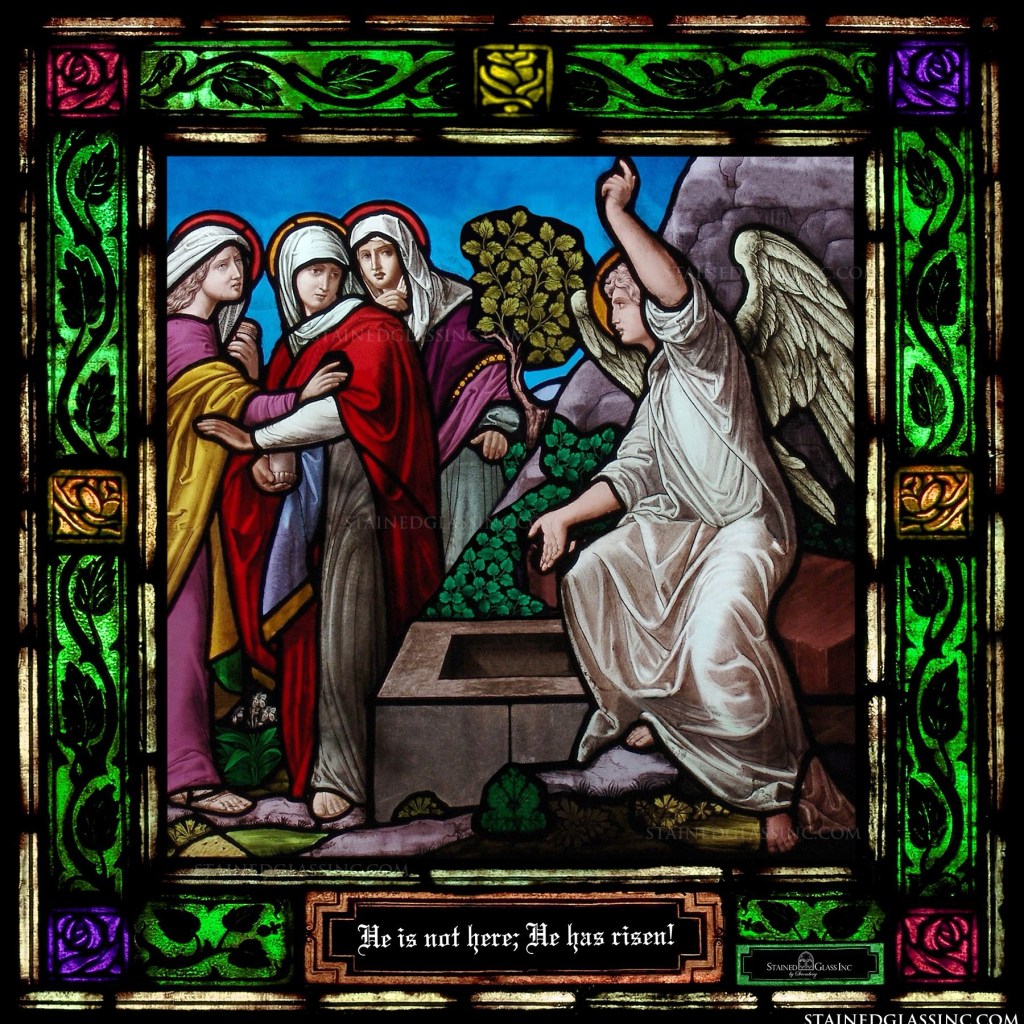
It’s evident in Cooper and Murph. It’s evident in all the most impactful movies and stories we enjoy. And it’s evident in the life, death, and resurrection of Jesus. And every Easter we get the chance to admire that cost he was willing to pay to provide us with life in the midst of decay and destruction in our lives on Earth. There’s no greater love than that.