The Cute and Absurd

Chris Pratt in his viral MTV awards acceptance speech from a few years ago outlined nine rules he wanted to share specifically with his young audience. But it was Rule No. 4 that illustrated the framework for his overarching message.

“When giving a dog medicine, put the medicine in a little piece of hamburger and they won’t even know they’re eating medicine.”

Mixed in with some crude potty humor and lots of laughs from the audience were a few surprising heartfelt rules. Rule No. 2 was “You have a soul. Be careful with it.” Rule No. 6 was “God is real. God loves you. God wants the best for you. Believe that, I do.” And Rule No. 8 was just as blunt, “Learn to pray. It’s easy, and it’s so good for your soul.”

Many news articles latched onto and promoted his non-religious rules like how to keep your poop from stinking up the bathroom at a party (“the hamburger”) and as a result unintentionally promoted what Chris intended to be “the medicine” in his message. What an incredibly witty and cleverly constructed award acceptance speech.

This hamburger-medicine approach has been used often, especially with youth. The theory is that if you can cake a moral message in enough entertainment and comedy, you can make it palatable. That no one would willfully choose to accept the medicine on its own.

It’s the model for many church youth groups. The model for Disney movies. The model for children’s stories and TV shows. And it’s a model many parents use with their own kids. Even I instinctively resort to humor often to soften my kids up and make them more open to lessons I try to pass on to them.

But I stumbled upon an interesting quote by the late pastor, professor, and writer Dallas Willard who has had me pondering when this approach may go too far.

He states that today much of our art can be summed up in two words: “cute and absurd.” And the more I’ve pondered it, the more I think he’s correct. We should be cautious of when the pendulum swings too far.

So much of modern TV shows, movies, and books, not just for children, depend on the cute and absurd for almost the entirety of their content in a way that historical storytelling hasn’t required. Is there a historical equivalent of “The Emoji Movie” or “Trolls?” Were kids in past generations reading books inundated with pictures of simply cute or silly things? Did past stories include similar sidekick characters that now seem to be used principally for comic relief and merchandising?

If you cover that medicine in too much hamburger, does it lose its effectiveness? Or maybe by fixating on the hamburger too much, we forget to include the medicine in the first place?

I think Chris Pratt gave a succinct and distilled picture of what this can look like. He could have given nine funny rules for life that would have been discussed in the next news cycle and moved on with his life. But he was willing to put himself out there and add a few doses of some important truths that he wished to impart to others. I can only applaud him for that. If anything, it showed that someone with those values could still find a place in Hollywood and maybe give others confidence to be themselves in environments that seem bereft of people with similar beliefs.

I think it serves as a reminder that seriousness and levity don’t have to be mutually exclusive. The proper mix of both might be the best recipe for us getting the medicine we need.
Advice for Life in 5 Words

A friend asked a seemingly simple question on Facebook a few months ago. The question was, “If you could give your best advice in 5 words what would you say?” Of course there were a variety of answers provided, but one that was mentioned by several people.

The advice was “Don’t Change Yourself for Anyone.”

If one were to take a sample of all the platitudes commonly thrown around today, I have to think few are used more often than this one. And while it can be useful in particular contexts, like discouraging young people from compromising their values for a relationship or to fit into a particular social group, is it really sound advice that can be applied universally to life? Heck, can it even be applied broadly to life beyond these very specific scenarios?

Should you really not change for anyone? Does it no difference if that “anyone” refers to an acquaintance, a colleague, a friend, a mentor, a family member, a parent, a significant other, or a spouse? Is there no one within our lives for which we should be willing to change?

Is there a certain age where you should no longer change? I think many of us would say that toddlers, especially when throwing tantrums, must change their behavior as they grow up. Should they not change? I’m sure many of us know adults who still act very much like toddlers. Should they not change? Does changing stop when we become 18 and graduate high school? Or when you obtain a certain level of post-secondary education?

Why do we tell each other to not change ourselves for anyone? Could it be that it sounds therapeutic especially when coming out of a tumultuous season of life, which seems to be when this phrase is often uttered? Could it be that maybe when we need to evaluate what changes may need to be made, we’re often scared to start that process and this reinforces that we’re fine to stay as we are?

I think for many of us, the word change can be a terrifying thought. But maybe it’s the conscious and purposeful kind of change that we’re most scared of.

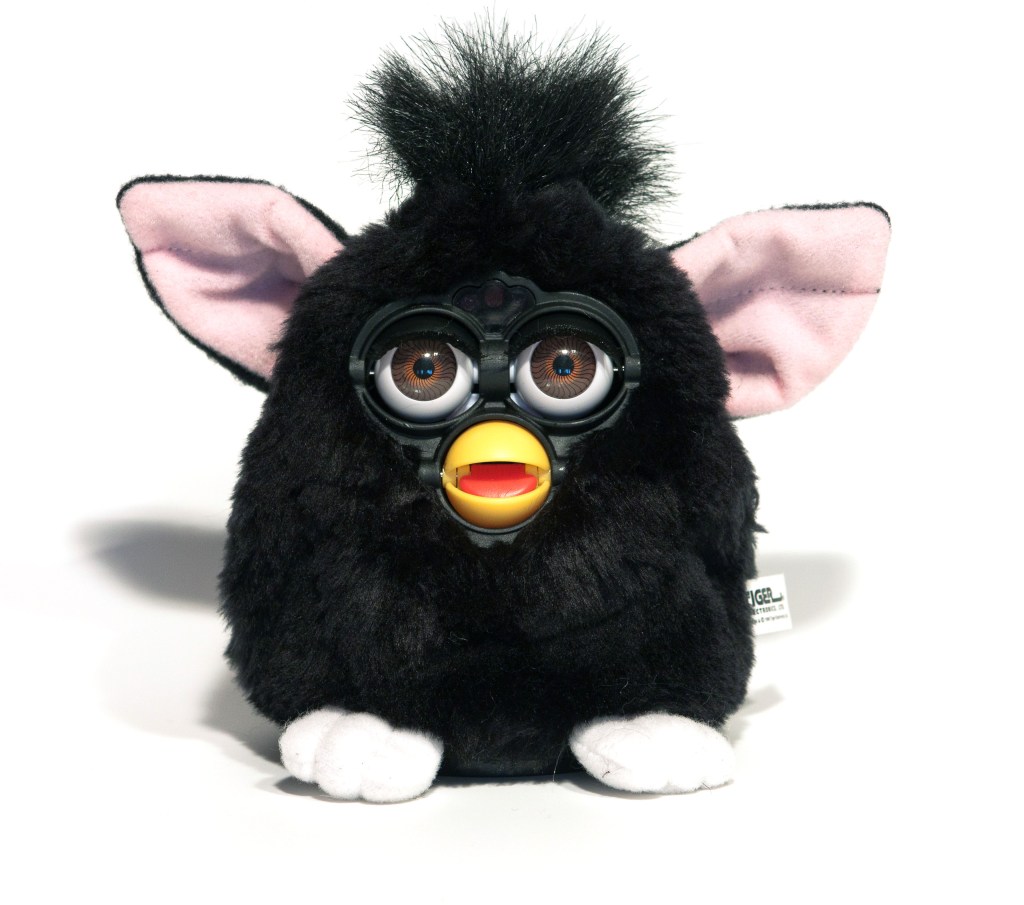
There were several trends I recall growing up as a 90’s kids. Tamagotchi. Pokemon cards. Furby, Ty Beanie Babies. Dunkaroos. Capri Sun juices. Colored ketchup. Walkmans. Gameboys. How often was it that our desires reflected those of the people around us? That, while these are all material things, the fact that our friends had them and desired them, we were (subconsciously) willing to change to be like them and desire the same things.

Just to be clear those Furbies still creep me out to this day. Just staring into those eyes…. I’m going to have nighmares tonight.

And was there anything more damaging to one’s status among classmates than being labeled a “poser?” That if you were caught copying or imitating someone else, you were lesser than everyone else. I thought imitation was the sincerest form of flattery. Yet, the conscious effort to follow someone growing up was disdained even though we were all doing it subconsciously.

Consider how even as adults, the people who identify with counter-cultural groups like hipsters, rebels, punks, and hippies have all followed nearly identical trends within specific groups. In their avoidance of mainstream culture, they simply change to follow and adopt the patterns of their own subgroup of the culture.

So can we ever be purely an individual? Is there really a way for us to not change? And is the status quo really worth striving for?

If I could offer an alternative five-word piece of advice it would be this.

“Find someone worthy of imitating.”

Change is inevitable and we are social beings that are constantly watching those around us. Whether it’s trying to keep up with the Jones’ or just trying to fit in with coworkers or friends, we are all in some way or another trying to conform ourselves to be accepted.

So why not shift this process from the subconscious level to the conscious? Why not be proactive in selecting who in our lives are living in a manner worthy of our imitation? If we are all “posers” anyway, why not pose after someone who will help you become a better person?

In an ironic way, we may find that there’s a whole lot of freedom to be found in this type of conformity. That maybe imitation done properly will provide so much more good than telling ourselves to not change at all. That maybe we don’t always know how to best live well, and emulating someone else may help us get closer to figuring this out.

So how about you? Any life advice you would share in five words?

Changing for Better or for Worse?

Well these past four years sure did go by fast, and upon reflection it’s amazing how much I believe I’ve changed since my freshman year. I can remember auditioning for the Blue Band and then thinking that so much of my self-worth was riding on that result. I remember planning to pursue engineering because I enjoyed the subject, but also because I wanted to live comfortably and this occupation would give me the money to do so. I remember thinking that wearing your dorm key on a lanyard was cool. I couldn’t have been more wrong on all three (especially that last one).

We are constantly changing. Day-to-day we may seem the same person, but really reflect over the past few years or even months and I’m sure there’s something that has changed in your personality, your temperance, your desires, or your dreams. To believe that we are unchanging, that we can’t grow and develop or diminish and decay, can be dangerous. The truth is, we are taking one of those two paths in almost every situation. So are you changing for better or for worse?

First, what are you working towards? What is culminating goal that you have set for yourself? Your final destination dictates the trajectory that you will try to take and therefore should be given much thought. The thing to watch for though is that in pursuit of this goal, does it cause you as a person to grow or deteriorate? Pursuit of happiness, a common goal for people, could lead to the compro In the grand scheme of life though, lanyards are of much less importance than things like relationships and our contributions to our community. The goal you have makes you more aware of the progress or the retrogression you make over time.

Second, what setting are you putting yourself in? A plant placed in fertile soil with plenty of nutrients will often thrive more successfully than when it’s planted in a bunch of rocks. Are you surrounding yourself with groups that instill good values and support for you? I wrote a post before called “The Rule of Five” which talks about this exact topic. The people we surround ourselves with will have a big impact on who we change into.

Lastly, what attitude do you have regarding change? In Luke 18, Jesus tells a parable about the Pharisee and the Tax Collector. They both go into the temple to pray. The Pharisee was prideful and lists off all of the great things he does and then lists the ways that he is better than the Tax Collector. But the Tax Collector simply humbles himself and asks for mercy. Humility leads to positive change because it allows us to recognize our shortcomings instead of keeping them in the dark. We can always find worse actions of others to compare ourselves to. If we use these actions to justify our actions ourselves entirely we’re in trouble.

This world is changing, and watching the news lately I have been deeply saddened by just how much more pain, violence, deceit, and discouragement there has been lately. We all contribute to how this world changes, for better or for worse and we probably contribute more bad than often we would like to admit. So let’s do our best with what we have because we could always use more people consciously trying to change for the better.