Why Today’s Politics Cannot Create Good Conversation

Well if you’re a Phillies fan, you’ve probably found the past few months pretty frustrating. It seemed like we were set up for a competitive season with off-season acquisitions and early season success, but the wheels have since fallen off and we sit in a position of hoping to land a wild card spot unless some unlikely and fortuitous changes occur. On top of that we may lose our beloved Phillie Phanatic. Not the outcome many of us Philadelphia sports fans had hoped for or envisioned for the season.

The trading deadline is in the rear-view mirror and some fans were left scratching their heads. Why didn’t the team make more significant moves to acquire greater talent with the hopes of making a bigger push into the playoffs? They could have sold some of their minor league prospects to acquire major league talent to try and win now. But they didn’t. Why not?

In some paradoxical way, these professional sports teams are competing for this season and for future seasons as well. There aren’t awards for major league teams who have continuous success over several seasons, except for the number of championships won. However, there could be an argument made for the value of the teams that win consistently over long stretches of time. Teams that aren’t just peaking for one championship season and then diminishing into the position of the lowliest of teams like the Miami Marlins, who are dreadful yet still seem to find a way to best our Phillies this year.

Mortgaging the future for one season is not always the wise decision even though this season is the one the fanbase is most preoccupied with. Somehow the Sixers got fans to look forward somewhat patiently for success years in advance. But most often, especially in Philadelphia, there is a push from the fans to win now. But the front office for the Phillies made the decision that going all in this season, even if it aligned with the wishes and desires of a fanbase to win as soon as possible, would likely compromise any opportunity in the near future to bring home the World Series Trophy. In a sense they are playing two different games at the same time. There’s a competition to win this year’s championship, as remote as those chances are, but also remain competitive in the long term.

We don’t just see this in sports though. In some way, this is an application of delayed gratification similar to the habits of saving, investing, working out, and eating healthy. We try to establish these habits, that require effort and often sacrifice in the short term to provide health, prosperity, and success in the long run.

It’s a principle that seems lost in how our politics work today especially on difficult topics like social justice. Our political system is currently constructed to offer and profit off of immediate gratification and is capable of trading away the long term health of the nation in an expedient effort to obtain something in the now. Essentially, playing for this season and mortgaging our country’s future in the process.

And the general public is adopting a similar temperament to those of the Philadelphia sports fanbase: that brotherly love and patience we are so beloved for. Hopefully we don’t all wind up throwing snowballs at Santa. Feels like we’re really close to that happening.

ProgressivE POLITICS and the narrative it proposes

Progressivism implies a particular perspective or narrative. The inclusion of the word “progress” in it’s name indicates a direction. Change. Fluidity. Flux. The opposite of staying put. It insinuates that where we currently stand is insufficient and that we need to move towards a new place – arguably a better place.

This idea in and of itself is not a bad one, right? There are plenty of issues we can identify around us. No shortage of problems to be solved. Why wouldn’t a progressive mindset be a good, even necessary one? We should try to change to fix issues where possible. To be content with where we currently are would seemingly be to cast a vote in support of the very problems we are observing. and to be accepting of the way things are.

Progressivism, as a political and social platform however, is different. Although they are the side advocating for social justice and reform, I think they are undermining their ability to create the desired change in the process. While both the left and the right have a significant role in the political tension and mudslinging we all see and experience today, I believe it is progressive politics that have elevated the discord to another level.

Before you click away, please give me a chance to explain. I did not vote for Trump. I’m no alt-right white supremacist. I hope everyone reading this who knows me could attest to that. Yes, the right has been blocking all of this necessary social reform with great fervor and they have many problems of their own, that I may write about in the future. The bigger problem with our ability to have conversation on these specific topics of social reform, as I see it, is the resulting attitudes towards one another largely as a result of the progressive platform gaining prominence and I have data to support that conclusion.

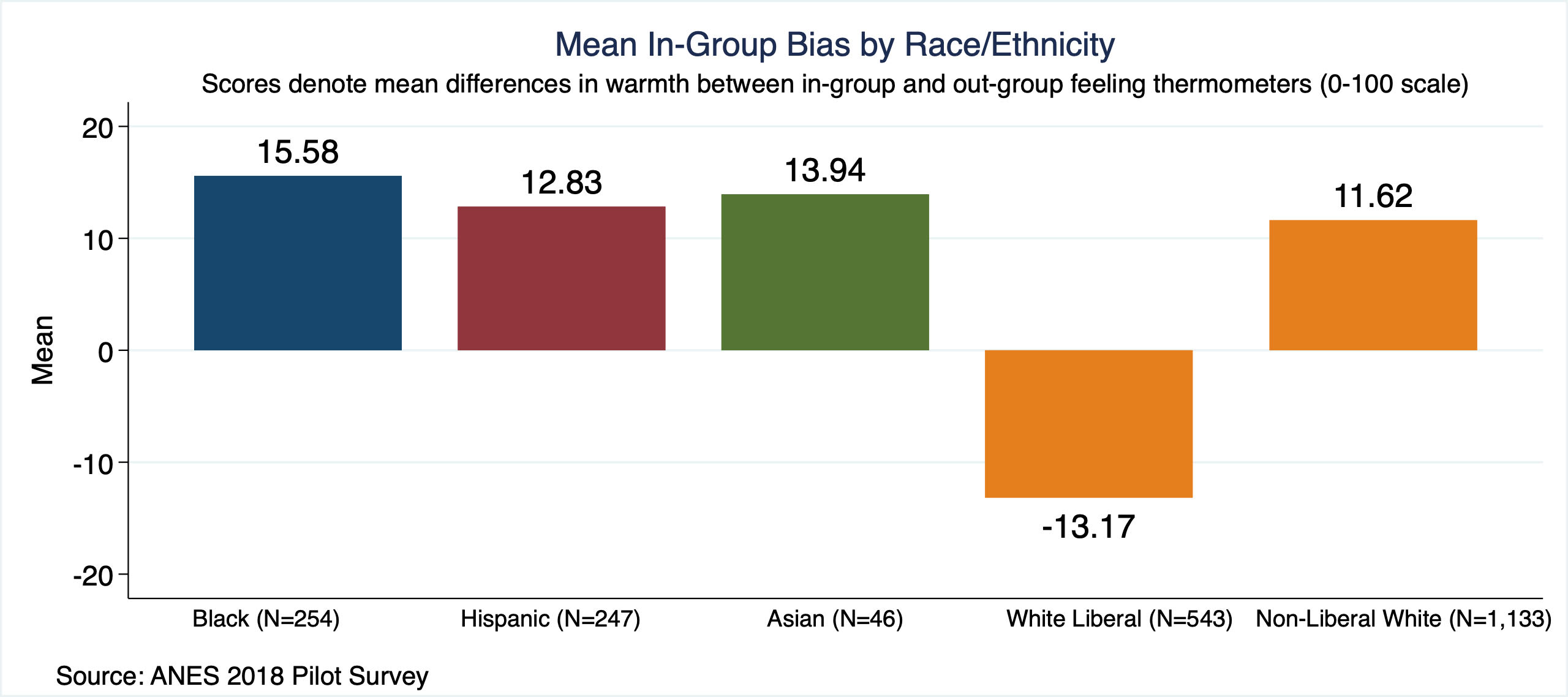
Take a look at these statistics from the American National Election Studies (ANES) from 2018 on racial bias.

As you can see from the graph above the more liberal white people consider themselves, the more negatively they feel about white people. The more conservative, the more positively. Also, consider that the moderates also lean towards favoring their in-group. Yeah, yeah, yeah… people on the right are white supremacist, and people on the left see white people accurately as perpetuating the systemic sins they have committed… Let’s look a little deeper.

The real game changer is this next graph.

White liberals are the only group surveyed that views there own race less favorably than other races. Every other subgroup views their own race more preferably than other races. And it’s not a small difference. You could make the argument everyone else is racist… or I think you could draw a more likely to be accurate interpretation that there is something incredibly unnatural occurring within the left wing of our politics today, especially among white people. If you can do the math as well, you will see that there isn’t a drastic difference in how positively white conservatives and white liberals feel about out-group people, which I think is important to note.

Yes, both political parties have a role in the lack of productive conversation we are having today, and these stats don’t mean every white liberal hates white people, but I think these point to a stark trend. I think the progressive platform especially it’s white proponents, for all of it’s own self-proclaimed compassion, are sowing a lot of negative feelings towards others. And it’s these negative feelings that will make the platform unsustainable over the long run, and maybe in the very short term, undermining their own goals in the process.

So what is it specifically about progressive politics that creates these attitudes? The platform, which still emphasizes the need for change and flux within society to move to a better place, focuses on the preeminence of social reform to carry this out. It takes this idea that problems exist and says that through the political realm, almost all issues can be resolved or must be resolved. That change to society must come largely through legislation. That our laws dictate the ethics and direction of our nation, and that without these in place, we cannot make progress. We cannot take steps towards the ideal, towards the utopia we envision, in any other way.

As Massachusetts Senator Elizabeth Warren said in one of the recent Democratic Presidential Debates in response to Maryland Representative John Delaney regarding his statements that her platform was “impossible” to implement:

“I don’t understand why someone would go through all the trouble of running for president of the United States just to tell us what we can’t do and what you won’t fight for.”

Elizabeth Warren at Recent Democratic Party Debate

It was a quote that was largely applauded and celebrated. Several media outlets were praising Elizabeth Warren for standing up for what the party was for and this quote was considered a death blow to John Delaney and his more moderate stance on these issues.

Right now, especially within the Democratic Party presidential nomination race, there is a fight to show how willing you are to advocate for causes without needing to really address the plausibility or methods of pursuing such ends. The more kind and compassionate you sound towards the most lowly members of society, the higher you are in the status hierarchy. It sounds good. It sounds compassionate. It makes for good sound bites. And it is completely understandable why this would sound worthy of support to a lot of people. I probably would have aligned with some of these ideas myself about four years ago, if you read that snippet from my previous post. I bought into this mindset as well.

Progressive politicians advocate for change at the highest levels of government and in the most powerful institutions. That if we can just get the right people in place and the right policies, everything will fall into place. And it isn’t just in politics. I listened to two keynote speeches at colleges this spring advocating that the young adult graduates advocate for these social reforms to be brought about. With the time they were allotted before the young audience, the most important message the speakers wanted to convey was encouraging students to fight for these causes with expedience to make the world a better place. To take on these large systemic issues. Quite a lofty task to entrust to these young adults as they enter a new chapter of life.

The problem is not that these topics or policies are being raised or considered. We should discuss reparations. We should discuss gender equality and if there are barriers for certain minority types from being involved in society. There is merit to discussing these types of policies. The problem, in my opinion, occurs when this political platform serves as a meta-narrative of sorts because then the policies become elevated to ultimate importance to resolving the woes of society.

If the story of our nation can be boiled down to power struggles, how quickly power can be obtained, the institution of new policies at the highest level of government, and that policies are the key to the improvement of well-being and the ushering in of the utopia, who’s to say we shouldn’t rush the process as quickly as possible?

Right, why shouldn’t we fix everything now? That’s what they are promising to do if they are elected. Why shouldn’t we demand it? We see what’s wrong. The problems are self-evident (or so we say). Just throw some legislation at it and we can all go on our merry way. If the wealth of our nation could be more evenly distributed. If the top positions within companies were evenly split between all races, genders, sexual orientations, then we could achieve the equity of outcome that everyone deserves. That only through this approach can we finally right the wrongs of the past and get to that utopia we so desire.

And what about the local community. The family unit. The individual. These smaller and seemingly less powerful entities are of little to no consequence in light of the most powerful institutions. They have no role or responsibility in progressive policies. The individual is reduced to their identity. Gender, sexual orientation, race, age, etc. and are merely a statistic. You are a byproduct of everything that’s been handed you, both the good and bad. Some are privileged and some are oppressed. The individual, the family, the neighborhood are just along for the ride with the social tides and at the mercy of whoever happens to be at the helm of the most powerful institutions in society. Better hope the right person is in charge or your group is screwed.

At that point don’t the ends justify the means? At the end of the day it’s about “progress.” We know what the utopia should look like (or at least we tell ourselves we do). We can create policies to get there, and there’s no reason to wait. These ideas are laced within political discourse. It’s why we have lost patience with the other side. They are standing in the way of progress. (Cue the anger and resentment.)

Yes, there are problems in our society. Yes, some can be fixed with laws. But do we really want to buy into the narrative progressivism provides though? Do we want to put all our eggs in the basket of legislation oscillating in the 4-year tide of presidential elections for solving our problems?

By believing these problems, which progressives usually consider to be significant, can be resolved within any one- or two-term presidency is in an ironic way diminishing the breadth and depth of these very problems. Politicians are playing checkers when we should be playing chess. They have different goals than society at large and have to craft their platforms to appeal to the most voters and motivate them to get out and vote, or as Hillary Clinton would say, Pokemon Go to the polls.

And most politicians seem willing, like an unwise professional sports team, to mortgage the future for the sake of votes now. They are willing to let the sentiment of the nation and our ability to have discussions and community across party lines get destroyed to capitalize on the next election. This isn’t an issue with one party. It’s a real problem with politics, and becomes much bigger when we let politics host all the conversations we are having and become the governing meta-narrative of our society.

I Was Woke and Didn’t Even Know It

One of the unanticipated benefits of keeping a blog I have discovered is having the ability to revisit some of the ideas you held in the past. Similar to how a familiar song can help you instantly recall memories of your past, rereading what you wrote can remind you of what you used to be concerned with and how you previously thought about certain topics. A little blast from the past in a way.

For every post that I have published there has typically been at least one other left in draft form and unpublished. Sometimes these drafts weren’t posted because the ideas weren’t fully formed. Sometimes I wasn’t comfortable with the language I was using and was a bit afraid to share my thoughts. Sometimes I thought the post wound up being really boring and wasn’t worth sharing. Whatever the reason for not publishing these posts, they have been a joy to reread recently. Did I think and feel about these topics in the same way today? Would I have said things differently?

One old draft in particular caught my attention. This particular one was drafted shortly after the death of Freddie Gray in Baltimore, which was a little over four years ago. You may remember that riots occurred in the aftermath of his death. Tensions flared because this unfolded during an especially volatile time nationwide with police and African American relations in the spotlight. I grew up not too far outside that city. I frequently visited the Inner Harbor with my family for Orioles games and with classmates to visit the aquarium. I have fond memories of the place so this story in particular caught my attention.

Baltimore Riots in April 2015

I figured I would share a snippet of that draft post I wrote at that time.

The riots that have occurred. The fires. The stones thrown at cops. The stones thrown back at the rioters. All over a lost life. A young man very similar to several others who have experienced similar stories in these past months and years. The story is too familiar. It’s too repetitive to be a coincidence. There is a huge issue at hand. And both sides are aggressively making their cases that the other side is completely wrong, uncaring, barbarian, and deserves punishment. And if both sides keep pushing, fighting, and pointing fingers, I don’t see us moving anywhere anytime soon.

I’ll admit that I have been wrong. Growing up I thought that everyone had the freedoms to be able to take advantage of opportunities and turn things around for themselves but I’m realizing more and more that I was wrong. There is a clear inequality that exists between classes in this society that is contributing to the issues we’re seeing and it’s one that should be addressed.

Some loaded words there… especially for me. I’m not usually one to use heightened language like that, but there it was. I never finished this post. I didn’t offer a solution by the time I finished writing. I didn’t have a suggested stance or disposition to recommend beyond realizing myself that issues were present and a feeling that something (whatever that something is I don’t know) should be done.

I’m not exactly sure where I intended to take the rest of the post at that time, if I had a resolution in mind, but the sentiment and feelings I had I think are evident in this passage: that not all of the tension and violence between law enforcement and members of the African American community should be attributable to individual responsibility on part of the African American community. My reasoning was a realization that there were significant class differences, perpetuated by longstanding issues of racial discrimination, rooted centuries in the past in slavery, and still propagating in segregation and discriminatory behaviors up until just a few generations ago. That systemic racism is a real thing. Even though I wouldn’t define myself in this way at the time, I was, as some would say, “woke.”

I never shared this at the time. The post was never finished so I’m not sure if it was because I was fearful to share these thoughts, or just that I hadn’t finished grappling with them. So why am I sharing this now? With the Democratic presidential debates underway, the topics of social justice, reparations for slavery, gender equality and equity are all hot button topics of discussion and the conversation can often get heated around these topics.

On stage: Cory Booker, Julián Castro, Kirsten Gillibrand, Michael Bennet, Andrew Yang, Bill de Blasio, Tulsi Gabbard, Jay Inslee, Joe Biden and Kamala Harris.

Questions arise… How much of people’s struggles are due to systemic issues out of their hands and how many are the result of personal choices? How much disparity between economic and social outcomes are attributable to race, gender, class, and what we would now consider the errors of our forefathers? Should we try, and if so how do we try, to mend and heal the wounds of the past? Is legislation the appropriate, or even a plausible approach for making amends?

I found this recent article by Patricia Cohen in the New York Times to be quite interesting and I think a politically balanced overview worth reading on the topic of reparations. Among the many interesting tidbits she shares, she notes that economist David H. Swinton estimated in 1983 that 40 to 60 percent of the disparity between white and black incomes are due to historic and ongoing discrimination. Additionally, she mentions that as the Civil War ended that General William T. Sherman made a promise to redistribute a large section of land along the Atlantic Coastline to black Americans recently freed from slavery that had the support of Lincoln. But that plan was later rescinded by President Andrew Johnson. And on top of that she made reference to the reparations we made after the Japanese internment camps ended and those made by Germany to the Jewish people as examples of reparations previously executed. One considerable difference I’ll note though, is that these reparations were made almost immediately after the cessation of the harmful acts. They were handled much more rapidly than the case being discussed in America today.

I only share that to say that there is credibility to the statement that the sins of the past have bearing on the present and that there is precedence for reparations in similar cases and we, as a nation, previously considered them shortly after the abolition of slavery. I am not prepared to give a vote to support or disparage either side of this particular debate. These are incredibly complicated issues and warrant a large investment of time, study, and conversations with others. A sufficient investment I don’t feel I have made yet to date.

But I do want to explore how we discuss these issues. I believe this question of how we converse is the bigger underlying issue to be addressed, and one that, if addressed, will help us navigate through these incredibly complex issues like social justice, equity, equality and reparations. Because let’s be honest, is there really a debate or discussion occurring on these topics currently?

In my next post I’m going to explore what I believe are the two biggest threats to having a productive conversation on these topics. And then I want to share in the following post a couple of overlooked and undervalued principles that I think are necessary to help us move in a more positive direction. These are incredibly sensitive topics and ones that I intend to handle delicately. I hope you’ll join me in this conversation over the next few posts as we explore these issues of social justice and reform. And hopefully some good conversation can result. That we can make an investment of time, thought, and conversation in trying to grapple with these incredibly important and difficult topics.

What Pawnee and San Francisco Have In Common

I feel like I was late to the party. It was just within the past year that I started watching Parks and Recreation on Netflix and it only took a few episodes to realize what I had been missing out on. I mean how can you not laugh at Ron Swanson’s over-the-top libertarian approach to running the Parks and Rec department, Chris Pratt’s role playing as FBI agent Burt Macklin, Amy Pohler’s incredibly fun personality fit for the role of Leslie Knope, the overly ambitious mid-level politician, or the undeserved incessant badgering of their fellow coworker Jerry (oh wait his name was Garry right?).

If you’ve ever watched Parks and Rec, you would know that one of the most recurring gags on the show are the murals displayed within the municipal building in the fictional town of Pawnee, Indiana. At several points during the show Leslie Knope introduces one of the Murals of Pioneer Hall and explains the historical significance of the artwork. These murals addressed chapters of Pawnee’s past time, (in an overtly comedic manner) that ranged from a magician being burned at the stake in the 1970’s for pulling a rabbit out of a hat, to bare-knuckle fist fights between men and women, and the trial of Chief Wamapo, who was punished for simply being “Indian,” which at that time was considered a crime in Pawnee.

“Sunday Boxing”
“The Traveling Magician”
“The Trial of Chief Wamapo”

The intention of including these murals in the show was to, in a lighthearted manner, show just how outrageous people were in the fictional town’s past and they did a good job of it. At times, Leslie Knope would make references to the removal or covering of these murals to prevent any offense towards the citizens in Pawnee.

However, you will notice that Leslie had subtle elements of shame shrouded in the comedic overtones of these particular moments of the show. In a way, as a resident of Pawnee, she felt connected to, almost involved in, the actions depicted in these murals.

These mural scenes rarely lasted more than fifteen to thirty seconds in length each time, yet in a strange way, these scenes had a way of leaving an impression. At least they did on me. And they have been almost prophetic about what our nation would be confronting with great frequency not even a decade later.

Ironically, it seems that a high school in San Francisco is situated in a strikingly similar, yet I would argue, starkly different position. At George Washington High School, the school board recently approved the decision that 13 murals that constitute a cumulative work of art entitled “The Life of George Washington” are being removed from the school at a cost of at least $600,000. These murals, which highlight George Washington’s slave ownership and treatment of Native Americans, among other aspects of his life, have been deemed offensive by some in the community and there has been a push by some in the community to have them removed. Their pushing and prodding has evidently been successful.

Unlike the murals in Pawnee, these murals were not representative of a fictional town in Indiana, but of actual events that did occur in our nation’s history. And these murals were not meant as a joke like the one’s in Parks and Rec. These murals were painted in a not-so-lighthearted manner and represent what some of us would now consider uglier times in our history.

Now before we get too far ahead of ourselves I want to clarify a couple things. Most of us have not and will not ever set foot in George Washington High School. I couldn’t care less how much money it will cost them to remove these murals. If I lived in that school district maybe I would. My life will go on essentially completely unchanged with their decision to remove them. The reality is, this high school in San Francisco really has no bearing on most, if not all of my reader’s lives.

That being said, the removal of these murals is consistent with a pattern of similar conversations and decisions currently occurring across the nation regarding the preservation/removal of statues and other historical artwork in public spaces that represent, and some would argue, endorse some of the darkest parts of our nation’s history.

It is this second point, the pattern that we are observing that I wish to discuss. How we should have these discussions. My hope is to have it not with anger. Not with frustration. But with consideration of what all is at play and at stake with these decisions. I want to try to answer what role should art and history should play in our culture.

The role of art

Jonathan Pageau, an icon carver from Canada, has a YouTube channel entitled The Symbolic World. I find his videos quite interesting as he discusses the symbology of movies, culture, and stories. He recently did an interview for a documentary on the purpose of art, which I have linked below (the first 15-20 minutes give the gist of his ideas).

A simplistic explanation of his view on art in this interview is that the term “art” was initially meant to mean the skill with which someone carried out their craft to serve a given purpose. Today the word “art” is largely meant to refer to the thing that was actually crafted. This difference may seem trivial, but in fact this point can be quite significant the more you think about it.

Jonathan and the interviewer discuss how the art of pizza-making, done by a pizzaiolo, is not so much based on how creative the pizza looks. When we buy a pizza, we don’t need them to reinvent the pizza. The artistry is how skillful the pizzaiolo is at making a pizza that serves it’s intended purpose, which is to be aesthetically pleasing but ultimately delicious and nutritious. A pizza that looks good but tastes like garbage is not art by Jonathan’s definition.

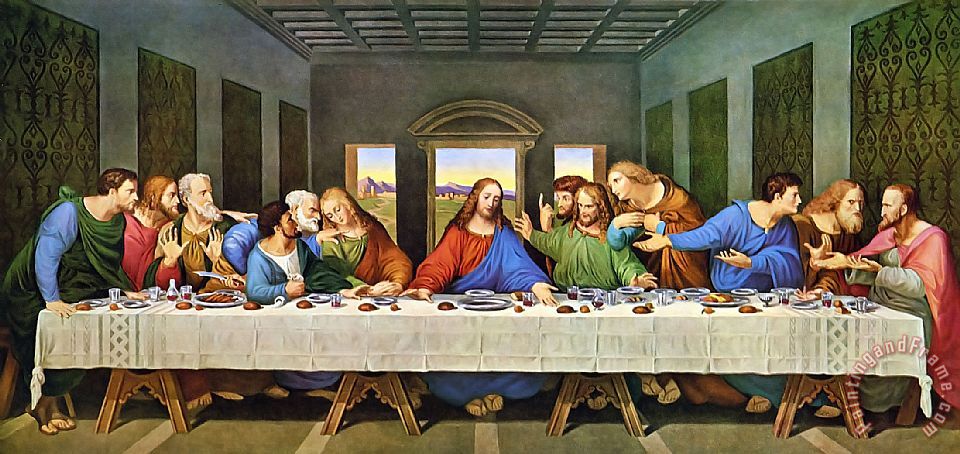
Likewise, Jonathan discusses how the famous painting “The Last Supper” by Leonardo Da Vinci would be a work of art. While the painting might not seem historically accurate because it would be strange for all the disciples and Jesus to all sit on one side of the table, the painting was skillfully crafted to serve a particular purpose. When the painting is hanging on the wall of a dining room, anyone sitting at their own table, eating their own meal, would be able to reflect on this painting and in a way feel like they were a part of the Last Supper. It is for that purpose that the painting was crafted.

“The Last Supper” by Leonardo da Vinci

With that in mind, let’s revisit these murals at George Washington High School. These murals were initially painted in the mid 1930’s by Victor Arnautoff, an artist who worked under the New Deal Works Progress Administration. By the way people are offended by these murals, you would think he was serving as some advocate for the actions of George Washington. You would think that the purpose he intended for these murals must have been to applaud our first president and endorse slavery and the killing of Native Americans. The reality may surprise you.

Victor Arnautoff was a communist who happened to be quite critical of George Washington. He used his skill of painting for the purpose of creating murals that would encourage critical analysis of the life of George Washington. One can argue how accurately he crafted this argument as I’ll discuss later. But contrary to many of the detractors of this work of art, its whole existence was intended to provide a critical lens through which we view George Washington’s life and the actions of his contemporaries. So basically, those who wish for these murals to be removed are advocating the destruction of a work of art that was intended to critique the very same issues they are critiquing…. Right… This sounds like exactly the type of mural that they would want preserved. Anyway…

I liken the skill of art to a process of distillation. A reduction of the raw materials to something more dense and potent. The pizza maker distills his years of experience into crafting his best pizzas. Leonardo Da Vinci distilled both his painting skillset and his understanding of the gospel story to craft a beautiful and impactful painting purposed for connecting people with the story of the Last Supper . Similarly, Victor Arnautoff distilled his painting skillset and understanding of George Washington’s life into a painting meant to persuade it’s viewers to give a critical assessment of his life when so many held exclusively wholesome and idyllic views of our first president.

When we view works of art and interpret them in a manner consistent with their intended purpose, there is a much greater depth to which we can engage with them. The skill of art distills down even the most complex narratives into something like a mural that can serve as a potent reminder of what the artist wants us to remember or learn.

the role of history

I loathed history class growing up. I mean it absolutely bored me out of my mind. Morgan would attest that I don’t have the best memory, and with how history class was structured at my school – and I think most schools for that matter – I struggled mightily to memorize dates, names, and places. I was so bad at regurgitating those flashcard facts on the exams. The primary lesson I learned after all those years at school was simple. People in our past were really bad people, but fortunately we’re so much better now and we keep making progress.

Maybe you would agree with that idea. Or maybe you wouldn’t. It wasn’t a hypothesis that I consciously constructed. It was a viewpoint formed naturally over time from the stories in history that I had been told. Stories of wars, disease, slavery, prejudice, genocide, oppression, you name it. People were so dumb in the past. Good thing we’re so much smarter and nicer than they were.

I don’t recall learning about too many historical figures with overtly positive attributes associated to them. There really weren’t too many positive stories in the past at all that I could remember. If anything there were historical figures, like George Washington, which I knew of but was indifferent towards.

But if we really are so much better off today than where we were in the past, how do we explain how possibly the most horrific chapter of human existence occurred just over 70 years ago during World War II? There are people still alive today that lived through the Holocaust. How do we explain the increased prevalence of mass casualty shootings today? How do we explain the substantial divisions within the populace, increased suicide rates, increased mental health issues, the downfall in the success of marriages, just to name a few issues.

Are we really better off than our ancestors? Maybe financially. There’s definitely less scarcity in the world than there ever was throughout human history. That definitely makes it easier to be nicer to each other (although I think even that’s debatable).

Is there absolutely nothing we can learn from history except what not to do? Is there nothing redeemable about our ancestors or their cultures?

The 2016 presidential election peaked my interest in history because I was curious how we got to where we currently stand. It was a sufficiently ugly campaign to push me to seek out what lessons could be teased out from history. I’ve (very slowly) been reading biographies on past presidents and ironically I most recently finished “Washington: A Life” by Ron Chernow. I cannot recommend the book enough.

If I were to revamp the primary lessons that I’ve learned about history, in just a few years of more intentional study, it would be in this way. I’ve found that by reflecting on history I can very quickly insert myself into the shoes of people in different times and situations and ask myself could I or would I do anything differently. I can gain insight into a different culture than my own, like a fish getting to go swim in the ocean after being cooped up in a fish tank it’s whole life (except there’s no risk of being eaten by a shark).

It’s worth noting that history, like art, can never be completely objective. Historical stories can be true, but with the inevitable selection and omittance of details, one can never fully grasp the entire story. Each biographer brings their own perspective and has to craft from an infinite number of facts and details a cohesive storyline for the life of the historical figure. I will never be able to see the inner thoughts of historical figures like George Washington. But I read excerpts from his letters, studied his actions, and learned about the current events occurring in his lifetime and began to understand who he was. Even in some of the darkest times of history, there are some absolutely beautiful stories and strong and good-natured people to learn from. Studying history has a role in my life, and I think it can and should still play a role in our culture.

So what do we make of these murals?

So how do these piece together. Murals, like the one at George Washington High School, are a distillation of the events of not just George Washington’s life but of our nation’s history. You could spend your whole life studying the reasons for and ramifications of these events and still not see it with complete clarity. Murals distill that information into a painting, placed in a public space, where we collectively can wrestle with the reasons for and ramifications of these events. Murals, like other publicly shared works of historical art, invite us to engage with history together as a community.

But historical art without a thorough understanding of the history is problematic. The Last Supper painting by Leonardo Da Vinci means nothing to the viewer if they do not already possess an understanding of the story behind the painting. Likewise, one cannot really enjoy or assess how good a pizza is until they have tasted several pizzas to which they can compare.

Regarding Washington specifically, I would like to offer a few key insights that I’ve learned. Yes he owned slaves and often was a harsh slave owner. Yes, he was involved in military conflict with Native Americans. These aspects of his life are in fact true and well documented. However, there are other sides of the stories to be considered as well.

George Washington lived in a tougher economical time, where lifespans were shorter and survival was much more difficult. In many of his letters, you got the sense that he thought he was doing his slaves a service by giving them work, a place to live, and food to eat. It’s worth mentioning that George Washington’s estate was always struggling financially, especially since he refused pay for most of the service he gave to our country. He also adopted many children from his friends and family after they died and financially supported them. Additionally agriculture was incredibly labor intensive (they were just on the cusp of introducing crop rotations and new technologies), hence the economical reasons for maintaining the institution of slavery. This is not meant to endorse slavery, but to demonstrate why it was difficult to overcome the momentum it had within the culture.

He actually allowed his slaves to marry slaves from other plantations and relocate so that he would not separate their families. This was something that was not common among most slave owners. One of his closest companions throughout his life was Billy Lee, a slave, who rode by his side throughout the Revolutionary War. And by the end of his life, with the constant attempts of persuasion from his friend Marquis de Lafeyette, he overcame the inertia of the cultural norm slavery was by rewriting his will to free the slaves he owned upon his death. Marquis de Lafeyette is a man I found quite admirable in my study of George Washington, and one I hope to study more at some time.

And regarding Native Americans, the interactions between colonists and the many tribes are way too complex for me to get into. I simply don’t know enough to really weight in on it. All I can say is that no side was completely in the right or wrong, and many horrific acts were performed by both sides over many many years. I sound a lot like Donald Trump there, but I do think this is true in this case.

Was Washington all bad or good? No. But he is a man worth studying, and we shouldn’t be so quick to praise or demonize him. Ever wonder what he thought about artists painting portraits or crafting statues of him? He actually requested that he not be drawn or sculpted larger than his actual stature in real life. I think that’s a pretty humble stance for a man who would be head of the executive branch for our nation in its infancy.

If you read articles on the removal of these murals, you will read quotes from students saying they were never taught the significance of these murals. They will say that the only interaction they have with them is that other students will suggest “meeting under the dead Indian.” It’s this hollow interaction with historical art that keeps us from contending with these essential questions in our culture. This mural was meant to serve as a catalyst for discussion and instead is serving as an incitement to anger over past sins.

We definitely should discuss whether all statues and murals should remain up. That’s not a bad question to ask. Honestly I still struggle to see the value in statues because they fail to depict any story and only seem to glorify the individual. Maybe that’s too shallow of a view on them. But not all of these murals and statues need to remain. The question is what purpose are they meant to serve, and can they continue to function in that manner if we approach them in the correct manner.

The problem occurs when we don’t give history its due respect and we interpret art in a manner in which it was never intended to be used. It doesn’t matter to me if they take the murals down or not. My question would be what would they proposed to replace it with? And if we are going to so heavily scrutinize the errors of our ancestors, can we step outside our own fish tank to see our own culture with enough clarity to identify where we may be off base.

There’s no way to whitewash or erase history. We can forget history, but it still doesn’t change the fact that it occurred. Art and a study of history can help us engage in these difficult conversations. We need to be careful about how quick we decide to remove these works of art from our public arena. Maybe we just need to rediscover their purpose or learn a little more about the stories behind them. Then we may discover new vistas of appreciation for what we have, how we got here, and where we really should be going.

Jordan Peterson and the Question of Belief

Within the past few months I stumbled upon Jordan Peterson. And by “stumbled” I mean, I was binge watching his videos for pretty much all of November and December last year once I was introduced to him. Some of you may know exactly who I am referring to and I’m sure many of you have no idea who he is as well.

Jordan Peterson is a clinical psychologist from Canada, who is known for his contributions to conversations on psychology, philosophy, politics, and religion. His videos with Joe Rogan and a contentious and laughable TV interview with Channel 4 News are a couple of the videos that gained him a significant following. Also his highly publicized book entitled “12 Rules for Life” has sold over 3 million copies so far.

His personal YouTube channel has nearly 2 million subscribers and one of his most popular lecture series on the stories of Genesis consists of two-hour-long videos each with hundreds of thousands of views and in some cases millions. He captured the attention of so many people, who never would have ever considered listening to approximately 40 hours of lectures on the Bible, and presented the stories in a more sophisticated manner than many of us experienced in Sunday school. I found them to be incredibly fascinating (especially the one on Cain and Abel) and I linked one of my favorite excerpts from his lectures below to give you a quick peek into who he is.

He never claims to be a theologian but sought to demonstrate the value in these older texts and the lessons that could be learned from reading them. He never even claims to be a theist, atheist, or agnostic during his conversations. The result of his lecture series though, among his many other interviews and lectures, is that people have been reconsidering their own personal beliefs and worldviews. And not just that, there are many cases of people being lifted out of depression and nihilism. So what the heck is going on with this guy and the people who are listening to his lectures?

At the end of each lecture, he would have a time for attendees to ask questions. And one of the most common questions he gets presented with is “Do you believe in God?” It’s a personal question. It is a question so often asked to determine which group are you in. Do you belong to the Christian, agnostic, or atheist communities or a different faith group all together? We like to delineate ourselves and see if we’re rooting for the same teams. Especially with all of the success and publicity he has received recently, there are many people clamoring to hear him identify with their group.

I’m sure at some point in our lives we have all been asked this exact question. Sometimes we’re prepared to give an emphatic “yes” or “no”, or maybe we cringe a bit at the question and evade an answer out of fear of how our answer will be received. Many have felt pressured into saying they believe something that inside they really don’t believe. Or maybe among friends and family, there is a pressure to say we do or don’t believe in a God, because the alternative answer would be unpopular or shameful.

Jordan Peterson, put into a similarly awkward position, however gives quite an interesting response. He most often replies to this question with the response “It depends what you mean by ‘God’ and it depends what you mean by ‘believe’?”

His response initially seems like a cop out. “C’mon man… just answer the question!” But I think as you listen to his lectures you realize the genuineness with which he says it and the deeper reasoning behind the response.

The word “God” can mean so many different things to so many different people. Do you mean the old white dude up in the clouds standing behind the pearly gates? Do you mean white Jesus with the dashing brown hair and those spiffy brown sandals who’s everybody’s best friend? Do you mean that judgmental God who is willing to let people burn in hell because they didn’t obey the rules? Do you mean the Jesus who would be taking part in social justice parades today or rocking a MAGA hat? Or a different God from a different religion all together?

And what about the question of “What do you mean by belief?” Is it just a verbal proclamation? Is it mostly an intellectual posture? Is it a matter of how we act? Is belief a one-time occurrence in our lives where we say the magical prayer so we get an out-of-jail free card to go to heaven?

To answer “Do you believe in God?” with a simple “yes” or “no” requires so many assumptions that we may be completely misunderstanding each other when discussing the topic. I think that is why Jordan Peterson responds the way he does. And I think it’s for this reason that he has gained so much popularity. Jordan Peterson elaborates in over 40 hours worth of these lectures that God and belief, among many other topics, are not so simplistic, that there is more nuance to the conversation, and he allows his listeners to explore their own ideas.

The Bible is full of stories of people’s understanding and knowledge of God changing as they experienced him. Even the disciples, those closest to Jesus, had their understanding of who God was completely changed within the last week of his life. Jordan Peterson, though not a self-proclaimed Christian, is wrestling in front of everyone with who he thinks God is and it has been changing people in incredible ways, myself included. 

And dare I say that we can look elsewhere than the Bible to gain an understanding and knowledge of God? I think Jordan Peterson’s contention with the tragedies of the 20th century and watching his own daughter struggle with debilitating health issues that has shaped his understanding the way it has. 

Jordan Peterson in one of his interviews said that he avoids answering this question with a simple “yes” or “no” because he isn’t even scratching the surface in his forty hours of biblical lectures. That takes humility to admit that honestly. And I think it’s his authenticity that really makes people gravitate to his messages. He doesn’t provide an exhaustive explanation of who God is or what it means to believe because he can’t, and if we’re being honest, none of us can. 

I agree with so much of what he says but not everything. But that’s not really the point. He’s clearly struck a chord with so many that were longing for this type of long-form conversation on God and meaning within our lives. It’s been absent for so many of us and I think there’s been a longing for it. I would highly recommend watching his videos, especially if you’re within the church, because I think there are many things to be learned from him from how he has conversations, the insight he can give into the psychology of the human mind, and a fresh outsiders view on the value of these stories.

Maybe we can all revel a little more in the mystery surrounding who God is. Maybe it’s okay for us to admit just how little we know and be willing to ask tough questions. Maybe it’s in the seeking out of who God is that we will find the deepest and most profound answers. Maybe Jordan Peterson just might be helping this younger generation take a step back and really assess what we all believe in and what “belief” really means. 

Why We Shouldn’t Throw Away Fairy Tales

One of the things I most look forward to as a father will be the opportunity to read stories to my son. Morgan and I have already started the habit of rocking him to sleep while reading books and I am excited for when he’s old enough to really engage with the stories.

For some reason, there’s something about stories that resonates so much with me and maybe that’s the case for you as well. I’m not ashamed to say I’m the type of guy who gets teary-eyed at the end of movies like Up, Wreck-It Ralph, and Toy Story 3. How can you not shed a tear when Carl gives Russell the Ellie badge, when Ralph is sacrificing himself into Diet Coke Mountain, or when Woody, Buzz, Jessie and their friends are all about to be melted in the incinerator and they are locked arm-in-arm facing it together?

These stories don’t have to be animated films though to create these deep feelings. Maybe war films like Saving Private Ryan conjure up similar emotions as you witness their camaraderie and sacrifice. While they aren’t usually my cup of tea, romantic films like The Notebook get people welling with emotion as they see the deep love Allie and Noah share. Or maybe you were feeling emotional when half of our favorite heros from the Marvel Cinematic Universe vanished into dust before our eyes in Avengers: Infinity War. Hopefully no one needed a spoiler alert on that last one!

Maybe the stories that most resonate with you are from literature. I remember the shock when reading Harry Potter and the scenes when Dumbledore and Snape died. As with any great piece of fictional writing, these were characters I had come to know and identify with and to read of their deaths was to in some way experience that myself.

These experiences drive us go to the movies and read books. These stories seem to point to certain values or ideals that resonate with so many of us. Even when we can’t articulate into words what exactly in the story resonates with us, their impact is felt. In a way, these fictional stories, although they are not necessarily true historically, abstract out themes and concepts that are incredibly true to our real-life experiences as human beings.

What’s interesting is that lately there seems to have been more dialogue about Disney’s princess stories. Now I’m not going to argue that the Disney version of these older stories are the epitome of fairy tales, but I do think that they are the ones we collectively are the most familiar with.

Keira Knightley, an actress probably most commonly known for her role in the Pirates of the Caribbean, recently said on Ellen that the movies Cinderella and The Little Mermaid are banned in her house because of their depiction of women. Her comments sparked some discussion with people voicing both support and opposition to her thoughts. I don’t think she’s alone in holding these opinions.

Even a scene in Ralph Breaks the Internet, featuring the Disney princesses, which I will admit I found to be humorous (and still do), poked fun at the past princess stories that Disney had created and as stated in news headlines “spoofed the Disney Princess Industrial Complex” and was a “moment that mattered.” A scene like this would not have happened if Disney did not realize this was a widely shared sentiment.

As funny and creative as that scene is, the question remains… Is what this scene portrays about these older stories true? These movies have been mostly acclaimed since they were released. The question is then what changed recently? Are we better people today that we can look back on these stories and see them for what they really are? Or do we have a different and maybe inaccurate perspective on what these stories were really meant to convey?

Take Sleeping Beauty for instance. This is a story that could very easily be construed as “a woman is in trouble and needs a big strong man to save her.” There is the obvious plot line of being willing to fight for true love, which I don’t think is necessarily a bad thing to teach. However, I think Sleeping Beauty contains a strong lesson on parenting.

Aurora’s (Sleeping Beauty) parents, did not invite Maleficent to Sleeping Beauty’s christening. In essence, her parents were unwilling to allow anything that could be potentially dangerous into her life, which I think we all know, whether or not we want to admit it, is impossible to do.

They were then confronted by Maleficent and issued a curse that on her 16th birthday she would die from pricking her finger on the spindle of a spinning wheel. Her parents then decided that in order to protect their daughter, they would burn every spinning wheel in the kingdom and send her away to live with the three fairies. They decided to keep her secluded from all spinning wheels, which I think is a metaphor for all potential things that they believed could cause her harm. Interestingly though, they couldn’t keep her from pricking her finger on the spinning wheel as Maleficent still found her way to Aurora.

There is so much more to this story that could be extracted. We could learn from the isolation of Maleficent contrasted with the family and community of all the other characters. Or we could compare Prince Phillip’s courage to the fear of Aurora’s father. Or how about the importance of strong female supporting characters (which is present in a lot of these fairy tales) around Aurora and the importance that mentorship has in a young person’s life.

In Beauty and the Beast, Belle is responsible for redeeming the Beast and is by far the most admirable of all the characters. Gaston, represents the epitome of the self-aggrandizing jerk that I hope we all agree no man should be emulating. Ariel, Pocahontas, and Mulan all represent incredibly strong and courageous women in their stories. Cinderella is a great demonstration of good things coming to those who are diligent with their responsibilities and that is a great lesson for men and women of all ages.

Disney adapted these fairy tales that had been passed down for several centuries across cultures. There are reasons these stories were shared for so long and that Disney was willing to adapt them into films. You can compare it to evolution and survival of the fittest. These stories that have been handed down to us have been maintained because they speak to some of the deepest virtues and values that we have come to embrace as a culture better than other stories that have been told. Yes, they may be imperfect stories, and worthy of critique, but I think we need to be careful about thinking we are so different or (even worse) better, than our ancestors and that they cannot through their stories speak into our lives.

For the same reason that not every movie and story made today will be remembered 100 years from now, not all stories of old have been passed down by our ancestors to us. There’s a reason Lion King will be remembered and not The Emoji Movie or why books like The Lord of the Rings and Harry Potter will last instead of The Twilight series.
I’m not saying we can’t joke about these movies. I just think we need to carefully watch what we joke about, because it very easily and quickly be adopted as “truth.”

It feels like there has been a growing disdain or casual indifference to most of what we inherit. It’s almost like we’ve become so preoccupied with the mistakes of our ancestors that we are now in the process of trying to clean the slate of their influences in our lives, which often manifests as the throwing away of everything that they created, valued, and passed down to us, including their stories. We view these older stories as antiquated, irrelevant, or (even worse) oppressive in the themes they portray.

However, I think there is a real danger in this interpretation of these stories and as a result the dismissing of them. Reducing each of these stories down to the plot line of “a woman is in trouble and needs a big strong man to save her” or fill in the blanks “_ is oppressed and needs the oppressor __ to save them” is stripping these stories of their real value and intended message.

I’m not saying there’s never been oppression, nor am I saying that these stories are perfect in the stories that they tell. However, I think we will be giving up on some of the best stories we have to learn from and discrediting the significance of what our ancestors learned if we just throw them away. I believe that the degree to which we decide to give critical thought to the themes of these stories is the degree to which we will draw benefit from them. Yes, we can still criticize these stories, but to discard them could be like throwing out the baby with the bathwater. And if that’s the precedence we set, why should we expect our descendants to want to hear any of the stories we tell?

C.S. Lewis once said, “But some day you will be old enough to start reading fairy tales again.

I hope we can continue to give these stories a chance to teach us and consider why they have been deemed valuable for so long. I think they have so much to teach not just my son, but me as well because they have been shared with so many people across time and have resonated with so many. I don’t want to be a parent, like Aurora’s father, that in an effort to shield my son from all of the potential malevolence in the world keeps him from living his life. Similarly , I think it’s much better to engage with these stories and be able to learn through the process, then to not even give them a chance.

Let’s be careful about what we decide to throw out  because our ancestors are worth listening to and we may be getting rid of the very best they were trying to share with us.

The Lenses Through Which We See the World

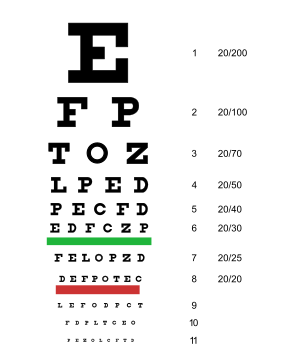
Once a year I have to go see the optometrist. Each year it’s the same old tests. “What are the smallest letters you are able to read?” To which I always reply, “I cannot read the big E without my contacts.”

I’m usually laughing as I mention it because I know it’s an E but it just looks like a blob. If it weren’t for contacts and glasses, I would have a hard time believing I would still be alive today. Tough to imagine that I wouldn’t have walked out into traffic or off a cliff by this point. Thank goodness for technology and for specialists who have been trained to help people like me attain eyesight. I wouldn’t be able to function through life otherwise.

While we all may vary in our level of independence, we all to some degree or another depend on others. That is unless your a hermit tucked back in the middle of the woods. But you wouldn’t be reading this blog post if that were the case….

Anyway, many of us see specialists to help us through all sorts of aspects of our lives. Doctors, financial advisers, and gym trainers are perfect examples. But they can’t do everything for us. Even though we oftentimes rely heavily on their expertise, we almost always still have a role to play. Doctors may recommend a treatment plan, but often it requires us to follow through on the recommended modifications and sometimes significant lifestyle changes to realize the desired health outcome. Financial advisers may recommend savings plans and investment strategies to get you to where you want to be financially in the future, but it requires discipline to stay to a budget and a commitment to achieve those financial goals. Gym trainers can encourage and push you through their recommended exercises to improve your health and conditioning, but ultimately you need to push yourself to actually complete the exercises and say no to that third Yum Yum Donut.

Our wants and needs drive us to pursue the assistance of others if we are unable on our own to meet our needs. We start planning for the future, knowing that we want to help pay for our child’s tuition in the future or save for a new house, and seek the assistance of a financial planner to get there. We go through the holidays and pack on the pounds and then realize maybe I should get a trainer to lose this weight and keep it off. Recurring illnesses or pain may drive us to finally visit the doctor for a diagnosis.

Until we recognize the need or want, the need for assistance is not evident. More often than not though, the earlier the need is recognized and corrective actions are taken, the greater the outcome in the long run. Establishing good financial, exercise, and health habits at an early age is of much more benefit than waiting until later.

So this got me thinking, what want or need are people like mentors, life coaches, psychiatrists and pastors addressing? And I’m not talking about the life coach who helps you brush your teeth and not act like a snowflake. I’m talking about the life coach who helps feed you the thoughts that drive you to push through the daily grind. To get up in the morning with a purpose and be able to keep pushing through life. Because it can be a grind at times.

Now I realize there can be significant differences between all of these people. There are substantially different qualifications for being a life coach, a mentor, a pastor, and a psychiatrist. But I think there is some significant overlap in the roles these people play in the lives of others.  Paul Vanderklay, a pastor who runs his own YouTube channel, which I would highly recommend, defined his role as a pastor as “helping people align their story with the story of others and the story of the Bible.” Now, this is not necessarily a post about pastoring. For the purposes of generalizing this for all mentors, life coaches, and spiritual leaders we could replace “the story of the Bible” part of his quote with “a framework or lens through which we see the world.”

Our story can be quite complex. There have been things within our control and many things out of our control. Highs and lows. Both comedic and tragic moments. Mistakes made and incredible feats accomplished along the way. Maybe there have been unrealized dreams or everything we could ever need has been handed to us. Each of our stories, though they may share some similarities, are incredibly unique.

The stories of others, although often hidden beneath the perfect facade of social media and our “put-together” behavior in public, often have many of the same elements that ours do. Pain, happiness, hardship, joy, strife, love, peace, war, injustice… The more you listen to other peoples stories and study history, the greater sense you get of how difficult and complex this world has been, continues to be, and always will be. A visit to the Holocaust museum or a brief study of the 20th century is all it needs to be overwhelmed with the heaviness of the human condition.

Today more than any other time in history we are confronted with, more often than not, the worst of the worst stories in the world. Mass casualty shootings, natural disasters, the spread of disease, wars, kidnappings and murders, sexual predators, corrupted institutions… At no other time in history have we been bombarded with the tragedies of life from across the globe with the frequency and explicitness we do today. It doesn’t take long to see the depravity of this world and how incredibly sad and difficult the stories of humans have been and continue to be.

And this is why I love how Paul Vanderklay defines his role as a pastor. In addition to knowing your own story and engaging with the stories of others is the need to have a framework or lens through which to understand these stories. For those of you who go to optometrists you are probably familiar with a phoropter. (Don’t feel bad if you didn’t know the name for it because I certainly didn’t.)

Closeup of medical equipment in an opticians clinic

The optometrist will continue to change the lenses in front of your eyes and check your vision to see how clearly you read the letters in front of you. The very first lens used usually provides a very low resolution view of the letters, but as additional lenses get added or changed, your vision should improve assuming your seeing an optometrist worth his or her salt.

Likewise, the role of mentors, life coaches, and spiritual leaders in our lives is to help us to find a lens or framework through which we can see our lives and the lives of others in the greatest clarity possible that we can. Easier said than done, because as I stated before this world is incredibly difficult and the more you study the human condition the more complex the framework and precise the lens must be for us to function well. I think more often to not, the emotional, spiritual, and mental turmoil we all experience is almost always due to dissonance between our story, the stories of others, and the framework or lens we are using to view the world.

Maybe we haven’t dealt with an aspect of our story and really gotten to the root of an issue. Maybe we’re so disconnected from others, that our story gets out of alignment of the shared human experience or we lose an understanding of others and what it means to relate with them. Or maybe our framework through which we view ourselves and others is incompatible with our life. Maybe the lens through which we view the world is directing us in a direction that does not lead to the betterment of our story, or to a life that is compatible with the rest of humanity.

Similar to the optometrist changing out lenses as they are determining our prescription, we can all be modifying our frameworks to try understand the world, and I think that’s so often done best with the assistance of others. As we talk through our lives and really dig into our perceptions of the world, the low resolution frameworks like happiness, popularity, power and money being the meanings of life will inevitably have to be replaced by higher resolution lenses through which we can see the world if we will ever be able to handle the complex and difficult stories that we all share. And who knows, maybe that new worldview that we adopt can take us beyond a state of just coping with the difficulties of life and extend to a greater appreciation of what existence has to offer.

We may never get a 20/20 vision of the world, but here’s to hoping we can all at least read the big E of life, whatever that may be, and continue to refine our worldview from there. And don’t be afraid to reach out to someone for guidance. We all need guidance whether we wish to admit it or not. Just like the optometrist is saving me from blindly walking into traffic or off a cliff, that person, or those people may help us from falling into the deepest pits of life. We have a role to play in figuring out our way but we weren’t meant to figure this out on our own. 

For Those of Us on the Naughty List

I’m so excited for the Christmas season. Every Christmas Eve for several years now, my family has watched Elf. It’s become a tradition, and I tradition that I really hope we hold on to for years and years to come. I’ve probably seen it close to 30 times and can proudly quote a majority of the movie. One of my favorite scenes from Elf is when Buddy is prepared to go to New York City and begin his quest to find his dad. Santa gives Buddy his tips and insight before he commences his journey to the Big Apple and ends it with this brilliant and memorable moment in the movie.

Will Ferrell does an impressive job imitating the behavior of a young child throughout this movie. His reaction to finding out his father is on the naughty list is so spot on for the reaction of a typical child. I can recall a specific instance on Christmas Eve asking my mother if she thought I had been good enough that year to be on the Nice List. While I don’t remember exactly what I had done that year, I do remember the unrest I had inside. Had I done enough good? Had I done too much bad? What bad things did my parents know about that I didn’t want them to know about? It weighed heavily on my young mind.

Getting an ambiguous reply from my mother, which I now know was an opportunity to get some sick enjoyment out of my suffering that night (just kidding Madre), lead me to think even more about this whole naughty-nice thing. What was the criteria? How “nice” was nice? How “naughty” was naughty? Did I just have to be above the 50th percentile? Was it a scale where as long as the good outweighed the bad, I made the nice list? What was the standard?

There was something raw about this night, something that made it so memorable. I was not at rest whatsoever. In fact, I don’t recall sleeping much of that night at all because I realized I really hadn’t been as nice of a kid that year as I should have been. As much as I wanted that new Gameboy, Nerf gun, K’NEX set, or whatever the hot toy was that year, a part of me didn’t feel deserving of it.

As I laid in bed, staring for hours at the ceiling and listening to the soft ticking of my wall clock, it was easy to make up excuses, distort the narrative, or look at good and bad actions in terms of a scale as ways to justify or avoid confronting mistakes, but it didn’t really give me relief. I’ve hurt people. I’ve done things that, simply put, were not right.

Despite trying to be as good as possible, I’ve become exhausted with the pursuit of perfection, because it’s not attainable. Deep down, there are things I know I should and should not do and my life has not always aligned with these. I know that the “good person” label should be reserved for those doing good and whole acts and thoughts 100% of the time. With perfection as the standard, I see myself as deserving of the naughty list. Despite my best efforts at being good, I know I have and will continue to come up short.

So I guess I may as well give up hope then right?  I may as well invest in a furnace for all the coal I will be accumulating. If I can’t do it on my own what hope is left?

Eugene Cho, pastor of Quest Church, spoke at Collyde Summit this past September and one part of his speech regarding this topic really resonated with me. He had recently been pulled over for going well above the speed limit. With this context he gave us three different scenarios.

In the first, the officer gave him the ticket for the full offense despite his pleading for a lesser or nonexistent punishment. In the second, the officer forgot the offense and let him go without penalty. In the third, the officer gave him the ticket for the full offense. But then, the officer pulled out his own checkbook and wrote a check for an amount greater than that on the ticket and gave it to the driver.

The first scenario depicts justice. The driver was in the wrong for speeding, and the authority gave him the appropriate penalty. The second depicts mercy. While he was wrong for speeding, the authority did not punish him for it. He had forgotten or excused his mistake. The third however, depicts grace. It makes no sense. The man who is at fault, is blessed by the authority despite his wrong doing. He did nothing to deserve the check and yet the authority gave it to him. The authority takes the penalty upon himself and substitutes himself for the driver.

If you were to personally experience all 3 of these, which would leave the biggest impact on you? Which one would most likely cause you to stop speeding in the future? I’m assuming most would say scenario #3.

The thing is that our mistakes are worse than a speeding offense. That “raw” feeling I experienced as a young child, was a real confrontation with the fact that there is something wrong with me. That I’m not as good as I should be.

Michael Yankoski illustrates it well in his book “The Sacred Year.”

“So sin is like cancer, eating us alive, diminishing what we’re made to be. It’s a cancer of the mind, a cancer of the heart, a cancer of the soul. And it has spread out like a tumor throughout our whole selves. And like the Bible says, ‘the wages of sin,’ like the effects of untreated cancer, ‘is death.”

This life can weigh heavily on us, wear us down, and change us. We lose our childhood innocence and start to justify actions and behaviors just because that’s how the world works. Just like doctor’s exams aren’t often pleasant, looking in the mirror and seeing ourselves for who we are is not easy or pleasant, but it’s necessary. And there’s hope!

As we enter the Christmas season, lets celebrate that we’ve been offered the gift of grace through the life of Jesus Christ. A man who did no wrong during his life, gave up his own perfect life for us. Like the officer, giving out of his own checkbook the payment for the ticket, Jesus paid the price of our mistakes with his own perfect life. Not out of indifference for us, but because he truly loves us. If his action was as simple as writing a check I could label it as indifference. But the fact that he was beaten, whipped, mocked, pierced with nails and thorns, and crucified on a cross to make that exchange for our wrongs, tells me it was out of love.

He came to give this gift to everyone, especially those who saw themselves as people who regret past actions. If you don’t believe me read Luke 15:11-32 or Luke 18:9-14. And that love, is enough to turn people from the bad things we’ve done to the more fulfilling life of good. It’s a gift that we don’t deserve, but that is offered to us. It doesn’t matter what we’ve done, because he paid for it all on the cross and continues to change lives everyday. People have been and continue to be freed from addictions, greed, lust, envy, hate, self-loathing, pride, gluttony, anger, and the list goes on. He wants to remove that cancer from our lives. He wants so much more for us. If you haven’t accepted this gift, please know that He waits anxiously for you to open it.

Wouldn’t you accept the check from the officer? Will you accept the gift of forgiveness, acceptance, and love from God? Trust me, it’s the best gift one can receive.

To those of us feeling deserving of the naughty list, I hope we can all enjoy the freedom, peace, and hope that comes with the Christmas season! As Line #2 in the Code of the Elves says, “There’s room for everyone on the nice list.”

Longing for Something Different

This past year has seemed especially difficult. Natural disasters, international tensions, shootings, bombings, all on top of our personal hardships that wear us down repetitively. And while it seems like this year has been particularly difficult, which I believe it has been, these hardships have always been a component of the story-line.

Just a couple weeks ago we remembered the terrible event 12 years ago, that shook our nation and demonstrated just how evil man can be and just how much pain a people can endure. And this isn’t by any means the lone instance of this. Just think back to history class when we learned of all of the suffering that has occurred in the history of mankind, let alone just in the past century.

Oppressive leaders, sex-trafficking, child abuse, poverty, racism, hunger, disease and illness, war, genocide, slavery, domestic violence…. Our news is saturated with hard times, sad stories of pain, and the cruel actions of so many people. But is this new? Has there ever been a peaceful time? A time without pain, or hardship, or suffering? A time where everyone treated everyone else with complete respect and received the same?

It seems like a lofty thing for us to ask of humanity (this whole peace and love thing), and yet isn’t that what we hope for? Why do we feel as if the world should be different if this is all we’ve experienced? Hardships, pain, and turmoil is “normal”, the only thing we’ve known, and yet we long for something different. It’s like desiring apple pie when you haven’t tasted apples or pie before.

So have you personally ever noticed this gap? Have you longed for a better world despite the repetitive failure of our circumstances to even come close to meeting that expectation. If many people desire an ideal world, which I believe many of us do, it says a lot about who we are. Exhausted, we may start to give up hope, but even if we start to accept the status quo, the reality is we still preferred something else. We crave something this world isn’t offering.

So is this “better world” attainable? Is there a legitimate hope that exists for something different than the status quo? And if so, what do we rest our hope in?

Those are the big questions.

I’m going to offer my worldview and I would encourage you to keep reading, and join the conversation.

It was when I saw how messed up this world is, the pain we all endure, my own shortcomings in being a “good” person, and the trouble and hardships I’ve caused others, that I first realized the gap between what I longed for in the world and reality.

I believe that this gap can only be crossed with the help of Jesus Christ, who came and lived a perfect life, and sacrificed himself through death on a cross. God loved us enough to come down as a man, weak, tempted, beaten, mocked, and killed. He suffered like us. He shared in the hardships just so we could know him and know that He loved us and was willing to die for us. He died as an atonement for the mess that exists in our lives that has caused the turmoil and miseries of this world.

Even since Jesus’ death and resurrection, his commandments to love one another and make disciples, has pushed the church into the next chapter of His story-line: to work on restoring this world to how it’s supposed to be. A perfect community with God and one another, and without pain, hardship, suffering, or death. And he promised he would come again to restore this world completely, ridding it of all of its shortcomings.

A peaceful world is what we long for. On our own, we haven’t been able to fix it, but God has entered our story, shared in our suffering, and has offered hope for a better world and a better life for those who follow. He has been, is, and will continue to be working to fix this world. It’s a story that fits what can be observed about this world. It’s a story that offers hope in the midst of sadness and despair. It’s a story that if true, changes everything.

These struggles we go through are real. The pain is real. But there’s hope given that says it’s only temporary and that it will be dwarfed by the happiness and fulfillment of what’s to come. I long for the day, when I experience something different. Much, much, much different.

4 Common Misconceptions About Eternal Life

Despite growing up going to church, I never really understood eternal life. I was fine with the idea of being surprised at life’s end as to whether or not heaven exists. I mean I’ve been a “pretty good” person so I’ll live life and then confront whatever may be next when it’s in front of me. But for those who enjoy asking tough questions and looking for answers, or what constitutes to some people as intellectuals, society’s common depiction of heaven can be troubling.

But this depiction that is commonly pondered on is based off of incorrect conceptions about what eternal life really is, and I think these same misconceptions prevent so many from understanding Christianity and what it’s purpose is. I want to discuss 4 of the misconceptions I personally had that, when found to be incorrect, changed my view on the faith entirely. I love thinking through deep stuff like this and I hope you enjoy and take something from some of my thoughts from the past couple months.

1. Eternal Life is Simply Living Forever.

I’m a drummer and my family would tell you that I never stop drumming on something at all times. The steering wheel during drives to and from work, the kitchen table during dinner, railings go up and down the stairs… You get the picture. But the idea of doing something, heck even drumming, forever seems well… pretty boring.

In the same way, I had always found the idea of heaven to be well…. boring. Heaven was a bunch of people, clothed in white, in the clouds, behind those pearly gates, playing harps and singing hymns together forever and ever. On and on… and on…….. and you get the picture…

This life looked so much more fun than heaven did, and therefore heaven deserved to take the backseat in priorities to my own life here. Living forever might be fun for a few months, I guess years if you keep meeting new people, but after a while… yawn…

But this belief that it’s simply living forever, strips “eternal life” of it’s greatest characteristic. In the Gospel John, Jesus states,

“… I have come that they may have life, and have it to the full.”
                                                                                                             – John 10:10 –

He doesn’t state that he has come so they may live forever. He states that they may have life, and have it to the full.

When we say eternal life, so much pivots around both of these words:  Eternal and Life.

Life is something that is quantifiable. One can have a lot of life, while another can have very little, seemingly dead. Often we look at it as unchangeable and that we’re each given one and it’s a life regardless of how it’s lived. I would argue that we can have an abundance or scarcity of life.

Think about it. Two drivers on the road are both cut off by an aggressive driver. One of them reacts by flipping off the guy who cut him off and lets this detract from the rest of his day and makes him miserable with other people. The second driver, who realizes the insignificance of what has been done to him, realizing he’s okay and didn’t crash, and doesn’t let it affect his life and relationships with others. This is definitely an extremely simplified situation but hopefully it helps illustrate the point.

And Eternal. While we often associate this with unlimited time, it actually is meant to quantify the amount of life that is offered to us. Think of never ending life being represented by an infinitely long string along a timeline. What real eternal life is that same string of infinite length, but also with an infinite thickness. It’s about experiencing an infinite quality and quantity of life forever.

I think we can all say this world is difficult and trying. Multiple shootings, natural disasters, and heart-wrenching stories have occupied our news, especially this past year it seems. Living forever doesn’t really fix that, but an abundance of “life”, now that sounds enticing and worth looking for.

2. Eternal Life Starts at Death

The light. The moment when we pass from this world and continue on to whatever comes next. A man stands there (I guess this is God) and he determines whether or not you get eternal life and go to heaven, or go to hell. This is the common perception of when eternal life begins.

Growing up, I saw a huge disconnect between this life and this supposed eternal life. It seemed like it was simply a hope for people that needed lemonade in a world that was handing them a ton of lemons. This life seemed “fine” in many respects, and it was difficult to buy into the belief that we would live an entire life here, have it end, and then start another like this one never happened. And when things seem disconnected, one has a legitimate reason to question them. But I think it’s the fault of our culture’s oversimplification of eternal life that has led to this disconnect.

C.S. Lewis’ book The Great Divorce I believe paints a better picture of when eternal life starts, or better yet, when the progression for it starts. He throughout his book emphasizes that right now, in this life, on a daily basis we can either gain life or lose it. Jesus said that he came so that may have life and have it to the full, which means that it wasn’t here before. Power, riches, beauty, sex, relationships, and titles have all been pursued by man as a way of achieving fulfillment, and yet time and time again we have seen how they have failed to fill the void in the individual that longs for purpose and significance and often left them a more deteriorated and lost individual. Christ showed us how to live a full life and then provided the forgiveness, mercy, and sacrifice to enable us to have it.

So in a world that tries to continuously feed us lies about what will make us happy and give us a worthwhile life, I would argue there is only one way to a fullness of life. It starts here and now, not after death.

3. Eternal Life Can Be Earned.

God opens the books and weighs the scales to see how much good and how much bad we’ve done. It’s simple and it’s fair. Like karma, if you do good things, good things happen to you like receiving eternal life. If you do bad things bad things happen to you, you’re going to hell. It’s balanced and just.

But when you realize you’re not as good as you thought before, you start to give more thought to what the whole point of this life is. Could I even earn eternal life if I tried? And what does eternal life look like?

How could an imperfect person be in the presence of a perfect God? If I’ve made but one mistake, how could I possibly be fit for heaven?

“For the wages of sin is death; but the free gift of God is eternal life through Jesus Christ our Lord.”
                                                                                                       – Romans 6:23 –

God doesn’t want to judge and keep people out of heaven. He wants to be with us and doesn’t want us to experience death.

The ultimate way to demonstrate ones love for someone, would be to give up one’s life for that person to save them, right? A close family member or a significant other is about to walk in front of a speeding vehicle and you dive in and push them out of the way taking the punishment.

Simply put. That’s what Jesus did when he died on the cross. Sin earns death, and death is the absence of life. This world will wear us down if you don’t have anything that’s able to fill you up and give you life. He took the sins that deserve death from those who believe in who he claimed to be, and gives the eternal life he had to those same individuals. It was a demonstration of love. It was God showing just how much he loved mankind and how much he wanted us to be with him. We don’t earn eternal life, it’s a gift from God, sitting in front of us waiting to be opened.

4. Heaven’s Boring

A cartoon version of heaven may work for children but as an adult, I refuse to believe such a childish idea. As I hit my teenage years, I really had a hard time accepting heaven when it was often portrayed like fantasy. As much as I wanted to believe it because my church, and family believed it, I couldn’t myself. It wasn’t until I realized how unlike those typical depictions heaven really was, that I actually committed to believing in it. I’d like to briefly describe as best as I can what I think heaven will really look like. This are small glimpses into what I believe is impossible for us to completely explain or grasp.

Community. First off heaven is a community that is built on 100% pure relationships. Look at the elements of two or three of your best relationships in life. Think about some of the intimacy, trust, and love that is experienced in these. Now imagine that this exists between everyone, where there is no fighting between individuals, there is no sadness or hurt feelings, and everyone can find pure joy in everyone else.

Freedom. It’s a life away from so many of the things that restrict life like listed before. The pursuit of money, power, glory, and pleasure are all intrinsically valueless, and heaven provides fulfillment and frees the individual to satisfy the hunger and thirst for pure life that they long for.

Transformation. It’s not just about living forever. It’s much more about becoming more of who we were intended to be. Imagine a life without guilt, without disappointment in yourself because God has helped you reach the pinnacle where you no longer hurt others.

We often look externally, to possessions and experiences, for excitement and fail to see all the opportunity within the individual and especially within relationships to experience excitement. I think heaven presents a beautiful environment for us to experience those jaw dropping experiences but most importantly within perfect relationships and as the people we were intended to be, pure and without sin. Thanks for reading!

“Ask, and it will be given to you; seek, and you will find; knock, and it will be opened to you. For everyone who asks receives, and the one who seeks finds, and to the one who knocks it will be opened.”
                                                                                                          – Matthew 7:7-8 –

Changing for Better or for Worse?

Well these past four years sure did go by fast, and upon reflection it’s amazing how much I believe I’ve changed since my freshman year. I can remember auditioning for the Blue Band and then thinking that so much of my self-worth was riding on that result. I remember planning to pursue engineering because I enjoyed the subject, but also because I wanted to live comfortably and this occupation would give me the money to do so. I remember thinking that wearing your dorm key on a lanyard was cool. I couldn’t have been more wrong on all three (especially that last one).

We are constantly changing. Day-to-day we may seem the same person, but really reflect over the past few years or even months and I’m sure there’s something that has changed in your personality, your temperance, your desires, or your dreams. To believe that we are unchanging, that we can’t grow and develop or diminish and decay, can be dangerous. The truth is, we are taking one of those two paths in almost every situation. So are you changing for better or for worse?

First, what are you working towards? What is culminating goal that you have set for yourself? Your final destination dictates the trajectory that you will try to take and therefore should be given much thought. The thing to watch for though is that in pursuit of this goal, does it cause you as a person to grow or deteriorate? Pursuit of happiness, a common goal for people, could lead to the compro In the grand scheme of life though, lanyards are of much less importance than things like relationships and our contributions to our community. The goal you have makes you more aware of the progress or the retrogression you make over time.

Second, what setting are you putting yourself in? A plant placed in fertile soil with plenty of nutrients will often thrive more successfully than when it’s planted in a bunch of rocks. Are you surrounding yourself with groups that instill good values and support for you? I wrote a post before called “The Rule of Five” which talks about this exact topic. The people we surround ourselves with will have a big impact on who we change into.

Lastly, what attitude do you have regarding change? In Luke 18, Jesus tells a parable about the Pharisee and the Tax Collector. They both go into the temple to pray. The Pharisee was prideful and lists off all of the great things he does and then lists the ways that he is better than the Tax Collector. But the Tax Collector simply humbles himself and asks for mercy. Humility leads to positive change because it allows us to recognize our shortcomings instead of keeping them in the dark. We can always find worse actions of others to compare ourselves to. If we use these actions to justify our actions ourselves entirely we’re in trouble.

This world is changing, and watching the news lately I have been deeply saddened by just how much more pain, violence, deceit, and discouragement there has been lately. We all contribute to how this world changes, for better or for worse and we probably contribute more bad than often we would like to admit. So let’s do our best with what we have because we could always use more people consciously trying to change for the better.