Voldemort and the Pharisees – Mirrors to Ourselves

The Mirror of Erised scenes in Harry Potter and the Sorcerer’s Stone have always captivated me. Not only for what they reveal about Harry, but for what they reveal about us.

With mirrors we can see ourselves visually. But the Mirror of Erised, which plays an integral role in the first book of the series, shows the person their deepest desire. For Ron Weasley, he saw himself as Quidditch Captain and holding the house cup. But for Harry, he saw himself reunited with his parents who were killed when he was an infant.

It’s not too surprising that an orphaned boy would wish for a fix to these absent relationships. In contrast Ron’s deepest desires seem so trivial. But they paint a picture of the wide spectrum of human experience, pain and want. This mirror reflects back an even rawer depiction of who we truly are.

The Mirror of Erised

When Dumbledore found that Harry had discovered the mirror and was spending much time staring into it, he said, “It does not do to dwell on dreams and forget to live.”

Quite a fitting quote from a man who the reader later finds out also suffered significant losses within his own family.

But the scene that I find most compelling surrounding this mirror is the one towards the end of the book when Dumbledore explains how Harry, and not Voldemort, was able to retrieve the Sorcerer’s Stone from it.

“Only one who wanted to find the Stone — find it, but not use it — would be able to get it, otherwise they’d just see themselves making gold or drinking Elixir of Life. But not Harry. Harry, who wanted to find the Stone to stop Voldemort from getting it — who wanted it, but not for himself — was able to get it out of the mirror.”

The Sorcerer’s Stone could provide the ability to prevent aging, via the Elixir of Life and could turn any metal to gold. The stone symbolized the human hunger for immortality and wealth. Setting aside the irrationality of how the magic works, the central premise of this story appears to be getting us to question the unchecked pursuit of wealth and power. The dangers of desiring or longing for control.

This same longing for control, the desire to master life through our own effort, shows up not only in fantasy stories but in the Bible as well.

This dynamic, while not nearly as explicit, seems to undergird much of the Gospels. Very often a stark contrast is drawn between the Pharisees and Jesus, and rightly so, for Jesus is often both directly and implicitly challenging them. Jesus levies his sharpest critiques toward the Pharisees more than any other demographic, even the Roman centurions. I think it’s for this reason that many Christians today, also tend to use the term Pharisee in a derogatory and accusatory manner.

But is it possible that by making the Pharisees out to be solely antagonists and so alien from ourselves, we rob these stories of their power? It would be like only seeing the elements of Harry in ourselves and not seeing how we also might have traces of Voldemort’s motives within ourselves, which is a scary proposition.

Similarly, the Pharisees might be the group that many Christians most closely resemble, and I don’t mean that in a condescending manner. I believe the Pharisees can serve as an excellent mirror to understanding much of ourselves.

The Pharisees lived in difficult circumstances. Under Roman occupation, the Jewish people were a shell of their former selves. It had been several centuries since the last prophet from the Old Testament, Malachi, had prophesied and it felt as though God had turned his face from them and was silent despite their suffering. They had already gone through the exile to Babylon, rebuilt the temple, but now they were hardly in control of their own destinies. It would be understandable if they felt God had forsaken them. Outwardly it certainly appeared that way.

Instead of giving up, they doubled down on trying to live in perfect obedience to God’s laws, seemingly in hope that their righteousness would lead to God’s favor. That favor, one could imagine, would look very different than the circumstances they found themselves within.

In much the same way, we can dwell on our own failings and think that is the cause of God’s seeming disfavor. But this type of thinking often spirals into treating God like a vending machine who will give us what we want if we simply put the figurative quarter in by acting rightly. That if we get our house in order, our circumstances would be guaranteed to improve.

Dumbledore warned that people dwell on these deepest desires and forget to live. In many ways, the Pharisees’ desire for better circumstances by influencing God’s hand via their “perfect” behavior, missed the point altogether.

Life, wealth, autonomy, and the realization of dreams in and of themselves are not bad things. They are good things but cannot be the ultimate thing.

As Jesus says in his Sermon on the Mount, “But seek first his kingdom and his righteousness, and all these things will be given to you as well.” He is addressing our anxieties, worries, and stress about worldly things. Jesus too found himself living under Roman oppression, and was ultimately killed by it. And yet, he said to aim higher, seek God’s kingdom, not in a bartering way to obtain his gifts, but out of selflessness and then, and only then, can you truly live, often despite the outward appearance of life’s circumstances.

If you’re like me, I like to exhaust the limits of my abilities before relinquishing control. It’s hard for me to do that. And I often find myself trying to appease God to be deserving of his favor. But that’s more like the way of the Pharisees, and dare I say Voldemort, still trying to exert control albeit in a more covert way.

No amount of time spent in front of that mirror would have ever brought Harry’s parents back. The mirror can reflect our deepest longings, which are often a void left from our deepest wounds and scars. And we can spend much of our lives dwelling on those, to no avail, and missing the point of life in the process.

Jesus offered a different way. He said suffering and pain was inevitable. But he invited all of us into relationship with him and to have life abundantly. That abundance isn’t often found in money, extended lifetimes, or even necessarily the righting of past wrongs. I would say it’s not even primarily about living forever in heaven, as some Christians often reduce it to.

No, it’s something fuller. Something richer. At its core, that abundance is an abundance of relationships, something that is made starkly evident in the Harry Potter books, and I think is quite evident in the Gospels.

Perhaps real life begins when we step away from the mirror and our attempts to control how our deepest longings will manifest themselves and instead seek first relationship with God and with one another.

Literally False, Metaphorically True

Two brothers who have made their rounds on podcasts these past several years are Bret and Eric Weinstein, members of the self-named “Intellectual Dark Web.”

The “IDW” (for short) consisted of several counter cultural thinkers (many from academia) who were resisting anti-liberal movements underway on college campuses and within the zeitgeist of western societies more broadly. Their commonly shared beliefs over the preservation of Enlightenment values (with an emphasis on free speech) allowed them to have frank conversations about their conflicting views on a whole host of, what to them seemed to be, secondary issues. Conversations that were often drawing large crowds and filling arenas and theaters and millions of views online.

One of the fascinating developments within this group however is the struggle with how religion is to be handled. Some like Jordan Peterson tried to emphasize its integral role in Western thought. Others like Sam Harris denigrated it as nothing more than a social contagion worth exorcising completely. And then there were a wide range of views in between.

For Eric Weinstein, an avowed atheist as he indicates in his tweet, the notion that these truths we believe to be self-evident – our equality before God as individuals and certain unalienable rights – apparently do not appear to be as evident to the citizenry today as it was to our Founding Fathers and their contemporaries.

Some of these staunch atheists realize that – much like a man sawing off the branch he is sitting on – society appears to be secularizing to the point that maybe we’re detaching from the very root of what gives us our values. As Eric says, these words are “load bearing.”

Cue Eric’s brother Bret, a former evolutionary biology professor, who had this engaging conversation with Jonathan Pageau, an Orthodox Christian and artist.

The contrast of their worldviews becomes very apparent in the final 30 minutes of the conversation. Bret frames religion in the following way: “Literally false, metaphorically true.” The crux of his point is that a religion like Christianity is not accurate in its truth claims about origins, history, science, etc. however, it’s a useful fiction for affording us the values and reigning in the bad behaviors of individuals so as to allow civilization to foster.

He goes on to use the analogy of a tennis player who is told to swing through the ball. In Bret’s opinion, what the racket does following its contact with the ball has no bearing on the ball’s flight path. And yet, coaches often use this as a teaching tool to get a proper swing. “Literally false, but metaphorically true.”

A similar story he uses in other conversations is of a native island tribe who believes in a tsunami god. They pass down stories through the generations of how the tide receding into the ocean is the tsunami god preparing to attack their island. This story affords people who never experienced a tsunami within their lifetime to have the ability to respond appropriately (finding high ground) when the situation eventually arises. In essence, from an evolutionary perspective, the religion, while not conveying a “literally” true explanation of what is occurring, provides benefits for the continuation of entire people groups.

But Bret goes further with his tennis analogy and concludes that if the tennis player starts losing the game, their coaches must find some new teaching tool with which to correct the player’s technique. A teaching method different than the “swing through the ball” advice given by coaches of the past. This is consistent with the more alarmist position he takes regarding the state of western culture more broadly. It also seems to fit his worldview that places an emphasis on change and evolution. In his opinion, the religions of old are inadequate to respond to the challenges of today and therefore a new answer to today’s problems must be found.

Jonathan however takes his analogy and flips it on its head. Is the tennis player possibly losing the game because his coaches started telling him it doesn’t matter if he follows through? Is his abandonment of what worked before what caused him to fall behind in the first place? Is he more likely to succeed if he continues to follow the advice of past generations that has gotten them through trials before?

Maybe the best recent nonreligious example of Bret’s “literally false metaphorically true” theory is public health during COVID. Framed as charitably as possible, we could say that for the sake of encouraging people to make the “right” decisions for collective health of society, some of the literal truthfulness of the public health officials’ claims was abandoned. Inconvenient truths that would have been counter productive for their urgent goals were omitted. To achieve expediency, they were willing to sacrifice honesty about the scientific conclusions (or lack thereof) at the time.

The origin of the virus. The efficacy of the vaccines. Two weeks to stop the spread. Risks to different age groups and demographics. That’s just a few that immediately come to mind. Each of those errors eroded trust. Whether it was malevolence or purely ignorance, it wreaked havoc on the credibility of the public health profession.

So what lessons can be learned from this?

As a parent and as a youth group leader at our church, Bret’s words prompt me to think through what it is I want to pass along to those who come after me. I’m confident that at the very least what Christ’s life and death has afforded to those within the Church is metaphorically true. That if you live as if it’s true (like swinging through with a tennis racket) and not just living for the here and now (YOLO) but for things of eternal value, you wind up producing the best results in the here and now as well.

Maybe nothing can serve as a better example of that is Jesus. He was willing to lay down his own life in pursuit of something of far greater value. We can debate whether or not he accomplished through his crucifixion the eternal salvation of those who trust in him in the life to come. But we cannot deny the incredible power of that act, which has rippled through history and impacted society considerably even if it is only metaphorically true. Even avowed atheists like the Weinstein brothers concede as much.

But then we need to take another step and question the “literally false” part that has the potential to undermine long-term trust, much like public health did in the past few years. As a parent I would not like to hand down to my kids and to the young children something that omits inconvenient truths or outright includes lies just to get a result in the immediate. I want to hand them the best map for navigating life I can, which admittedly will never be perfect.

But maybe that’s where being honest about areas of doubt or exposing kids to the diversity of views on topics that even the church has had debates over throughout history would keep the next generation from questioning the trustworthiness of adults in the long run.

For deconstruction of faith so often happens on the basis or interpretations of topics like Genesis, debates over the church’s stance on social issues, and literary criticism of the Old Testament, all which fall outside the purview of the creeds of the church historically. Maybe it’s worth reflecting on what is and is not included within those commonly shared belief statements. For should one’s entire faith hinge on an interpretation of difficult to read books like Genesis or Revelation? Not that these aren’t profound books of the Bible, but distilling their messages into simple prescriptions or belief statements is impossible.

That being said, I struggle with Bret’s proposition about finding a new answer to today’s challenges. I haven’t seen to date a better alternative to the Christian worldview or something that I could fabricate that better explains who we are, our purpose in life, and how best to live it out. I’m more in the camp of Jonathan asking Bret why we have to abandon what has worked before. Have prior generations not faced difficulty and hardship? It seems intrinsic to the human experience.

I’ll put my trust in the man that was willing to die for others and the power that comes from his name. The downstream effects through western society from his life, death and professed resurrection are apparent. And as we all watch as we saw off the branch we sit on, I’ll continue to suggest that we take a break from cutting and give greater credence to the trunk and roots that hold us up. This worldview and the values it affords aren’t as self-evident as it used to be. And maybe this gives us an opportunity to appreciate it all the more.

The Cute and Absurd

Chris Pratt in his viral MTV awards acceptance speech from a few years ago outlined nine rules he wanted to share specifically with his young audience. But it was Rule No. 4 that illustrated the framework for his overarching message.

“When giving a dog medicine, put the medicine in a little piece of hamburger and they won’t even know they’re eating medicine.”

Mixed in with some crude potty humor and lots of laughs from the audience were a few surprising heartfelt rules. Rule No. 2 was “You have a soul. Be careful with it.” Rule No. 6 was “God is real. God loves you. God wants the best for you. Believe that, I do.” And Rule No. 8 was just as blunt, “Learn to pray. It’s easy, and it’s so good for your soul.”

Many news articles latched onto and promoted his non-religious rules like how to keep your poop from stinking up the bathroom at a party (“the hamburger”) and as a result unintentionally promoted what Chris intended to be “the medicine” in his message. What an incredibly witty and cleverly constructed award acceptance speech.

This hamburger-medicine approach has been used often, especially with youth. The theory is that if you can cake a moral message in enough entertainment and comedy, you can make it palatable. That no one would willfully choose to accept the medicine on its own.

It’s the model for many church youth groups. The model for Disney movies. The model for children’s stories and TV shows. And it’s a model many parents use with their own kids. Even I instinctively resort to humor often to soften my kids up and make them more open to lessons I try to pass on to them.

But I stumbled upon an interesting quote by the late pastor, professor, and writer Dallas Willard who has had me pondering when this approach may go too far.

He states that today much of our art can be summed up in two words: “cute and absurd.” And the more I’ve pondered it, the more I think he’s correct. We should be cautious of when the pendulum swings too far.

So much of modern TV shows, movies, and books, not just for children, depend on the cute and absurd for almost the entirety of their content in a way that historical storytelling hasn’t required. Is there a historical equivalent of “The Emoji Movie” or “Trolls?” Were kids in past generations reading books inundated with pictures of simply cute or silly things? Did past stories include similar sidekick characters that now seem to be used principally for comic relief and merchandising?

If you cover that medicine in too much hamburger, does it lose its effectiveness? Or maybe by fixating on the hamburger too much, we forget to include the medicine in the first place?

I think Chris Pratt gave a succinct and distilled picture of what this can look like. He could have given nine funny rules for life that would have been discussed in the next news cycle and moved on with his life. But he was willing to put himself out there and add a few doses of some important truths that he wished to impart to others. I can only applaud him for that. If anything, it showed that someone with those values could still find a place in Hollywood and maybe give others confidence to be themselves in environments that seem bereft of people with similar beliefs.

I think it serves as a reminder that seriousness and levity don’t have to be mutually exclusive. The proper mix of both might be the best recipe for us getting the medicine we need.

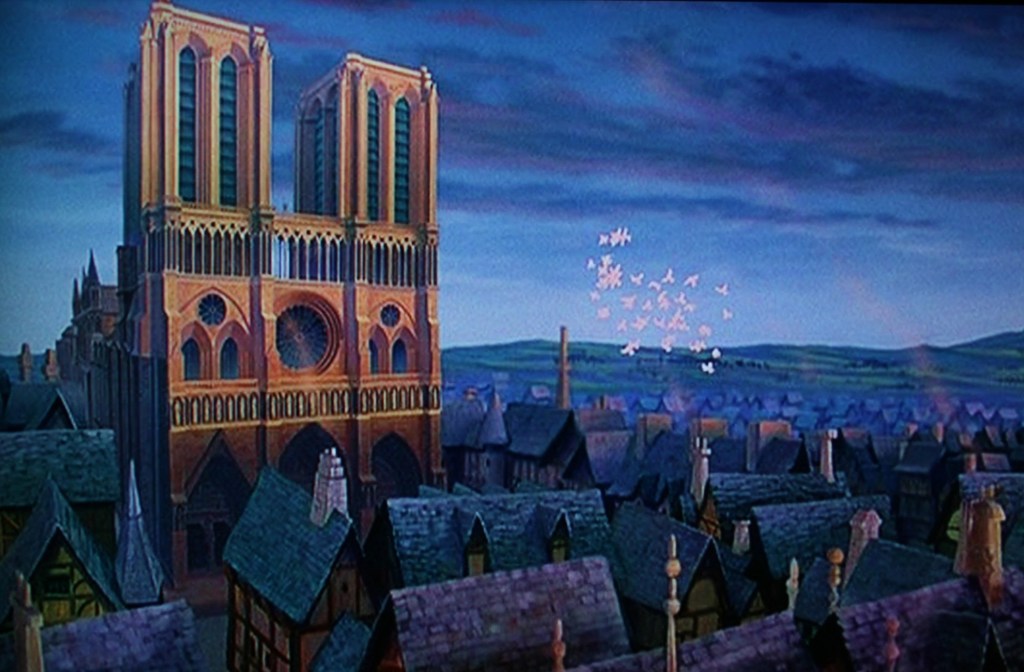
The Numinous Bells of Notre Dame

God chose the foolish things of the world to shame the wise; God chose the weak things of the world to shame the strong. God chose the lowly things of this world and the despised things—and the things that are not—to nullify the things that are, so that no one may boast before him.” 1 Corinthians 1:26-29

The Hunchback of Notre Dame, is a woefully underappreciated masterpiece. The score, the animation, and the storyline are woven together to produce a film that is inspiring, convicting, and haunting in a way so few works of art accomplish.

The deep and difficult topics, such as religion, lust, and unrequited love were bravely included by Disney’s Animation Studios, which more recent films lack. Their movies today seem to miss the risk-taking and profound themes that made them so popular in the past. And despite Disney’s recent propensity for revisiting their older classics, as the composer Alan Menken said in a recent interview, there appears to be a unique holdup with a live-action remake of The Hunchback of Notre Dame.

This movie is controversial to many, in large part due to its dark themes. And given the pushback Disney has received of late on many movies, it probably shouldn’t come as a surprise that executives would be hesitant as to whether or not to pull the trigger on a remake. Because it’s not just Disney that has lost its appetite for stories that might be challenging. The general public has as well.

But sometimes dark elements are necessary in stories. There are some who theorize that Disney’s lackluster productions of late are due to a drop off in the quality of their villains and I think there’s substance to that theory. For many of Disney’s best movies are driven by their villains, and Claude Frollo just might be Disney’s most terrifying one.

As the jester states at the beginning and end of the movie, “This is the tale of a man and a monster.” As a kid, one would assume the man would be Frollo and Quasimodo was the referenced monster. But the theme that permeates this whole story though is how Quasimodo, a disfigured man, was able to reveal the monstrosity that was Judge Frollo. The lowly, foolish, and seemingly weak man shames the seemingly wise and strong monster.

The Most Oppressive Tyranny

As the opening song to the movie “The Bells of Notre Damestates, “Judge Claude Frollo longed to purge the world of vice and sin. And he saw corruption everywhere except within.” This particular temperament was one C.S. Lewis had identified and was so poignantly able to describe in his own writing.

Of all tyrannies, a tyranny sincerely exercised for the good of its victims may be the most oppressive. It would be better to live under robber barons than under omnipotent moral busybodies. The robber baron’s cruelty may sometimes sleep, his cupidity may at some point be satiated; but those who torment us for our own good will torment us without end for they do so with the approval of their own conscience. They may be more likely to go to Heaven yet at the same time likelier to make a Hell of earth. This very kindness stings with intolerable insult. To be “cured” against one’s will and cured of states which we may not regard as disease is to be put on a level of those who have not yet reached the age of reason or those who never will; to be classed with infants, imbeciles, and domestic animals.

C.S. Lewis

As C.S. Lewis rightfully remarks someone of Frollo’s character, would create hell in his own pursuit of heaven. This behavior isn’t limited to the religious, but to any person who believes in their own heart they are blameless and sees wrongs necessary of correction exclusively in others.

However, there’s certainly an extra level of horror when those committing atrocities do so in the name of God. That’s probably why Disney chose to change Frollo’s role, which was originally as an archdeacon in the book, to simply a Parisian judge. For when corruption runs that far up the hierarchy, it gets incredibly unsettling, and no doubt Disney would have received additional scrutiny from Catholics for suggesting such degrees of misdeeds so high up within the Catholic Church.

And yet, this world has seen corruption run all the way up into the priesthood, and not too long ago. And even in Protestant denominations, the recent controversies around leaders such as apologist Ravi Zacharias or Hillsong pastors Carl Lentz and Brian Houston show, those in the highest positions of church authority, can find twisted justifications for their actions. The Hunchback of Notre Dame is haunting because it rings true in our experience.

As C.S. Lewis notes in his wonderful book The Great Divorce, “It is a stronger angel, and therefore, when it falls, a fiercer devil.” We often shy away from those things that are most distressing, but that’s only because they originally were supposed to be really beautiful things that have gone awry.

When trivial matters go wrong, they hardly make a difference in our lives. A broken tool, a bad meal, a rough day at work. But when the most vital parts of our life get warped, like relationships and community – these things have the potential to create significant havoc – and it makes us pullback and consider cutting them off all together. And yet, that’s not what this movie seems to recommend.

The Numinous Notre Dame

For how dark the movie is at times, it makes room for the light to shine all the brighter. The abuse of Frollo is contrasted with the numinous beauty of the purest forms of love and fidelity. The movie opens with the bell towers of Notre Dame above the clouds, a depiction of the holy and transcendent. But as the opening song continues, the viewer is taken below the clouds and into the city of Paris, where the ideal represented by the architecture of Notre Dame has to answer the idiosyncrasies of a culture filled with not just your bakers and fisherman, but gypsies, jesters, Quasimodo, and Frollo as well.

Throughout the movie, stained-glass windows, the awe-inspiring architecture, the compassion of the priest, and the eyes of the statues of saints and of Mary and baby Jesus linger behind the actions of all characters spurring them and the viewers towards deeper and more profound understandings of love.

The writers of this film, while challenging the deplorable actions of men who abuse their positions of authority, also have a deep and profound respect and adoration for the ineffable ideals represented in that cathedral. Hard not to think it’s a similar impulse that disturbed so many religious and nonreligious people alike when Notre Dame burned back in 2019.

For the self-sacrificial acts of Esmeralda, Quasimodo, Phoebus and Quasimodo’s mother are allowed to standout all the more in spite of the dark times they found themselves in.

Jesus addressed his parable of the Pharisee and the tax collector to “some who were confident of their own righteousness and looked down on everyone else.” And in it he shows that the repentant tax collector would be justified before God and not the self-righteous Pharisee.

And C.S. Lewis notes “There are two kinds of people in the end: those who say to God, “Thy will be done,” and those to whom God says, in the end, “Thy will be done.”

This is what I believe The Hunchback of Notre Dame does so well.

This distinction Lewis makes is the same as the tax collector and the Pharisee, and which is the same as man and the monster. The presence or absence of humility. And the result being a different posture before God and towards other people.

A striking difference between Quasimodo and Frollo is how they see others. Frollo, in his conversation with Phoebus refers to the gypsies as ants deserving to be squashed. Quasimodo by comparison builds an entire model of the city with handcrafted figurines representing the people he longs to walk among down below. It’s hard to find a more stark difference in view towards the people in the city.

And this is why, the Festival of Fools and the use of the jester is so fitting. When a hierarchy is as backwards as this one, with the abuses of Judge Frollo so rampant, it takes the foolish things of this world to set it back upright again. And Quasimodo, named the king of the fools, is the hero who sets the world straight again. The mysterious bell ringer becomes the soul of the city as the jester sings in the opening verse.

“Morning in Paris, the city awakes
To the bells of Notre Dame
The fisherman fishes, the bakerman bakes
To the bells of Notre Dame
To the big bells as loud as the thunder
To the little bells soft as a psalm
And some say the soul of the city’s
The toll of the bells
The bells of Notre Dame”

Much like Jesus Christ, Quasimodo represents a messianic figure that shames the strong and sets hierarchies back in order. And it’s a reminder at times that the seemingly foolish, weak, and powerless things of the world may be just the answer to tyranny.

Louis C.K. and the Dog

The comedian Louis C.K. told a story during one of his appearances on CONAN about the time his dog ate so much chocolate and the difficulty of trying to save her life. I’ve watched my fair share of comedy bits on YouTube over the years, but this one in particular stuck with me. I think that’s because there’s a deeper lesson that can be derived from it.

Follow me on this quick aside before revisiting the Louis C.K. bit.

There was a debate on the Unbelievable podcast between Ben Shapiro and Alex O’Connor (also known as Cosmic Skeptic) regarding the topic of whether or not religion is good for society. If you’re interested, here it is for reference.

The podcast really does a nice job fostering constructive dialogue between people of opposing worldviews. And I thought this was surprisingly quite a cordial and engaging debate.

But my biggest takeaway from their discussion wasn’t so much on the main question being explored in the debate, but on one of the deeper philosophical questions that arose from the dialogue regarding what we claim we can and cannot know.

Ben Shapiro at several points says that his religious worldview (Judaism) does not require him to give proof of God’s existence and that he concedes there’s “a whole realm” of things he does not know. He proposes however that Alex O’Connor’s naturalistic atheism worldview does require a proof of the negative if he is going to say that everything can be explained away by naturalistic cause and effect and that there definitively is no god.

In essence, O’Connor holds a worldview that everything can be reduced to mechanical, physical, and chemical processes, like mere atoms bouncing off one another. Meaning or the sense of free will to many materialist atheists like O’Connor are illusions. They may be considered helpful illusions, but they are illusions nonetheless.

Ben Shapiro refers to his own line of argumentation as a “giant escape hatch.” That basically he can point to the transcendent, state that he believes it exists, and then just lean on the fact that he is fine with the notion that he does not, and cannot, know everything. This might seem like a slight of hand debate method or, as O’Connor calls it, an “appeal to mystery”. But, this actually demonstrates succinctly the biggest divide between many religious and naturalistic atheist-types.

O’Connor fundamentally holds the view that although he does not currently have an explanation for everything, that in theory, with enough time, we could have an explanation for everything. So often these conversations descend into the stereotypical “God of the gaps” debate that has mired many of these conversations in the past. Religious apologists poke holes in scientific discoveries to try and leave a gap for God, and the atheistic types keep trying to make arguments in a manner to close said gaps. But those arguments often fail to miss the very practical implications that these disparate worldviews have for the individual, which I think is far more important to tease out.

In Louis C.K.’s story, he had knowledge about the dog’s situation that his dog was completely unaware of. One might say, Louis had more information, more capability, and more agency to resolve the dog’s conundrum than the dog itself. And even after saving the dog’s life by getting it to consume the hydrogen peroxide to vomit the chocolate and prevent death from occurring, the dog had no real appreciation or understanding of what it was that its owner had done for it. Louis’ approach, albeit unorthodox and comical, was not truly understood by the dog.

The biggest difference between the traditional religious worldviews and many of the modern atheistic types, is this consideration for other beings with greater agency than ourselves. If we were to consider ourselves as the dog in Louis’ story, is it possible that we’re largely unaware of what might be going on above us? Many of us like to think God would be just like any other person and not operating on a completely different plane of wisdom, knowledge, agency, and capability than any one of us has. So would it be better to view the concept of God through the analogy of a dog’s experience of its owner?

Some naturalistic atheistic types might acknowledge some sense of agency within humans, something that seems to undermine their own worldview, but certainly give no credence to something potentially above us. And yet, recent cultural shifts have more and more of these types of thinkers realizing that their positions are not as iron-clad as they previously thought.

Terms like spirits, egregores, and swarms are coming up more frequently in conversations, even with esteemed cognitive scientists. Much like the function of a beehive, deep thinkers are starting to appreciate that there are clearly immaterial forces at work between and among whole groups of people that cannot be traced to a physical, mechanical, or chemical process. For some of these thinkers the admission that there is matter and “memes” or “information” is the closest they will allow themselves to get to entertaining this phenomenon.

Is it possible that there might be something above us with a type of agency that we can only understand or recognize in part? Something immaterial that causes whole groups of people to move and act in apparent unison? The materialist worldview certainly doesn’t offer explanations for it.

That’s what Ben Shapiro seems to point to. And it’s something Alex O’Connor seems reluctant to consider.

Louis C.K.’s dog, left to its own devices, would likely have died from the consumption of all that chocolate but for the bizarre (from the dog’s perspective), yet caring actions of its owner.

We need to ask ourselves whether we’re willing to admit our own limits in understanding, wisdom and knowledge and in humility ask to receive those things from above.

Shapiro might call it an escape hatch. O’Connor would call it an appeal to mystery. I would call it trust, the bedrock of any relationship, whether it be a dog and its owner or man and his maker.

Self-Control and How to Teach It

“You had one job to do!”

That’s the quote that comes to mind whenever I read this particular verse in Paul’s letter to Titus. It’s a simple verse, but one that causes me to chuckle a bit every time I read it.

“Likewise, urge the younger men to be self-controlled.”

Titus 2:6

HA, Ha, ha…? Wait, what exactly is it that makes this humorous? In fact, it doesn’t seem funny at all.

Well, the humor isn’t exactly evident within the verse itself. But it emerges once the preceding verses are considered.

“But as for you, teach what is consistent with sound doctrine. Tell the older men to be temperate, serious, prudent, and sound in faith, in love, and in endurance.

Likewise, tell the older women to be reverent in behavior, not to be slanderers or slaves to drink; they are to teach what is good, so that they may encourage the young women to love their husbands, to love their children, to be self-controlled, chaste, good managers of the household, kind, being submissive to their husbands, so that the word of God may not be discredited. Likewise urge young men to be self-controlled.

Titus 2:1-6

Paul’s letter seems to indicate that while older men and women and younger women are capable of bearing a lengthy list of responsibilities, younger men are to be entrusted with but one.

You have one job to do. Self-control.

Boy, does it hurt to hear that. Does Paul really think that little of guys like myself? Is Paul correct that young men are uniquely susceptible to this one particular error? Is it fair? Is it true?

Men Uniquely Challenged in Self-Control

Having taught a Sunday school class for middle-school-aged boys, I was always shocked how well all the girls stayed in their seats, while the boys ravaged the room like animals. How the girls raised their hands politely while the boys constantly tried to talk over one another. How the girls listened to directions while the boys were tempted constantly to act on every impulse. Personal experience seems to indicate clear differences and that’s why I find this at least a little humorous.

But one can look at trends in our society more broadly and see a dark side to this. Consider the relative struggles for boys in public schools as compared to girls and the admission trends going into college. Or even the overrepresentation of men in prison as well. Sure some may say these disparities are entirely or mostly socially constructed. That it’s only because we raise boys differently than girls that these different outcomes arise.

But maybe Paul’s point shows that this same pattern of behavior is observed across cultures and across times. That something written a couple millennia ago can still have relevance today. For biology really doesn’t change nearly as quickly as our cultures and circumstances do, right?

Why Resist Temptation at All?

So what’s the big deal about self control? Whether it’s food, alcohol, sex, or drugs – just to name a few – our body is prone to these prompts to indulge our most basic cravings. The marketing industry has boomed over the past century or so capitalizing on these subconscious desires. Video games are designed around them. Streaming services do their best to keep you glued to the TV. I’m sure Cheez-Its have a few tricks up their sleeves to make themselves so darn irresistible . And one might ask, why should we even attempt to curb these desires?

As adults many of us have learned that overindulgence or addiction to any of these can be detrimental to our health. There’s a reason we know we shouldn’t let kids eat whatever snacks they want whenever they want or let an addict have unfettered access to their substance of choice. We understand the need for AA and dieting programs.

That even though a person thinks they need to cave to that craving to be fulfilled, there’s a very strong argument to be made that giving in to everything their body longs for is detrimental to their health at the very least the long run and oftentimes the short term as well.

Self-control is the skill that helps us regulate these cravings. Yet we aren’t exactly born with it. In fact, we humans seem quite unique as compared to the animal kingdom in our ability not just to learn how to regulate ourselves but to actually export that restraint to our kids and by domesticating other animals. It is an amazing feat when we can train our dog to sit idly by staring at the juicy steak on the kitchen table and not give in to their innermost desires. If not for our training they would be devouring it like a wild animal.

But how do we best control ourselves and help teach others like our kids how to manage their impulses? And how should it be approached in communities like our schools and churches?

The 3 Typical Approaches to Self-Control

The first is an approach of absolute prohibition or abstinence. Often this is done out of a heightened sense of caution and a belief that it is most effective to establish a consistent and firm boundary that is never to be crossed than possibly concede any ground, especially with kids, by attempting nuance. No alcohol. No candy. No video games. And scare the kids with horror stories of STDs and teenage pregnancies to discourage any sexual deviance. Maybe even threaten that you will show them the door for disobedience. Don’t give them an inch or they’ll take a mile.

The method employed to establish this type of self-control doesn’t really matter as long as the end result occurs. No indulging in these actions whatsoever. No ifs, ands, or buts about it.

The second approach is on the opposite end of the spectrum, and is something I think is beginning to occur with more regularity. It’s the habit of choosing to indulge in whatever craving may arise instead of resisting it. That any inhibition to acting on our desires is not living as our “authentic self.” If you want sex, seek it out with whoever through hook-ups or do it privately through porn. Eat as much as you want of whatever you want. Or the constant and steady increase in the prevalence of recreational drugs and alcohol. Why should we limit our desires? “Eat, drink, and be merry for tomorrow we die.”

And the third approach is what I associate with the commonly stated phrase “everything in moderation.” It can be viewed as a middle road option as compared to the first two approaches. That generally speaking, everything is permissible, but you don’t want too much or too little of any given thing.

Yet I don’t think any of these three approaches cut it. At least when teaching middle-school-aged boys none of these worked. The more I’ve pondered these questions as to how and why we are to control ourselves and the verse that prompted them, the more I’ve realized how this challenge to self-control serves as a microcosm of what God wants most for us in this life.

A Biblical Approach to Self-Control

And this exact issue is present in the opening chapters of the Bible.

Now the Lord God had planted a garden in the east, in Eden; and there he put the man he had formed. The Lord God made all kinds of trees grow out of the ground—trees that were pleasing to the eye and good for food. In the middle of the garden were the tree of life and the tree of the knowledge of good and evil.

A river watering the garden flowed from Eden; from there it was separated into four headwaters. The name of the first is the Pishon; it winds through the entire land of Havilah, where there is gold. (The gold of that land is good; aromatic resin[and onyx are also there.) The name of the second river is the Gihon; it winds through the entire land of Cush. The name of the third river is the Tigris; it runs along the east side of Ashur. And the fourth river is the Euphrates.

The Lord God took the man and put him in the Garden of Eden to work it and take care of it. And the Lord God commanded the man, “You are free to eat from any tree in the garden; but you must not eat from the tree of the knowledge of good and evil, for when you eat from it you will certainly die.”

Genesis 2:8-17

From the very beginning God supplies man with multiple trees with fruit that were good for eating but puts one restriction in place. You must not eat from the tree of knowledge of good and evil.

Let us consider the three approaches mentioned before and see if this qualifies as any of those. God prohibits the consumption of the fruit from one tree in particular, but not all the others. He doesn’t allow them to indulge in whatever they want to consume. So maybe there’s an element of moderation involved, but he doesn’t necessarily limit how much they eat from the other trees. Hmmm… what’s going on here? Well in the next chapter it gets more interesting.

“Now the serpent was more crafty than any of the wild animals the Lord God had made. He said to the woman, “Did God really say, ‘You must not eat from any tree in the garden’?”

The woman said to the serpent, “We may eat fruit from the trees in the garden, but God did say, ‘You must not eat fruit from the tree that is in the middle of the garden, and you must not touch it, or you will die.’”

“You will not certainly die,” the serpent said to the woman. “For God knows that when you eat from it your eyes will be opened, and you will be like God, knowing good and evil.”

When the woman saw that the fruit of the tree was good for food and pleasing to the eye, and also desirable for gaining wisdom, she took some and ate it. She also gave some to her husband, who was with her, and he ate it. Then the eyes of both of them were opened, and they realized they were naked; so they sewed fig leaves together and made coverings for themselves.”

Genesis 3:1-7

While it’s common in modern interpretations to view the serpent as Satan in this passage, it wasn’t initially interpreted that way prior to the introduction of the concept of demons that from my understanding emerged not too long before the events documented in the New Testament. Simply read, early Jewish readers could have interpreted the serpent as the most earthly of all the creatures God had made. It slithered along the ground and in a cosmology that had a heaven and earth dichotomy, the serpent was therefore furthest from the heavens and most earthly or beast-like of all the animals. It had no self-restraint. What it longed for, it acquired.

You can see how in his first question to Eve, he distorts God’s command. “Did God really say ‘You must not eat from any tree in the garden?‘” The answer of course is no. God did not say that. In fact, he said it was permissible to eat of any, including the tree of life, with the exception of the tree of knowledge of good and evil. The serpent insinuates something that God did not in fact say. God did not prohibit them eating from the trees. God does not take the first approach with these earthly desires by prohibiting them in their entirety.

When Eve explains the warning God gave for eating from the tree of knowledge of good and evil, the serpent responds, “For God knows that when you eat from it your eyes will be opened, and you will be like God, knowing good and evil.” Here the serpent is taking the second approach, stating that by actually choosing to consume that which was pleasing to her eye, she would have everything that she could desire. That God, by placing this restriction in place, was holding out on them.

And yet, when she and Adam eat from the fruit, they are immediately filled with shame over their nakedness and wind up outside the garden and unable to enjoy the fruits of the tree of life that God had given them.

John Milton in his book “Paradise Lost” quotes Satan as saying the following, “Better to reign in hell, than to serve in heaven.” This quote, while short, encapsulates the stark difference between these two approaches to life. In many ways, making our desires subservient to the desires of God is an act of service. Similar to the child who chooses to obey their parent even when it goes against their own wishes, our self-control to follow the commands of our God is an act of faith, of love, and of trust.

We could have our own way. We could, as John Milton puts it, reign in hell. But can hell deliver what only heaven provides in both this age and the next?

If the serpent depicted in Genesis 3 and Milton’s version of Satan are correct, God is holding out on us. And it would be incumbent upon us to seek our own pleasure and fulfillment in whatever way we deem appropriate. But is this true? He gave Adam and Eve access to an abundance of trees including the tree of life for their enjoyment. He gives the gift of sex to be enjoyed within the confines of marriage. He turned the water into wine. And he has given us the Lord’s Supper and promises a wedding feast when we will be rejoined with him.

He doesn’t offer absolute prohibitions to most of our longings. He discourages us from the self-affliction of unbridled indulgence. And he doesn’t simply offer moderation as the best road.

He makes all of these natural longings that much more beautiful and fulfilling when they are placed in their proper context. And that is what self-control is about. Trusting God that these longings, when pursued in the right place and the right time, can help us encounter and appreciate God more than ever before. That we are choosing to trust and serve him in the process. And that all the inner turmoil of keeping ourselves in check will all be worth it in the end.

That’s a lesson not just for young men to learn. I think we all need it, myself most certainly included.

Interstellar, Easter, and the Necessity of Sacrifice

“Newton’s Third Law: The only way humans have figured out how to move forward is to leave something behind.”

If you watch a movie enough times and with a close eye you will often hone in on these little Easter eggs that point to the crux of the story. The same is certainly true of Interstellar, and this little quip from TARS the sarcastic robot who accompanies Cooper, the main protagonist played by Matthew McConaughey.

It’s a witty line. One that pokes fun at Newtonian laws of motions while responding to Cooper’s statement that TARS would have to be ejected from the ship in order to have a chance to arrive at their final destination given their fuel shortage. In many ways it seems like a simple matter of comic relief, a role the character TARS is well suited to fill throughout the film. But within this quote is the little nugget of truth that drives this entire film, and I would argue, much of our lives.

While Interstellar appears at first glance to be a sci-fi story of intergalactic space travel and exploration, in a similar genre of storytelling like Star Wars or Star Trek, the viewer quickly sees Christopher Nolan’s work is unlike most sci-fi films. Personally, I think this is the most beautiful film I’ve ever seen, and I think I can say almost none of that is explicitly due to the intergalactic theme. I’ve watched it close to ten times at this point, and each time this film moves me in new and different ways. The space theme seems like a quite fitting overlay for what, at its heart, is ultimately a story about the most important relationships we have in life.

As director Christopher Nolan states in the following video regarding the making of the film’s soundtrack, “it was really important that the music not pay any attention to the genre of the movie.” And so his initial creative prompt to composer Hans Zimmer simply consisted of dialogue between Cooper and his daughter Murph and a few ideas behind the film. He wanted Hans to feel free to compose without being overly restricted.

As Hans Zimmer states, the music he composed as a result of Nolan’s direction was ultimately “about what it feels like to be a father and what it feels like to have a son.” And my goodness, their process resulted in an absolute masterpiece of a score!

This movie is at its core, a story about the relationship between a father and his daughter and the cost of sacrifice. The sacrifice of leaving his family behind to try and save humanity, including his children, from the impending decay and death of earth. A sacrifice that Cooper made knowing it would pull them apart. And a sacrifice that Cooper would have to grapple with the cost of.

Yet, this theme is quite possibly made most apparent when juxtaposed against the closest character we get in the movie to an antagonist: Matt Damon’s Dr. Mann. Dr. Mann lures Cooper and his crew to his planet, falsely stating that it would be suitable for life, and conspires to take out the entire crew, all in an attempt to save himself by escaping on their ship.

Sacrifices are always made. Things are left behind in order to move forward. There are costs to progress. And on the one hand you have Dr. Mann who is willing to sacrifice others to save himself. And on the other you have Cooper who shows a willingness to sacrifice himself for the sake of others. I would venture a guess that all viewers share a sense of admiration for one and contempt for the other.

Sacrifice in its essence is neither good nor bad. However, sacrifice itself is unavoidable. It’s this theme that TARS so wonderfully summarizes in such a short quote. That in order to get anywhere, something is inevitably given up.

Many today look back on older faiths and mythologies with a sense of superiority to the explicit references to sacrifice and conclude it’s all outdated. In reality, they just had a clearer understanding of how the world functions at a fundamental level. Sacrifices to the gods for good harvests, fertility, success in war, you name it. Many of the ancient mythologies can be seen as an attempt by people to appease and sway the very fabric of reality.

They offered things of value up to try and get other things of value in return from their gods. Their crops. Their livestock. Even their children. Even though many of these forms of explicit sacrifice no longer have a place in our modern society, we still have it, and still in some very egregious forms.

Although certainly less horrific than child sacrifice, we still see the scapegoating of individuals and groups. Many who subscribe to a dog-eat-dog mentality, justify their own ascent in society at the expense of others. Political compromises are formed that aid certain groups and hurt others. Even the seemingly mundane investment of our time and energy into our jobs is a sacrifice to receive compensation. Sacrifice is intertwined with all the most important and consequential decisions in our lives. And it still makes it’s way into the stories we tell ourselves.

All of the greatest stories told include this element of sacrifice within it. And its greatest and most beautiful form is found in self-sacrifice. That’s why a flawed character like Cooper is still far more admirable than Dr. Mann. Add maybe that’s why the story of Easter is the most profound of human history.

Jesus, in the leadup to his crucifixion says to his disciples, “There is no greater love than to lay down one’s life for one’s friends.” (John 15:13). His ministry had only been underway for three years. He was only in his 30s at the time of his death. He was garnering a large following, healing many, and restoring the outcasts of society. There’s never a good time to die, but this was a true case of the good dying young.

Those few days between his death and resurrection had to have been utterly discouraging for his followers. Others had made sacrifices when the resulting outcome was clear. But here, it appeared to be the end of a movement in shame, tragedy, and pain. What could possibly be gained from his crucifixion?

And yet, that self-sacrifice made by Jesus – even when he had been tempted to save himself in a way similar to that which Mr. Mann refers – has given life to multitudes. He has propelled his disciples to lead better lives than they would have otherwise. And in his resurrection and ascension we are given a hope that was never there before.

In Interstellar, the twist at the end reveals that love is the only thing that is able to transcend space and time. Quite profound, but even this love shared between Cooper and Murph was the fruit of many sacrifices of time, care, attention, and effort on the part of both of them throughout her childhood while they were still together. Even this twist can’t escape the necessity of sacrifice.

However, I think Nolan’s conclusion is quite fitting. Love, the willing of the good for others, really can change the world. That love has a way of disproportionately providing good in excess of the sacrifices made. That even in occasions of apparent and real loss, that love can take us further than we ever imagined.

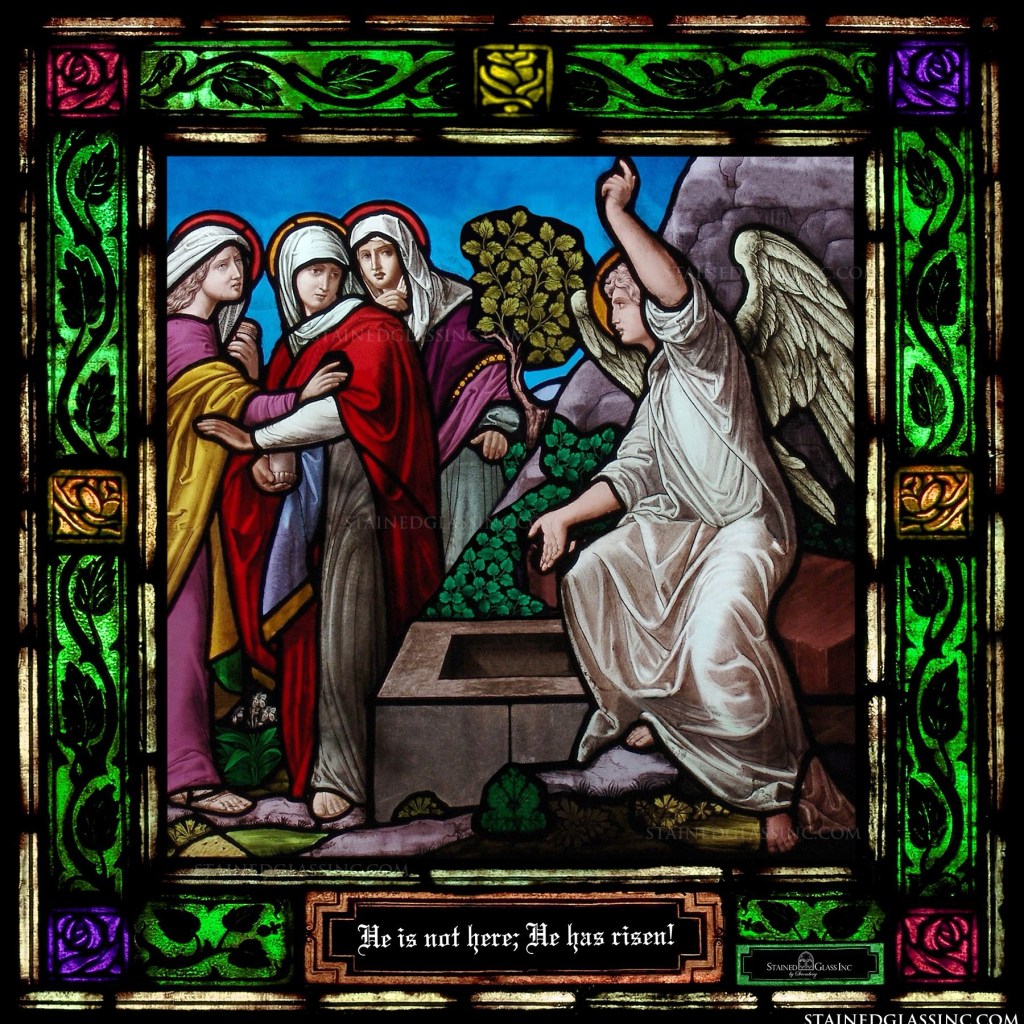
It’s evident in Cooper and Murph. It’s evident in all the most impactful movies and stories we enjoy. And it’s evident in the life, death, and resurrection of Jesus. And every Easter we get the chance to admire that cost he was willing to pay to provide us with life in the midst of decay and destruction in our lives on Earth. There’s no greater love than that.

Twin Ideals: The American Poltical Divide

It’s becoming increasingly more difficult not to come to the conclusion that our nation is made of two sides with irreconcilable differences. We’re innundated with that vantage point from both the left and the right. Rarely is someone willing to risk suggesting anything to the contrary.

We have two political platforms easily caricatured by the excesses of both ends of the political spectrum. When Democrats and Republicans are only contending with the loudest and most abrasive mascots of the other side, it’s quite easy to think the gap is far to large to bridge. For AOC and MTG will never see eye-to-eye and we therefore assume we will never be able to understand or get along with our peers who vote differently than we do. Many on each side are completely befuddled by the other side’s vantage point and therefore resort to assigning ill motive, as a way to explain what, to them, is unexplainable.

As I’ve explored in some recent posts, these political differences are worth exploring more deeply. How is it that someone else like my neighbors, friends, family members and coworkers comes to drastically different opinions than myself? Is it all attributable to this ill motive? Lack of intelligence or compassion?

In that previous post I was exploring how one way is to view these differences purely as a difference in geography: divisions between rural and urban areas seem to correlate very well with political persuasion better than most variables. Just look at any election results map and it’s quite evident.

But I’d like to posit one more here, courtesy of the thoughtful writing of Patrick Moynihan, a former Democratic Senator of New York. One that I’m sure overlaps significantly with one’s locale, but speaks to our differing political sensibilities.

“Liberty and Equality are the twin ideals of American democracy. But they are not the same thing. Nor, most importantly, are they equally attractive to all groups at any given time nor yet are they always compatible, one with the other.

Many persons who would gladly die for liberty are appalled by equality. Many who are devoted to equality are puzzled and even troubled by liberty. Much of the political history of the American nation can be seen as a competition between these two ideals, as for example, the unending troubles between capital and labor.

This liberty and equality framing for the two sides of the political aisle I have personally found quite helpful.

The aforementioned excesses of both political parties are quite possibly best represented by the dysfunctional ideologies that inevitably arise when either of these ideals becomes the whole show. Watch Fox News and you’ll get a portrayal of the right’s greatest fears and MSNBC could give you a glimpse of the left’s.

Yet, as Moynihan charitably states, much of our political history can be seen through the lens of this tension. This isn’t anything new, which means it probably isn’t going away anytime soon (if ever). Liberty necessitates an allowance of differences, even when it comes to outcome. Equality likewise requires some encroachment and curbing of liberties. And here we are trying to make them both work in tandem.

By casting both of these as ideals, Moynihan demonstrates that both are good and essential to the function of our society. For many fear the horrors of an authoritarian regime with no allowance for autonomy. And likewise, there are many who fear a society so stratified, that it devolves into chaos. Those fears are legitimate. Society can be destabilized by an absence of either ideal.

A well functioning society requires a proper balance of liberty and equality. Unfortunately there are few politicans that are trying to speak to the concerns of both sides. Yet, as I’ve had more and more conversations around political topics with friends, I’ve found the exact contours of others’ beliefs are often far more nuanced than those heard from political pundits.

For while most may look for a candidate to enter the ring championing the ideal that most appeals to their sensibilities, most have some idea of where the limits should be.

Maybe by viewing our political opponents through this lens we can actually have more constructive dialogue that may challenge our preconceived notions of how these two ideals can function together. I’ve found at least that these themes of equality vs. liberty pervade most of our political discourse even though we never state it explicitly. At least for me, this framework has helped me grapple with with the tradeoffs I often justify in my own political persuasions as a result of this tension.

I’ll end with this fun quote from G.K. Chesterton.

The modern world is not evil; in some ways the modern world is far too good. It is full of wild and wasted virtues. When a religious scheme is shattered…, it is not merely the vices that are let loose. The vices are, indeed, let loose, and they wander and do damage. But the virtues are let loose also; and the virtues wander more wildly, and the virtues do more terrible damage. The modern world is full of the old Christian virtues gone mad. The virtues have gone mad because they have been isolated from each other and are wandering alone.”

Whether we call them virtues or ideals, we have to find a way to bring liberty and equality back out of isolation. To realize both are ill-equipped to serve as the ultimate ideal and require something far larger that can account for both equality and liberty. For these two ideals may seem a world apart and the chasm to wide for us to engage with the other side. But it doesn’t have to be that way, nor should it be.